Generic selectors
Exact matches only
Search in title
Search in content
Post Type Selectors

Blaise Pascal

Blaise Pascal icon
17/07/2026

🗓️

🌱June 19, 1623 – Paris, France.
🍂August 19, 1662 – Paris, France.

🌟 Main Contribution

Blaise Pascal studied fluid pressure, mathematical statistics, and laid foundations of probability theory
“The understanding of pressure and vacuum transforms our comprehension of nature”
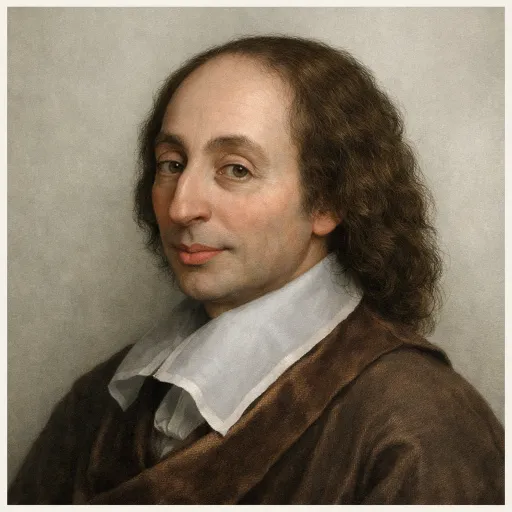
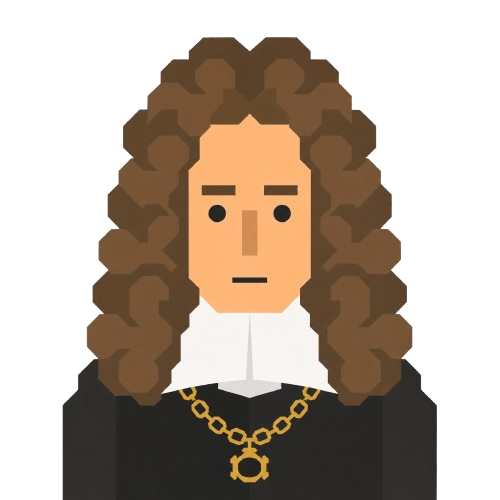
Blaise Pascal portrait

🧐 Did you know?

Blaise Pascal constructed the Pascaline when he was just nineteen years old with the sole purpose of alleviating the exhausting, painful workload of his father, who served as a royal tax commissioner in Upper Normandy and spent entire nights adding and subtracting columns of currency by hand. Due to intense intellectual strain and a chronically frail health from birth, Pascal suffered throughout his life from intolerable migraines, acute stomach pains, and severe insomnia; after miraculously surviving a carriage accident on the Neuilly bridge in 1544, he experienced an intense mystical conversion leading him to abandon mathematics almost completely to retreat to the Port-Royal monastery, wearing a sewn parchment known as the “”Memorial”” inside his jacket lining until the day he died.

🏅 Awards and Honors

Having developed his work in the 17th century, prior to the institutionalization of modern scientific accolades, Pascal’s recognition has manifested posthumously. His name was selected to honor the unit of pressure in the International System of Units and to designate one of the earliest programming languages of the computer era.

📚 Their name in science

🔆 Pascal (Pa)

Unit of pressure in the International System of Units, equivalent to a force of one Newton acting uniformly on a surface area of one square meter.

➤ Pascal’s Law

Hydrostatic principle stating that pressure exerted anywhere in a confined incompressible fluid is transmitted equally in all directions throughout the fluid.

➤ Pascal’s Principle

Physical statement describing how pressure changes in a confined fluid are transmitted uniformly, serving as the technological foundation for hydraulic presses and brakes.

Ad

❓ Who was Blaise Pascal?

Blaise Pascal was a French mathematician, physicist, philosopher, and theologian, universally considered one of the most brilliant minds of the 17th century for founding modern hydrostatics and co-inventing probability theory. A child prodigy educated by his father in an environment of high intellectual stimulation, he displayed superhuman geometric capacity from his adolescence. He possessed a mind endowed with a unique duality: relentless logical rigor for mechanical device design combined with a deep, tormented spiritual sensitivity of Jansenist nature. Pascal did not view science as an absolute end isolated from the human condition, but as an exercise of reason that had to halt humbly before the truths of the heart and divine mysteries.

🌍 The world in their time

In the early 17th century, fluid physics lay stagnant under the scholastic dogma of “”horror vacui,”” which assumed that nature detested empty space and refilled it instantly, preventing any understanding of hydraulic pump operation and atmospheric pressure behavior at different altitudes.

Become a giant

Your path to becoming a giant of knowledge begins with these top free courses
free energy & matter transfer course
Free mode

The Basics of Transport Phenomena

free aerodynamics course
Free mode

Flight Vehicle Aerodynamics

free hypersonic aerodynamics course
Free mode

Hypersonics – from Shock Waves to Scramjets

free energy & matter transfer course
Free mode

The Basics of Transport Phenomena

free aerodynamics course
Free mode

Flight Vehicle Aerodynamics

🔬 Scientific legacy

Blaise Pascal revolutionized science by formulating Pascal’s Law in 1647, proving that pressure exerted anywhere in an incompressible fluid is transmitted equally in all directions. To validate Torricelli’s theories experimentally, he coordinated the historic Puy de Dôme experiment in 1648, demonstrating that atmospheric pressure decreases with altitude and proving the real existence of a physical vacuum. In mathematics, he invented the “”Pascaline”” in 1642, the history’s first mechanical gear calculator, designed Pascal’s Triangle for binomial coefficient calculation, and laid the foundations of probability theory alongside Pierre de Fermat through geometric analysis of games of chance.

👣 Footprint in today's world

The legacy of Blaise Pascal forms the instrumental and analytical infrastructure of contemporary hydraulic engineering, architectural computing, financial economics, and statistics. His fundamental fluid principle today regulates the technical operation of automotive hydraulic brakes, high-capacity industrial presses, mechanical freight lifting systems, and pneumatic jacks utilized in workshops across the planet, while his probabilistic theorems form the bedrock for financial risk management algorithms and modern life insurance.

🏃‍♂️ The relay race

📥 Taking the baton

The monumental mechanical breakthroughs of Blaise Pascal built firmly upon Evangelista Torricelli’s atmospheric pressure experiments, combined with Desargues’ projective geometry and classical geometric quadrature methods developed by Galileo Galilei.

📤 Passing the baton

The fluid pressure clarification achieved by Blaise Pascal transformed experimental physics into an exact quantitative discipline, definitively destroying medieval Aristotelian physics prejudices. His philosophical and mathematical writings unified technological pragmatism with modern epistemology, opening the floodgates for steam engine development in the Industrial Revolution and the mathematical understanding of chance in today’s society.

Other giants you will want to get to know

Robert Boyle

Robert Boyle

1627

 –

1691
The philosopher of the chemical vacuum who banished mystical alchemy and isolated the law of compressible gases.
Joseph Fourier

Joseph Fourier

1768

 –

1830
The mathematician of heat theory who created the trigonometric series fundamental to the digital age.
Joseph Louis Gay-Lussac

Joseph Louis Gay-Lussac

1778

 –

1850
The daring chemist who formulated the ideal gas laws and ascended in balloons to measure the atmosphere.
Evangelista Torricelli

Evangelista Torricelli

1608

 –

1647
The bold physicist who proved the existence of atmospheric pressure and invented the mercury barometer.
Blaise Pascal

Blaise Pascal

1623

 –

1662
The mystical genius of hydrostatic pressure who invented the mechanical calculator and measured the weight of the vacuum.

Tools

Scientific calculator

Powered by Desmos

Scientific Dictionary

Powered by Wikipedia

2026 Best Online STEM Education Platform

Cargando clima y ubicación...

To learn and experience

Take your knowledge to the next level with science kits and hands-on tools that connect theory with experimentation

Essential for teachers and students

Learn with the best courses