Generic selectors
Exact matches only
Search in title
Search in content
Post Type Selectors

Pierre-Simon Laplace

Pierre-Simon Laplace icon
17/07/2026

🗓️

🌱March 23, 1749 – Beaumont-en-Auge, France.
🍂March 5, 1827 – Paris, France.

🌟 Main Contribution

Pierre-Simon Laplace developed probability theory and mathematical statistics, and made fundamental contributions to astronomy and celestial mechanics.
“Probability theory is the science of analyzing chance”
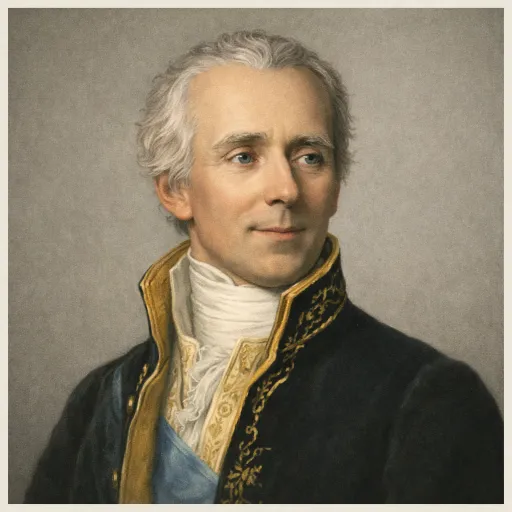
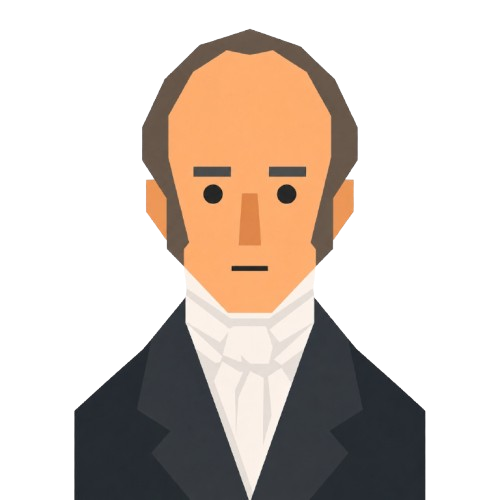
Pierre-Simon Laplace portrait

🧐 Did you know?

Pierre-Simon Laplace possessed an absolute scientific pragmatism removed from all theological metaphysics in his research. When Emperor Napoleon Bonaparte reviewed his treatise on celestial mechanics and curiously pointed out that Newton had mentioned God in his work while Laplace had not named Him a single time, the French mathematician proudly stood his ground and uttered his famous phrase: “”Sire, I had no need of that hypothesis,”” defending the self-sufficiency of physical laws.

🏅 Awards and Honors

Recibió la Gran Cruz de la Legión de Honor y fue miembro de la Academia Francesa de Ciencias, la Royal Society y la Academia de Berlín.

📚 Their name in science

➤ Transformada de Laplace

Transformación matemática ampliamente utilizada en ingeniería y física.

➤ Ecuación de Laplace

Ecuación diferencial fundamental de la teoría del potencial.

➤ Operador de Laplace

Operador diferencial de segundo orden ampliamente utilizado en matemáticas y física.

➤ Demonio de Laplace

Experimento mental sobre el determinismo clásico.

❓ Who was Pierre-Simon Laplace?

Pierre-Simon Laplace was a French mathematician, astronomer, and physicist, widely ranked among the most brilliant and influential scientists of all time, nicknamed the “”French Newton”” for proving the stability of the solar system. Educated at the University of Caen and a protégé of d’Alembert in Paris, he developed an astonishing political and academic career that survived intact through the French Revolution, Napoleon’s Empire, and the Bourbon Restoration. He possessed a mind of inflexible analytical determinism and a supreme mastery of continuous mathematical calculus, seeking to explain the universe as a perfect machine regulated by differential equations. Laplace did not view the cosmos as an unstable system requiring corrective divine interventions, but as a fully predictable mechanism under physical laws.

🌍 The world in their time

In the late 18th century, theoretical astronomy faced a major mathematical riddle regarding orbital stability. Newton’s equations alarmingly suggested that mutual gravitational perturbations among planets accumulated errors over time that would eventually destroy the solar system, requiring constant divine intervention.

Become a giant

Your path to becoming a giant of knowledge begins with these top free courses
free astrophysics enigmas course
Free mode

Greatest Unsolved Mysteries of the Universe

free exoplanets course
Free mode

Astrophysics: Exploring Exoplanets

free high-energy universe course
Free mode

Astrophysics: The Violent Universe

free astrophysics enigmas course
Free mode

Greatest Unsolved Mysteries of the Universe

free exoplanets course
Free mode

Astrophysics: Exploring Exoplanets

🔬 Scientific legacy

Pierre-Simon Laplace revolutionized science by publishing the five volumes of his monumental treatise *Traité de mécanique céleste* between 1799 and 1825, mathematically proving that the solar system is self-stable and that planetary orbital variations are cyclic and self-regulating. In pure mathematics, he founded the analytical theory of probability by publishing *Théorie analytique des probabilités* in 1812, transforming statistics into an exact scientific tool. He formulated the differential operator known as the Laplace Equation ($nabla^2 Phi = 0$), crucial for physical field studies, introduced the Laplace Transform to solve complex equations, and independently proposed the nebular hypothesis to explain the solar system’s origin.

👣 Footprint in today's world

The legacy of Pierre-Simon Laplace forms the analytical and instrumental foundation of contemporary civil engineering, actuarial statistics, field physics, and aerospace navigation. His mathematical transform is used daily by control engineers across the planet to stabilize automated systems, while his differential equations regulate the study of gravity, electrostatics, fluid magnetism, and current optical design.

🏃‍♂️ The relay race

📥 Taking the baton

The monumental analytical breakthroughs of Pierre-Simon Laplace built firmly upon Leonhard Euler’s variational calculus, Isaac Newton’s classical mechanics, and geometric formulas previously achieved by Joseph-Louis Lagrange.

📤 Passing the baton

The celestial stability proof achieved by Pierre-Simon Laplace consolidated 19th-century scientific determinism, establishing the theoretical concept of “”Laplace’s demon”” as the peak of physical predictability. His methodological contributions transformed the calculus of probability into an analytical discipline indispensable for the advancement of thermodynamics, social sciences, and modern quantum physics.

Other giants you will want to get to know

Johannes Kepler

Johannes Kepler

1571

 –

1630
The mathematical astronomer who shattered celestial geometric perfection by discovering the elliptical orbits of planets.
Joseph-Louis Lagrange

Joseph-Louis Lagrange

1736

 –

1813
The master of analytical mechanics who unified physics without geometry and located space equilibrium zones.

Henri Poincaré

Henri Poincaré

1854

 –

1912
The last universalist who discovered deterministic chaos and revolutionized topology and celestial mechanics.
Alan Turing

Alan Turing

1912

 –

1954
The mathematical genius who laid the foundations of computing and cracked the Enigma code.
Carl Friedrich Gauss

Carl Friedrich Gauss

1777

 –

1855
The prince of mathematics who tamed the normal curve of errors and instrumented terrestrial magnetism.

Tools

Scientific calculator

Powered by Desmos

Scientific Dictionary

Powered by Wikipedia

2026 Best Online STEM Education Platform

Cargando clima y ubicación...

To learn and experience

Take your knowledge to the next level with science kits and hands-on tools that connect theory with experimentation

Essential for teachers and students

Learn with the best courses