Generic selectors
Exact matches only
Search in title
Search in content
Post Type Selectors

Joseph Louis Gay-Lussac

Joseph Louis Gay-Lussac icon
17/07/2026

🗓️

🌱December 6, 1778 – Saint-Léonard-de-Noblat, France.
🍂May 9, 1850 – Paris, France.

🌟 Main Contribution

Joseph Louis Gay-Lussac formulated fundamental gas laws on the relationship between volume, temperature, and pressure, also studying gas mixtures and chemical reactions in air
“Chemistry is the key to understanding nature”
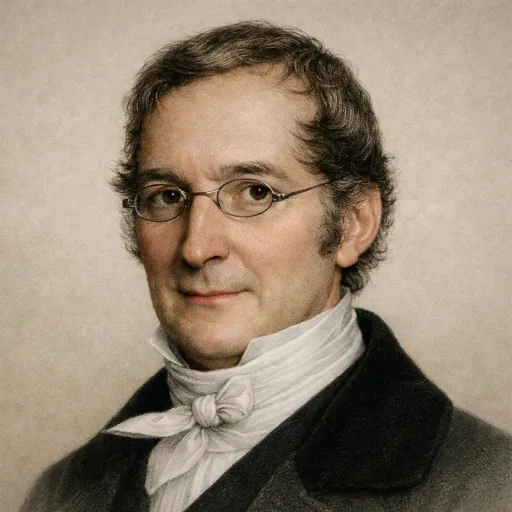
Joseph Louis Gay-Lussac portrait

🧐 Did you know?

Joseph Louis Gay-Lussac possessed extraordinary physical courage that he put at the service of obtaining pure empirical data. In 1804, with the objective of collecting air samples and measuring terrestrial magnetism at high altitudes, he ascended alone in an unpressurized hydrogen balloon to reach the astonishing altitude of 7,016 meters above Paris, setting a world height record that remained unbroken for nearly half a century.

🏅 Awards and Honors

Recibió la Medalla Copley (1830) de la Royal Society. Fue miembro de la Academia Francesa de Ciencias y de numerosas academias científicas europeas.

📚 Their name in science

➤ Ley de Gay-Lussac

Ley que relaciona la presión y la temperatura de un gas a volumen constante.

➤ Ley de Gay-Lussac sobre los volúmenes de combinación

Ley que establece que los gases reaccionan entre sí en proporciones sencillas de volumen.

❓ Who was Joseph Louis Gay-Lussac?

Joseph Louis Gay-Lussac was a French chemist and physicist, celebrated for his pioneering studies on the properties of gases and for his audacity in scientific experimentation at high altitudes. Educated at the École Polytechnique in Paris and a disciple of the great Berthollet, he developed his brilliant career during the Napoleonic Empire and the Restoration, a period when chemistry structured itself as an applied industrial science. He possessed a mind of exceptional methodical rigor, capable of designing high-precision laboratory apparatus to measure gaseous volumes. Gay-Lussac did not view chemical reactions as arbitrary phenomena, but as interactions governed by exact, predictable mathematical proportions.


🌍 The world in their time

In the early 19th century, the scientific community lacked quantitative laws describing how the pressure and temperature of gases interacted at a constant volume. Physicists did not understand the exact volumetric relationships that occurred between different gases when reacting to form new compounds, which limited the development of chemical engineering and aerostatic navigation.

Become a giant

Your path to becoming a giant of knowledge begins with these top free courses
free transport dynamics course
Free mode

Advanced Transport Phenomena

free energy & matter transfer course
Free mode

The Basics of Transport Phenomena

free aerodynamics course
Free mode

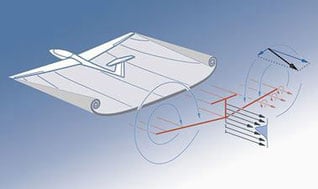
Flight Vehicle Aerodynamics

free transport dynamics course
Free mode

Advanced Transport Phenomena

free energy & matter transfer course
Free mode

The Basics of Transport Phenomena

🔬 Scientific legacy

Joseph Louis Gay-Lussac revolutionized science by formulating the gas law that bears his name in 1802, proving that a gas’s pressure is directly proportional to its temperature if the volume remains constant. In 1808, he formulated the Law of Combining Volumes, establishing that gases combine chemically in simple, fixed volume ratios. In elemental chemistry, he co-discovered the element boron concurrently with Humphry Davy, isolated elemental iodine, and pioneered the refinement of volumetric analysis and acid titration methods in the chemical industry.

👣 Footprint in today's world

The legacy of Joseph Louis Gay-Lussac forms the physical and engineering foundation of contemporary industrial thermodynamics and automotive engineering. His laws regarding ideal gas behavior are indispensable for the technical design of internal combustion engines, compression refrigeration systems, industrial pneumatic compressors, aviation life-support equipment, and the safe operation of pressure vessels like steam boilers.

🏃‍♂️ The relay race

📥 Taking the baton

The monumental physical breakthroughs of Joseph Louis Gay-Lussac developed from previous gas expansion investigations conducted by Jacques Charles and volumetric atomic theories formulated by Antoine Lavoisier.

📤 Passing the baton

The experimental precision of Joseph Louis Gay-Lussac in measuring gaseous combining volumes provided the decisive empirical proof that allowed Amedeo Avogadro to formulate his famous molecular hypothesis. His methodological contributions transformed laboratory chemical analysis into a quantitative standard process indispensable for the advancement of 19th-century organic chemistry.

Other giants you will want to get to know

Archimedes

Archimedes

287 a.C.

 –

212 a.C.
The mathematical titan of antiquity who unlocked the laws of levers, buoyancy, and infinity.
Amedeo Avogadro

Amedeo Avogadro

1776

 –

1856
The brilliant physicist who drew the line between atoms and molecules.
Michael Faraday

Michael Faraday

1791

 –

1867
The wizard of electrical induction who visualized magnetic lines of force and transformed industry.
Blaise Pascal

Blaise Pascal

1623

 –

1662
The mystical genius of hydrostatic pressure who invented the mechanical calculator and measured the weight of the vacuum.
Sadi Carnot

Sadi Carnot

1796

 –

1832
The architect of thermodynamics who designed the ideal engine and discovered the thermal limits of the universe.

Tools

Scientific calculator

Powered by Desmos

Scientific Dictionary

Powered by Wikipedia

2026 Best Online STEM Education Platform

Cargando clima y ubicación...

To learn and experience

Take your knowledge to the next level with science kits and hands-on tools that connect theory with experimentation

Essential for teachers and students

Learn with the best courses