Generic selectors
Exact matches only
Search in title
Search in content
Post Type Selectors

Robert Boyle

Robert Boyle icon
17/07/2026

🗓️

🌱January 25, 1627 – Lismore, Ireland.
🍂December 31, 1691 – London, England.

🌟 Main Contribution

Robert Boyle formulated the first quantitative law of gases, showing the relationship between pressure and volume, laying foundations of modern chemistry and fluid mechanics
“Air is as necessary to life as food”
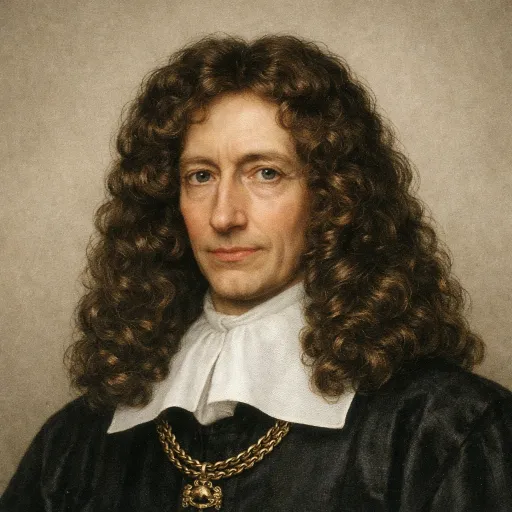
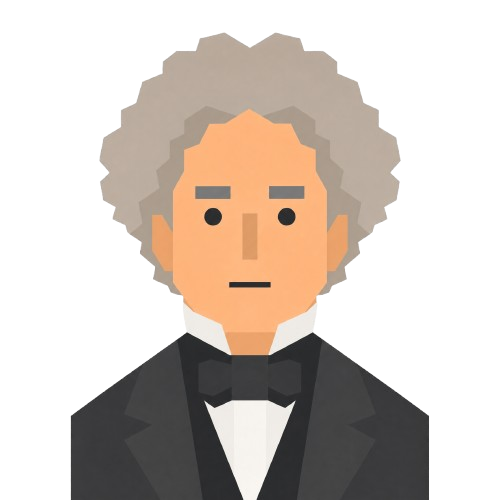
Robert Boyle portrait

🧐 Did you know?

Robert Boyle was an experimenter of such scrupulous intellectual honesty that he detailed even his failed experiments in his laboratory notebooks, breaking with the traditional secrecy of ancient alchemists who hid their mistakes. He lived obsessed with methodological purity and suffered from extreme social shyness, which led him to formally decline a knighthood from the British crown and the presidency of the Royal Society to avoid taking public oaths that would disturb his strict puritan morals and laboratory research time.

🏅 Awards and Honors

Boyle was a founding Fellow of the Royal Society and one of the founders of modern chemistry.

📚 Their name in science

➤ Boyle’s law

Law relating the pressure and volume of a gas at constant temperature.

❓ Who was Robert Boyle?

Robert Boyle was an Anglo-Irish chemist, physicist, and natural philosopher, universally considered one of the fathers of modern chemistry for introducing the rigorous scientific method into experimental laboratories. Born into the wealthiest family of the Irish aristocracy and a founding member of the Royal Society of London, he balanced an immense material fortune with an ascetic dedication to empirical experimentation and theology. He possessed a mind imbued with a radical mechanical atomism, convinced that the phenomena of matter were due to mechanical collisions of particles in space and not to hidden or mystical qualities. Boyle did not view science as abstract speculations, but as truths that had to be weighed, measured, and validated through reproducible laboratory equipment.

🌍 The world in their time

In the mid-17th century, the study of matter was dominated by medieval alchemy and Aristotle’s dogmas. It was erroneously assumed that the universe was composed of four qualitative elements (earth, water, air, fire) and that a physical vacuum was an absolute impossibility of nature, which prevented the development of analytical chemistry and thermodynamics.

Become a giant

Your path to becoming a giant of knowledge begins with these top free courses
free energy & matter transfer course
Free mode

The Basics of Transport Phenomena

free aerodynamics course
Free mode

Flight Vehicle Aerodynamics

free hypersonic aerodynamics course
Free mode

Hypersonics – from Shock Waves to Scramjets

free energy & matter transfer course
Free mode

The Basics of Transport Phenomena

free aerodynamics course
Free mode

Flight Vehicle Aerodynamics

🔬 Scientific legacy

Robert Boyle revolutionized science by publishing his masterpiece *The Sceptical Chymist* in 1661, where he redefined the concept of a chemical element as a pure substance that cannot be broken down into simpler ones, destroying the foundations of traditional alchemy. In fluid physics, he formulated Boyle’s Law in 1662, mathematically proving that at a constant temperature, the volume of a gas is inversely proportional to the pressure exerted on it ($P cdot V = k$). Alongside Robert Hooke, he designed an advanced vacuum pump with which he demonstrated that sound does not travel through a physical vacuum, that air possesses weight and elasticity, and that it is indispensable both for chemical combustion and for the biological respiration of animals.

👣 Footprint in today's world

The legacy of Robert Boyle forms the conceptual and methodological infrastructure of contemporary analytical chemistry, gas process engineering, and thermodynamic physics. His fundamental law regarding gases today regulates the technical operation of industrial air compressors, the design of current refrigeration and air conditioning systems, the calculation of gas mixtures used in deep-sea diving tanks, and the analysis of internal combustion in global automotive engineering.

🏃‍♂️ The relay race

📥 Taking the baton

The monumental experimental breakthroughs of Robert Boyle built directly upon Pierre Gassendi’s mechanistic atomism, Evangelista Torricelli’s experiments on atmospheric pressure, and the mechanical improvements contributed by his assistant Robert Hooke.

📤 Passing the baton

The separation between chemistry and alchemy achieved by Robert Boyle transformed the study of matter into an exact quantitative discipline, serving as a direct model for Antoine Lavoisier’s subsequent chemical revolution. His pioneering research on the vacuum and the behavior of elastic particles laid the indispensable experimental foundations for developing the kinetic theory of gases and 19th-century thermal physics.

Other giants you will want to get to know

Dmitri Ivánovich Mendeleyev

Dmitri Ivánovich Mendeleyev

1834

 –

1907
The genius of elements who discovered the hidden order of matter and designed the periodic table.
Fritz Haber

Fritz Haber

1868

 –

1934
The tragic genius of chemistry who fed the world with synthetic nitrogen and unleashed modern chemical warfare.
Evangelista Torricelli

Evangelista Torricelli

1608

 –

1647
The bold physicist who proved the existence of atmospheric pressure and invented the mercury barometer.
William Henry

William Henry

1774

 –

1836
The physician of gaseous fluids who measured the dissolution of matter and industrialized elastic water chemistry.
Antoine-Laurent de Lavoisier

Antoine-Laurent de Lavoisier

1743

 –

1794
The father of modern chemistry who proved that matter can never be destroyed.

Tools

Scientific calculator

Powered by Desmos

Scientific Dictionary

Powered by Wikipedia

2026 Best Online STEM Education Platform

Cargando clima y ubicación...

To learn and experience

Take your knowledge to the next level with science kits and hands-on tools that connect theory with experimentation

Essential for teachers and students

Learn with the best courses