
Special theory of relativity. Space, time, and applications
The online special theory of relativity simulations on this page allow you to explore how space and time are related at high speeds. We will discover phenomena such as time dilation, length contraction, and the relativity of simultaneity through virtual experiments. Thanks to this, we will gain a solid foundation for understanding Einstein’s theory and its applications in physics and technology.
This Thematic Unit is part of our Physics collection

STEM OnLine mini dictionary
Inertial Frame of Reference
Coordinate system in which an object moves at a constant speed or remains at rest, with no external forces acting on it.
Length Contraction
Shortening of an object’s measured length in the direction of its motion when it travels at relativistic speeds.
Mass-Energy Equivalence
Physical principle stating that the energy released in a nuclear reaction comes from a small loss of mass during the process.
Relative Simultaneity
Concept stating that two events that are simultaneous for one observer may not be so for another moving relative to the first.
Space-Time
Mathematical model combining the three spatial dimensions and the temporal dimension into a single four-dimensional fabric.
Special Relativity
Physical theory describing the motion of bodies in the absence of gravitational fields at speeds close to that of light.
Speed of Light (Limit)
Universal and invariable maximum speed for all observers, regardless of their state of motion.
Time Dilation
Phenomenon where time passes more slowly for an observer moving at high speed compared to one at rest.
What Is the special theory of relativity
The special theory of relativity, formulated by Albert Einstein in 1905, describes how the laws of physics remain the same for all observers in uniform motion and establishes that the speed of light in a vacuum is a universal limit. It explains phenomena such as time dilation, length contraction, and the relativity of simultaneity. Although it focuses on systems without gravity, it lays the foundation for the general theory of relativity, which extends these principles to gravitational fields and accelerations.
Fundamental principles of the special theory of relativity
The special theory of relativity is based on two basic postulates that completely transformed the classical view of space and time. From these, surprising consequences arise, such as time dilation, length contraction, and the equivalence of mass and energy.
Principle of relativity
The laws of physics are the same for all observers moving at constant speed relative to each other. There is no absolute frame of reference: motion can only be described in relative terms.
Constancy of the speed of light
The speed of light in a vacuum is the same for all observers, regardless of the motion of the source or the receiver. This principle breaks with the classical idea of adding velocities and redefines the notion of simultaneity.
From these principles, effects such as time dilation, length contraction, and mass-energy equivalence (E = mc²) are derived, confirmed by numerous experiments and with implications in many fields of modern physics.
Relativistic effects
Relativistic effects are the observable manifestations of the postulates of special relativity. Although they become noticeable only at speeds close to that of light, their consequences are measurable and have been experimentally verified.
Time dilation
When an object moves at high speed, time passes more slowly for it compared to an observer at rest. This phenomenon has been confirmed using atomic clocks on airplanes or satellites.
Length contraction
An object in motion becomes shorter in the direction of motion when observed from a system at rest. This effect is not noticeable at everyday speeds, but is essential to the behavior of subatomic particles.
Mass-Energy equivalence
Einstein formulated the relationship E = mc², which states that mass can be transformed into energy and vice versa. This principle explains phenomena such as the energy released in nuclear reactions or within stars.
Graphical representation and space-time
The special theory of relativity reshapes the traditional idea of space and time, combining them into a single entity: spacetime. This view is visually represented through diagrams that show how events are distributed depending on the observer’s motion.
Event diagrams and worldlines
Event diagrams allow the graphical representation of the position and moment when physical phenomena occur. Worldlines show the movement of objects through spacetime, revealing how their coordinates change for different observers.
Minkowski diagrams
Minkowski diagrams are a fundamental tool for understanding the relationships between space, time, and velocity. They include light cones, which define the limits of causality: no event outside the cone can affect the central event, thus preserving the temporal order of occurrences.
Applications of the special theory of relativity
The special theory of relativity has profoundly transformed our understanding of the universe and has both theoretical and practical applications. Its most famous equation, , explains the equivalence of mass and energy and underpins technologies such as nuclear energy and certain medical treatments.
In addition, its principles are fundamental in precision systems such as GPS, which must correct for relativistic effects to work properly. It has also been key in particle physics and in interpreting cosmic phenomena, consolidating the foundations of modern physics.

STEM OnLine mini dictionary
Inertial Frame of Reference
Coordinate system in which an object moves at a constant speed or remains at rest, with no external forces acting on it.
Length Contraction
Shortening of an object’s measured length in the direction of its motion when it travels at relativistic speeds.
Mass-Energy Equivalence
Physical principle stating that the energy released in a nuclear reaction comes from a small loss of mass during the process.
Relative Simultaneity
Concept stating that two events that are simultaneous for one observer may not be so for another moving relative to the first.
Space-Time
Mathematical model combining the three spatial dimensions and the temporal dimension into a single four-dimensional fabric.
Special Relativity
Physical theory describing the motion of bodies in the absence of gravitational fields at speeds close to that of light.
Speed of Light (Limit)
Universal and invariable maximum speed for all observers, regardless of their state of motion.
Time Dilation
Phenomenon where time passes more slowly for an observer moving at high speed compared to one at rest.
Explore the exciting STEM world with our free, online, simulations and accompanying companion courses! With them you’ll be able to experience and learn hands-on. Take this opportunity to immerse yourself in virtual experiences while advancing your education – awaken your scientific curiosity and discover all that the STEM world has to offer!
Special theory of relativity simulations
Michelson-Morley Interferometer
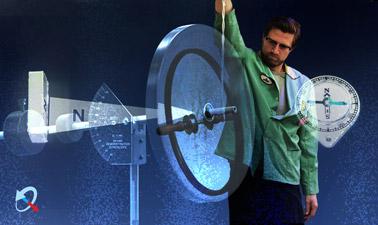
This simulation allows you to explore the famous Michelson-Morley experiment, which precisely measured the speed of light and laid the experimental groundwork for the special theory of relativity. You can adjust the length of the interferometer arms and observe the resulting interference patterns, understanding how small distance differences affect light. It is an ideal tool to visualize the principles of interference and reinforce the understanding of the constancy of the speed of light in different reference frames.

Relativity of simultaneity
This simulation lets you explore how two observers can perceive differently whether two events occur at the same time. You can change the position and velocity of the observers to see how relative simultaneity affects the perception of events. It is ideal for understanding that the concept of “at the same time” is not absolute but depends on the frame of reference.
Length contraction
In this simulation, you can see how an object moving at high speed shortens in the direction of its movement. You can change the speed and compare the length measured by an observer at rest with the length in the moving object’s frame, clearly showing the relationship between speed and spatial contraction.
Minkowski spacetime
This simulation graphically represents spacetime and the trajectories of moving objects. It allows you to visualize how time and space combine into a single framework, showing the worldlines of objects and how time is distorted at different speeds. It is an essential tool for visually understanding the concept of spacetime.
Twin paradox
This illustrates the famous thought experiment of special relativity: two twins, one who travels at high speed and one who remains on Earth, age differently. The simulation lets you adjust speeds and trajectories, showing how the effects of time dilation result in real age differences, reinforcing the previous concepts of simultaneity and time dilation.

Giants of science
“If I have seen further, it is by standing on the shoulders of giants”
Isaac Newton
Niels Henrik David Bohr
–
Werner Karl Heisenberg
–
Become a giant
Quantum Mechanics of Molecular Structures
Quantum Mechanics for Scientists and Engineers 2
Quantum Mechanics for Scientists and Engineers 1
Quantum Mechanics for Everyone
AP® Physics 1 – Part 1: Linear Motion
Circuits for Beginners
The Basics of Transport Phenomena
AP® Physics 1
Professional development for Educators
Reimagining higher education teaching in the age of AI
Teach computing: Support SEND learners with computing
Introduction to Data Wise: A Collaborative Process to Improve Learning & Teaching
HP Digital Skills for Educators – Microsoft 365 Copilot
Giants of science
“If I have seen further, it is by standing on the shoulders of giants”
Isaac Newton
Max Karl Ernst Ludwig Planck
–
Niels Henrik David Bohr
–
Become a giant
Quantum Mechanics of Molecular Structures
Quantum Mechanics for Scientists and Engineers 2
Quantum Mechanics for Scientists and Engineers 1
Quantum Mechanics for Everyone
AP® Physics 1
AP® Physics 1 – Part 1: Linear Motion
AP® Physics 1 – Part 2: Rotational Motion
AP® Physics 1: Challenging Concepts
Professional development for Educators
Teach computing: Introducing physical computing
Teach kids computing: Computing systems and networks
The Science of Learning – What Every Teacher Should Know
Teach teens computing: Encryption and cryptography
Test your knowledge
What does the special theory of relativity state, and why did it represent such a profound shift in classical physics?
How are the postulates of special relativity connected to effects such as time dilation and length contraction?
Why do people say that time “runs slower” when something moves really fast? It sounds like the clock is just breaking.
What does it mean that two things can happen “at the same time” for one observer but not for another? I can’t quite picture that.
What is all this useful for in real life? Because it sounds super theoretical until someone gives an example.
You may also be interested
Last simulations
To learn and experience
Take your knowledge to the next level with science kits and hands-on tools that connect theory with experimentation
Relativity and Quantum Physics For Beginners

Teachers essentials
Notion
Organize your notes, tasks, and projects in one place. Notion combines notes, lists, and calendars in one flexible space.
Canva
Design presentations, diagrams, and infographics with easy-to-use templates and professional results
Genially
Create interactive content, presentations, and educational games in a simple and visual way
Desmos
The most intuitive graphing calculator to explore mathematics and create dynamic classroom activities
Tinkercad
Design in 3D and simulate electronic circuits for free; it’s the perfect tool for simple robotics projects
Your Infinite Library
Enjoy the freedom to explore millions of titles and a curated selection of magazines on any device
Join Prime for students and young adults
The best series. Millions of songs. All included with your subscription.

Science made fun
Learn with the best courses
edX
Online courses from leading universities and companies. Learn practical skills and earn professional certifications
Coursera
Courses from leading universities and companies. Learn practical skills and earn professional certifications
Udemy
Thousands of online courses tailored to your level. Learn at your own pace with expert instructors