Generic selectors
Exact matches only
Search in title
Search in content
Post Type Selectors

William Rowan Hamilton

William Rowan Hamilton icon
17/07/2026

🗓️

🌱August 4, 1805 – Dublin, Ireland.
🍂September 2, 1865 – Dublin, Ireland.

🌟 Main Contribution

William Rowan Hamilton developed Hamiltonian mechanics and quaternions, unifying geometry and mathematical physics
“Mathematics and physics meet in the harmony of the equations governing motion.”
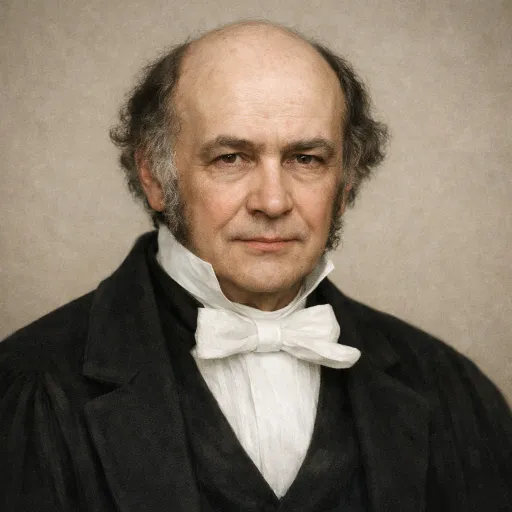
William Rowan Hamilton portrait

🧐 Did you know?

William Rowan Hamilton conceived his revolutionary algebraic discovery of quaternions on Monday, October 16, 1843, in a sudden and almost mystical manner. While walking with his wife along the Dublin canal toward the Royal Irish Academy, the mathematical solution flashed clearly in his mind after years of geometric stagnation; fearing he would forget the formula for three-dimensional multiplication at that exact moment, Hamilton pulled a pocketknife from his pocket and carved the fundamental quaternion equation directly onto the stone of Brougham Bridge, a brilliant act of mathematical vandalism celebrated internationally today.

🏅 Awards and Honors

Recibió la Medalla Real (1837), la Medalla Copley (1835) y fue presidente de la Real Academia Irlandesa.

📚 Their name in science

➤ Hamiltoniano

Función fundamental de la mecánica hamiltoniana.

➤ Cuaterniones de Hamilton

Sistema numérico de cuatro dimensiones.

➤ Camino hamiltoniano

Camino que visita cada vértice de un grafo exactamente una vez.

❓ Who was William Rowan Hamilton?

William Rowan Hamilton was an Irish mathematician, astronomer, and theoretical physicist, unanimously recognized as one of the most brilliant and versatile mathematicians in human history for unifying classical mechanics and inventing quaternion algebra. A child prodigy endowed with a superhuman capacity enabling him to master over ten languages by age thirteen, he was appointed Royal Astronomer of Ireland and professor at the University of Dublin at the early age of 22 before even graduating. He possessed a mind of supreme analytical and deductive abstraction, obsessed with finding a universal algebraic language applicable both to optical rays and the motion of celestial bodies. Hamilton did not view theoretical physics as separate phenomena, but as trajectories governed by a unified geometric principle of energy.

🌍 The world in their time

In the early 19th century, theoretical physics and three-dimensional geometry suffered from analytical fragmentation. Mathematicians lacked an algebraic system enabling them to multiply vectors in real space directly and elegantly without breaking classical laws, and analytical models for fluid and solid mechanics operated independently from light propagation models.

Become a giant

Your path to becoming a giant of knowledge begins with these top free courses
free quantum optomechanics course
Free mode

Cavity Quantum Optomechanics

free orthogonal algebra course
Free mode

Linear Algebra IV: Orthogonality & Symmetric Matrices and the SVD

free determinants algebra course
Free mode

Linear Algebra III: Determinants and Eigenvalues

free quantum optomechanics course
Free mode

Cavity Quantum Optomechanics

free orthogonal algebra course
Free mode

Linear Algebra IV: Orthogonality & Symmetric Matrices and the SVD

🔬 Scientific legacy

William Rowan Hamilton revolutionized science by formulating Hamiltonian Mechanics in 1834, introducing the famous Hamiltonian function ($H$) that reformulated Newton’s laws through first-order differential equations based on the system’s total energy (kinetic plus potential). In abstract algebra, he invented the quaternion system in 1843, a non-commutative extension of complex numbers operating in a four-dimensional space, breaking algebra’s traditional rule by establishing that $i^2 = j^2 = k^2 = ijk = -1$ and that the order of factors alters the product ($i cdot j = k$, but $j cdot i = -k$). In theoretical optics, he mathematically unified geometric optics with mechanics through the Principle of Least Action (Hamilton’s Principle).

👣 Footprint in today's world

The legacy of William Rowan Hamilton forms the analytical and programming infrastructure of contemporary computer graphics, robotics, and quantum physics. His mathematical formulation of energy is the indispensable Hamiltonian operator used today by physicists across the planet as the foundation for Schrödinger’s quantum equation, while his quaternion numbers are the bedrock for current three-dimensional graphics software to calculate spatial rotations within video game engines, NASA spacecraft inertial navigation, and computer animation in global digital cinema.

🏃‍♂️ The relay race

📥 Taking the baton

The monumental analytical breakthroughs of William Rowan Hamilton built firmly upon Joseph-Louis Lagrange’s analytical mechanics, Carl Friedrich Gauss’s complex number calculus, and Isaac Newton’s classical dynamic laws.

📤 Passing the baton

The analytical unification achieved by William Rowan Hamilton transformed theoretical physics into a geometric calculus of pure energy, serving as a direct intellectual bridge between 19th-century determinism and 20th-century quantum and relativistic revolutions. His invention of quaternions opened the floodgates toward modern non-commutative algebras and space vector analysis by Maxwell and Gibbs, permanently transforming our understanding of the mathematical symmetry of the continuous universe.

Other giants you will want to get to know

Leonhard Euler

Leonhard Euler

1707

 –

1783
The supreme titan of mathematical analysis who unified the language of calculus and mastered science without sight.
Gottfried Wilhelm Leibniz

Gottfried Wilhelm Leibniz

1646

 –

1716
The universal genius who co-invented infinitesimal calculus and designed the binary system that powers computers.
Daniel Bernoulli

Daniel Bernoulli

1700

 –

1782
The master of hydrodynamics who discovered the principle explaining how airplanes fly and fluids flow.
William Rowan Hamilton

William Rowan Hamilton

1805

 –

1865
The astronomer of quaternionic algebra who unified physical mechanics calculus and anticipated optical space.
Alan Turing

Alan Turing

1912

 –

1954
The mathematical genius who laid the foundations of computing and cracked the Enigma code.

Tools

Scientific calculator

Powered by Desmos

Scientific Dictionary

Powered by Wikipedia

2026 Best Online STEM Education Platform

Cargando clima y ubicación...

To learn and experience

Take your knowledge to the next level with science kits and hands-on tools that connect theory with experimentation

Essential for teachers and students

Learn with the best courses