Generic selectors
Exact matches only
Search in title
Search in content
Post Type Selectors

Léon Foucault

Léon Foucault icon
17/07/2026

🗓️

🌱September 18, 1819 – Paris, France.
🍂February 11, 1868 – Paris, France.

🌟 Main Contribution

Léon Foucault demonstrated Earth’s rotation with his famous pendulum and measured the speed of light with great precision, revolutionizing experimental optics
“The pendulum does not lie: the Earth moves beneath our feet”
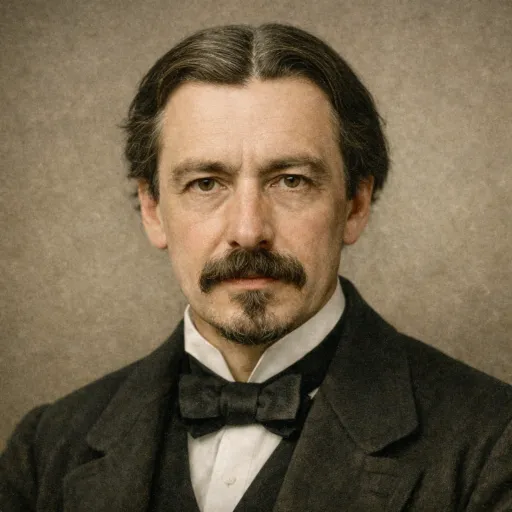
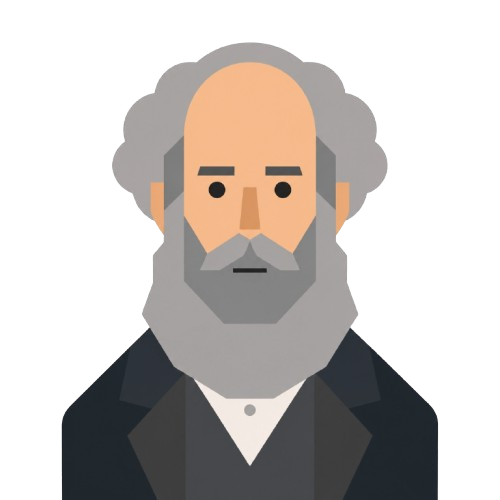
Léon Foucault portrait

🧐 Did you know?

Léon Foucault was an experimenter of extreme visual sharpness who began his scientific career collaborating on the refinement of the daguerreotype, the first photographic process in history. To achieve the absolute precision required for his measurement of the speed of light, he designed a tiny air-turbine engine that spun a central mirror at the astonishing constant speed of four hundred revolutions per second, challenging the mechanical limits of his era.

🏅 Awards and Honors

Foucault received the Copley Medal (1865) from the Royal Society and was a member of the Bureau des Longitudes and the French Academy of Sciences.

📚 Their name in science

➤ Foucault pendulum

Experiment demonstrating the Earth’s rotation.

➤ Foucault currents (Eddy currents)

Electric currents induced in conductors by changing magnetic fields.

❓ Who was Léon Foucault?

Léon Foucault was a French physicist and astronomer, world-famous for demonstrating in a direct and visual way that the Earth rotates on its own axis using his famous pendulum experiment. Initially educated in medicine, a field he abandoned due to his phobia of blood, he redirected his genius toward experimental physics and the construction of precision optical instruments. He possessed a mind of astonishing pragmatism and mechanical skill, capable of designing definitive experiments to resolve major theoretical debates. Foucault did not view science as complex abstractions, but as real phenomena that had to be captured and displayed with absolute mathematical clarity.

🌍 The world in their time

In the mid-19th century, Earth’s rotation was a fact accepted mathematically by the astronomical community according to celestial models, but no one had managed to find a direct, purely terrestrial physical proof observable in a closed laboratory that demonstrated the planet’s motion without looking at the stars.

Become a giant

Your path to becoming a giant of knowledge begins with these top free courses
free quantum optomechanics course
Free mode

Cavity Quantum Optomechanics

free astrophysics enigmas course
Free mode

Greatest Unsolved Mysteries of the Universe

free exoplanets course
Free mode

Astrophysics: Exploring Exoplanets

free quantum optomechanics course
Free mode

Cavity Quantum Optomechanics

free astrophysics enigmas course
Free mode

Greatest Unsolved Mysteries of the Universe

🔬 Scientific legacy

Léon Foucault revolutionized physics in 1851 by hanging a 67-meter pendulum with a bronze ball inside the Panthéon in Paris, empirically proving Earth’s rotation by observing the pendulum’s plane of oscillation slowly turn due to the floor’s rotational effect. In optics, he measured the speed of light using a system of rotating mirrors in 1862, obtaining a value with a margin of error of less than one percent from the real one. Furthermore, he invented the modern gyroscope in 1852 as another proof of rotation, discovered eddy currents (Foucault currents in metals), and pioneered the aluminum-coating process for astronomical telescope mirrors.

👣 Footprint in today's world

The legacy of Léon Foucault forms the technological foundation of contemporary navigation systems, astronomical optics, and electrical engineering. His gyroscope is the indispensable component used today in the inertial guidance systems of commercial aircraft, ships, submarines, and spacecraft, while his discoveries regarding magnetic induction currents regulate the design of magnetic brakes in high-speed trains and current electrical transformers.

🏃‍♂️ The relay race

📥 Taking the baton

The monumental experimental breakthroughs of Léon Foucault built firmly upon Isaac Newton’s classical mechanics laws, James Bradley’s astronomical observations on the aberration of light, and optical improvements previously achieved by François Arago.

📤 Passing the baton

The direct visualization of planetary rotation achieved by Léon Foucault electrified the scientific and popular community of Victorian Europe, definitively validating celestial mechanics on Earth. His optical mirror polishing and silvering techniques transformed astronomy, allowing subsequent engineers to build the large reflecting telescopes that opened the gates to the study of the deep universe.

Other giants you will want to get to know

Edwin Powell Hubble

Edwin Powell Hubble

1889

 –

1953
The titan of astronomy who discovered the expansion of the universe and the existence of other galaxies.
Gottfried Wilhelm Leibniz

Gottfried Wilhelm Leibniz

1646

 –

1716
The universal genius who co-invented infinitesimal calculus and designed the binary system that powers computers.
Archimedes

Archimedes

287 a.C.

 –

212 a.C.
The mathematical titan of antiquity who unlocked the laws of levers, buoyancy, and infinity.
Isaac Newton

Isaac Newton

1643

 –

1727
The supreme genius of the Scientific Revolution who unified the heavens and the Earth under the laws of gravity.
Galileo Galilei

Galileo Galilei

1564

 –

1642
The father of modern science who aimed his telescope at the heavens and challenged the world defending heliocentrism.

Tools

Scientific calculator

Powered by Desmos

Scientific Dictionary

Powered by Wikipedia

2026 Best Online STEM Education Platform

Cargando clima y ubicación...

To learn and experience

Take your knowledge to the next level with science kits and hands-on tools that connect theory with experimentation

Essential for teachers and students

Learn with the best courses