Generic selectors
Exact matches only
Search in title
Search in content
Post Type Selectors

Tycho Brahe

Tycho Brahe icon
17/07/2026

🗓️

🌱December 14, 1546 – Knutstorp, Denmark (now Sweden).
🍂October 24, 1601 – Prague, Czech Republic.

🌟 Main Contribution

Tycho Brahe carried out highly precise astronomical observations before the telescope, developing a hybrid model between geocentrism and heliocentrism. His work was essential for Kepler
“The stars may shape destiny, but man observes their course”
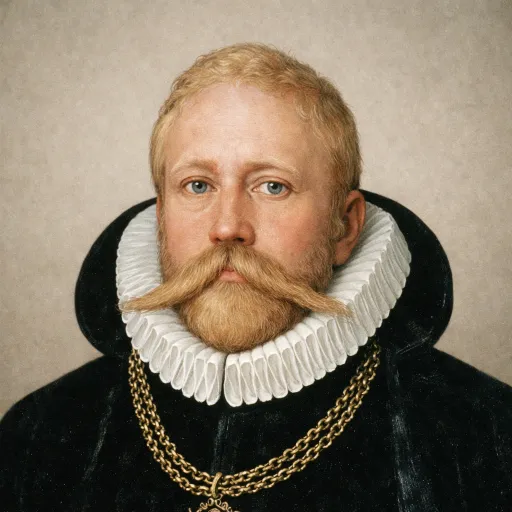
Tycho Brahe portrait

🧐 Did you know?

Tycho Brahe possessed an eccentric, quarrelsome, and arrogant character that matched his scientific genius. During his university years in Rostock, he fought a sword duel with another Danish nobleman over a mathematical dispute regarding who was the better geometrist, losing the bridge of his nose in the combat; for the rest of his life, Tycho wore a nasal prosthesis crafted from a polished alloy of gold, silver, and bronze that he affixed to his face with special adhesive salves. He kept a dwarf jester named Jeppe in his observatory castle who, according to Tycho, possessed clairvoyant powers, and a domesticated elk that tragically passed away after falling down the stairs of a noble palace after drinking excess beer during a lordly banquet.

🏅 Awards and Honors

Brahe served as Imperial Astronomer of the Holy Roman Empire and was supported by King Frederick II of Denmark and Emperor Rudolf II.

📚 Their name in science

➤ Tychonic system

Cosmological model combining features of the geocentric and heliocentric systems.

❓ Who was Tycho Brahe?

Tycho Brahe was a Danish astronomer, astrologer, and alchemist, unanimously considered the most precise and important astronomical observer of the era preceding the invention of the telescope. Born into one of the most powerful noble families of the Danish aristocracy, he balanced his immense feudal resources with a passionate dedication to systematic recording of celestial positions under the generous patronage of King Frederick II. He possessed a mind of empirical and methodological rigor unprecedented in his time, obsessed with reducing instrumental margins of error through continuous and repeated observations. Brahe did not view the firmament as an immutable sphere subject to traditional philosophical speculations, but as a dynamic laboratory whose movements had to be measured with millimetric precision.

🌍 The world in their time

In the late 16th century, European astronomical tables dragged massive accumulated errors of several geometric degrees in predicting planetary conjunctions. Astronomers conducted sporadic and rudimentary observations, which prevented mathematically validating the Copernican model or drawing reliable analytical star maps for transoceanic navigation.

Become a giant

Your path to becoming a giant of knowledge begins with these top free courses
free astrophysics enigmas course
Free mode

Greatest Unsolved Mysteries of the Universe

free exoplanets course
Free mode

Astrophysics: Exploring Exoplanets

free high-energy universe course
Free mode

Astrophysics: The Violent Universe

free astrophysics enigmas course
Free mode

Greatest Unsolved Mysteries of the Universe

free exoplanets course
Free mode

Astrophysics: Exploring Exoplanets

🔬 Scientific legacy

Tycho Brahe revolutionized astronomy by founding the Uraniborg observatory complex on the island of Hven in 1576, where he designed and built gigantic bronze quadrants and sextants that allowed stellar positions to be measured with an astonishing precision of one arcminute with the naked eye. He discovered the supernova SN 1572 in the constellation Cassiopeia, mathematically proving it lay beyond the Moon and destroying the Aristotelian dogma of the celestial sphere’s immutability. He proved in 1577 that comets cross planetary orbits and formulated the Tychonic model, a hybrid system where the Moon and Sun revolve around the motionless Earth while the other planets orbit the Sun. His final analytical catalog of over a thousand fixed stars set a new international empirical standard.

👣 Footprint in today's world

The legacy of Tycho Brahe forms the empirical and instrumental foundation upon which modern mathematical astronomy and classical nautical navigation were built. His gigantic and precise laboratory notebooks, inherited upon his death by his assistant Johannes Kepler, provided the indispensable analytical material that allowed Kepler to exactly deduce the three laws of planetary motion and prove the elliptical orbits of contemporary celestial mechanics.

🏃‍♂️ The relay race

📥 Taking the baton

The monumental observational breakthroughs of Tycho Brahe built firmly upon the data and classical geometric instruments of Islamic astronomers from Maragheh, combined with Alfonso X’s astronomical calculus tables and heavy metal casting techniques of the era.

📤 Passing the baton

The systematic precision achieved by Tycho Brahe transformed astronomy from a speculative philosophical discipline into an analytical, extreme-precision empirical science. His measurements of lunar and cometary parallax opened the definitive path for Galileo Galilei and Kepler to consolidate the 17th-century Scientific Revolution, proving the inescapable necessity of massive laboratory data in the advancement of universal theoretical physics.

Other giants you will want to get to know

Pierre-Simon Laplace

Pierre-Simon Laplace

1749

 –

1827
The French Newton of celestial mechanics who systematized probability and banished mystical hypotheses.

Nicolaus Copernicus

Nicolaus Copernicus

1473

 –

1543
The Renaissance astronomer who moved the Earth and stopped the Sun to found modern astronomy.
Tycho Brahe

Tycho Brahe

1546

 –

1601
The titan of astronomical observation who measured the sky with the naked eye and immortalized celestial mechanics data.
Galileo Galilei

Galileo Galilei

1564

 –

1642
The father of modern science who aimed his telescope at the heavens and challenged the world defending heliocentrism.
Isaac Newton

Isaac Newton

1643

 –

1727
The supreme genius of the Scientific Revolution who unified the heavens and the Earth under the laws of gravity.

Tools

Scientific calculator

Powered by Desmos

Scientific Dictionary

Powered by Wikipedia

2026 Best Online STEM Education Platform

Cargando clima y ubicación...

To learn and experience

Take your knowledge to the next level with science kits and hands-on tools that connect theory with experimentation

Essential for teachers and students

Learn with the best courses