Generic selectors
Exact matches only
Search in title
Search in content
Post Type Selectors

Robert Wilhelm Bunsen

Robert Wilhelm Bunsen icon
17/07/2026

🗓️

🌱March 30, 1811 – Göttingen, Germany.
🍂August 16, 1899 – Heidelberg, Germany.

🌟 Main Contribution

Robert Bunsen desarrolló el análisis espectroscópico y mejoró técnicas de laboratorio, sentando bases de la química analítica moderna
“El laboratorio es el corazón de la química”
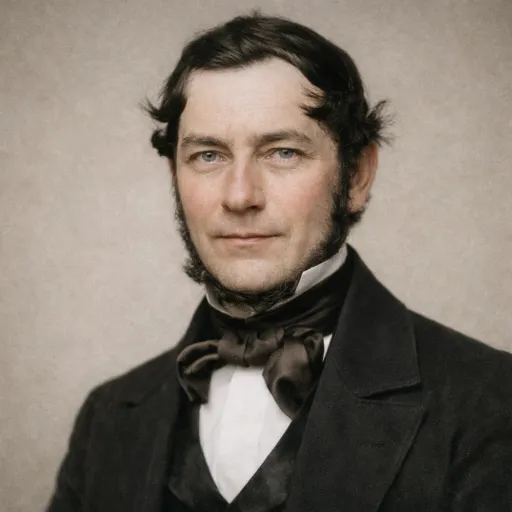
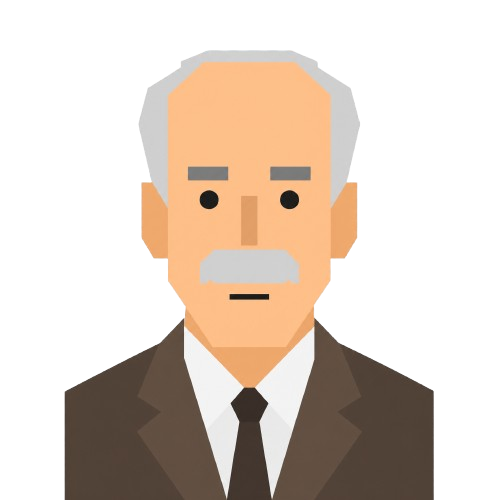
Robert Wilhelm Bunsen portrait

🧐 Did you know?

Robert Wilhelm Bunsen possessed a legendary tenacity and resistance to physical pain among his Heidelberg students. During his initial investigations on cacodyl compounds (highly poisonous and explosive organic arsenic compounds), one of the samples exploded violently in front of his face; the explosion permanently destroyed the vision in his right eye and caused severe burns, yet Bunsen returned to the laboratory a few weeks later to continue purifying the substance, joking that he would now spend only half as much on glasses. He despised commercial bureaucracy so much that he never patented his highly famous burner, proudly stating that his inventions belonged exclusively to humanity.

🏅 Awards and Honors

Bunsen received the Copley Medal (1860) and belonged to several European scientific academies.

📚 Their name in science

➤ Bunsen burner

Gas burner widely used in laboratories.

➤ Bunsen cell

Electrochemical battery developed by Robert Bunsen.

❓ Who was Robert Wilhelm Bunsen?

Robert Wilhelm Bunsen was a German experimental chemist, ranked among the most brilliant and practical laboratory scientists of the 19th century for co-inventing emission spectroscopy. Educated at the University of Göttingen and a celebrated professor at Heidelberg for over three decades, he possessed a mind characterized by exceptional technical pragmatism and an analytical genius devoid of commercial ambitions, seeking to simplify chemical instruments to maximize empirical precision. Bunsen did not view chemistry as abstract speculative theories, but as real physical phenomena that had to be isolated, purified, and identified through fire and light. His unconditional devotion to the laboratory cost him severe physical accidents that he bore with Spartan fortitude.

🌍 The world in their time

In the mid-19th century, analytical chemistry lacked a fast, precise, and universal method to identify chemical elements within complex samples. Traditional wet-chemistry essays required days of laborious precipitation and chemical purification, and were incapable of detecting tiny traces of substances or discovering new stable metallic elements.

Become a giant

Your path to becoming a giant of knowledge begins with these top free courses
free advanced synchrotrons course
Free mode

Synchrotrons and X-Ray Free Electron Lasers (part 1)

free magnetic resonance course
Free mode

Basic Steps in Magnetic Resonance

free analytical chemistry essentials course
Free mode

Basic Analytical Chemistry

free advanced synchrotrons course
Free mode

Synchrotrons and X-Ray Free Electron Lasers (part 1)

free magnetic resonance course
Free mode

Basic Steps in Magnetic Resonance

🔬 Scientific legacy

Robert Wilhelm Bunsen revolutionized science by co-inventing the emission spectroscope with physicist Gustav Kirchhoff in 1859, proving that every heated chemical element emits a unique spectrum of light lines, equivalent to an unmistakable optical fingerprint. Utilizing this pioneering analytical method, he discovered cesium in 1860 and rubidium in 1861. To achieve a perfect, clean, colorless, and smokeless analytical flame that did not interfere with light spectra, he refined the design of the laboratory burner that bears his name (the Bunsen burner) in 1855, regulating the pre-mixing of air and flammable gas. Furthermore, he invented the Bunsen filter pump, the Bunsen carbon-zinc battery, and the ice calorimeter.

👣 Footprint in today's world

The legacy of Robert Wilhelm Bunsen forms the instrumental infrastructure of contemporary chemical laboratories, industrial metallurgy, and astrophysics. The Bunsen burner remains the universal basic heating device used today in millions of schools, universities, and medical research centers across the planet, while his principles of spectroscopic analysis are the technological foundation for current pollution control sensors and space telescopes that analyze the chemical composition of distant stars and planets.

🏃‍♂️ The relay race

📥 Taking the baton

The monumental experimental breakthroughs of Robert Wilhelm Bunsen built firmly upon Joseph von Fraunhofer’s optical studies on dark lines, combined with analytical laws of combustion analysis previously developed by Jöns Jacob Berzelius.

📤 Passing the baton

The invention of spectroscopy achieved by Robert Wilhelm Bunsen and Kirchhoff transformed analytical chemistry into a science of optical precision, enabling the expansion of the periodic table of elements. Their instrumental techniques opened the floodgates for later astronomers to apply chemistry to celestial bodies, effectively founding modern astrophysics and spectrochemistry.

Other giants you will want to get to know

Robert Wilhelm Bunsen

Robert Wilhelm Bunsen

1811

 –

1899
The master of spectroscopic analysis who invented the laboratory burner and deciphered the elements’ fingerprint.
William Henry

William Henry

1774

 –

1836
The physician of gaseous fluids who measured the dissolution of matter and industrialized elastic water chemistry.
John Dalton

John Dalton

1766

 –

1844
The pioneer of modern chemistry who weighed invisible atoms and scientifically described color blindness.
Gilbert Newton Lewis

Gilbert Newton Lewis

1875

 –

1946
The master of the chemical bond who discovered how electrons bind matter together and redefined acids and bases.

Tools

Scientific calculator

Powered by Desmos

Scientific Dictionary

Powered by Wikipedia

2026 Best Online STEM Education Platform

Cargando clima y ubicación...

To learn and experience

Take your knowledge to the next level with science kits and hands-on tools that connect theory with experimentation

Essential for teachers and students

Learn with the best courses