Generic selectors
Exact matches only
Search in title
Search in content
Post Type Selectors

Gilbert Newton Lewis

Gilbert Newton Lewis icon
17/07/2026

🗓️

🌱October 23, 1875 – Weymouth, Massachusetts, United States.
🍂March 23, 1946 – Berkeley, California, United States.

🌟 Main Contribution

Gilbert Lewis formulated the chemical bond theory, introduced electron pairs, and contributed to acid-base theory
“Atoms build nature as bricks build a building”
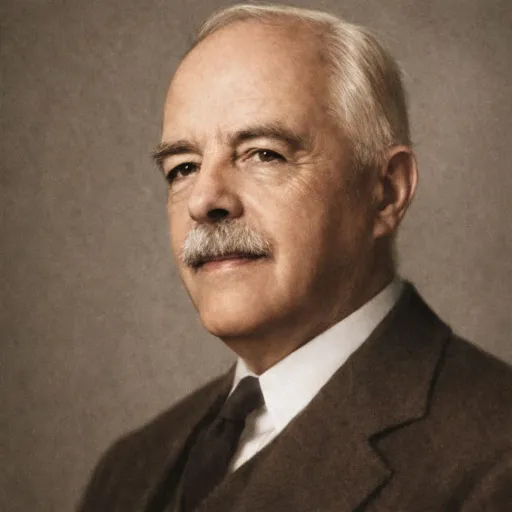
Gilbert Newton Lewis portrait

🧐 Did you know?

Gilbert Newton Lewis holds the bitter historical record of having been nominated 41 times for the Nobel Prize in Chemistry without ever winning it, an exclusion largely due to his sharp personal clashes with influential figures on the committee. Tragically, Lewis passed away alone in his Berkeley laboratory due to cardiac arrest while working with liquid hydrogen cyanide gases, in what many of his colleagues suspected was a suicide after having had lunch that very day with a scientific rival who had just won the Nobel.

🏅 Awards and Honors

Lewis was awarded the Davy Medal of the Royal Society of London in 1929 in recognition of his extraordinary advances in physical chemistry. Additionally, he was honored with the Gibbs Medal of the American Chemical Society in 1924.

📚 Their name in science

➤ Lewis Structure

Graphical representation showing the bonds between the atoms of a molecule and any lone pairs of electrons that may exist, illustrating electron sharing in covalent bonds.

➤ Lewis Acid and Base

Chemical theory defining acids as substances capable of accepting electron pairs, and bases as substances capable of donating them.

❓ Who was Gilbert Newton Lewis?

Gilbert Newton Lewis was an American physical chemist widely ranked among the most influential chemical scientists of the 20th century, celebrated for transforming analytical chemistry into a discipline guided by electron behavior. Possessing an exceptionally brilliant, perfectionist mind alongside a fierce independent character, he trained at Harvard University and spent much of his golden career as dean at the University of California, Berkeley. Lewis held an astonishing capacity to simplify complex concepts through ingenious visual representations. Despite his monumental theoretical contributions, his life was marked by a deep rivalry with academic institutions that unjustly denied him official Nobel Prize recognition.

🌍 The world in their time

In the early 20th century, chemistry lacked a practical atomic model explaining the physical nature of the chemical bond. Scientists did not comprehend how exactly atoms interacted with one another to group together and form stable molecules, keeping the study of matter’s reactivity under empirical formulas lacking a clear quantum explanation.

Become a giant

Your path to becoming a giant of knowledge begins with these top free courses
free biomaterials course
Free mode

Digital Biomaterials

free quantum molecular course
Free mode

Quantum Mechanics of Molecular Structures

free materials capstone course
Free mode

Capstone Exam – Materials for Electronic, Optical, and Magnetic Devices

free biomaterials course
Free mode

Digital Biomaterials

free quantum molecular course
Free mode

Quantum Mechanics of Molecular Structures

🔬 Scientific legacy

Gilbert Newton Lewis revolutionized chemistry by proposing in 1916 that chemical bonds are formed through the sharing of electron pairs between atoms, introducing the celebrated Lewis Structure (electron dot diagrams). He formulated the Octet Rule for atomic stability and, in 1923, redefined the theory of acids and bases, establishing that a Lewis acid is any substance capable of accepting an electron pair and a Lewis base is one that donates them. Furthermore, he coined the modern term “Photon” for the light particle.

👣 Footprint in today's world

The legacy of Gilbert Newton Lewis forms the absolute foundation of contemporary organic chemistry, biochemistry, and materials engineering. His dot diagrams are taught mandatorily in every school across the planet to comprehend molecular structure. His definition of acids and bases governs industrial processes for refinement, synthetic polymer manufacturing, pharmaceutical design, and the understanding of cellular metabolic reactions.

🏃‍♂️ The relay race

📥 Taking the baton

The monumental chemical concepts of Gilbert Newton Lewis developed upon the chemical thermodynamics laws previously formulated by Willard Gibbs, combined with early quantum atomic models and structure of matter studies of the era.

📤 Passing the baton

The pioneering work of Gilbert Newton Lewis regarding valence electrons opened the theoretical floodgates for chemists of the caliber of Linus Pauling to apply advanced quantum mechanics to the chemical bond. His refined thermodynamic insights also enabled Harold Urey to discover deuterium (heavy hydrogen), a chemical milestone essential for nuclear physics.

Other giants you will want to get to know

Robert Boyle

Robert Boyle

1627

 –

1691
The philosopher of the chemical vacuum who banished mystical alchemy and isolated the law of compressible gases.
Dmitri Ivánovich Mendeleyev

Dmitri Ivánovich Mendeleyev

1834

 –

1907
The genius of elements who discovered the hidden order of matter and designed the periodic table.
Robert Wilhelm Bunsen

Robert Wilhelm Bunsen

1811

 –

1899
The master of spectroscopic analysis who invented the laboratory burner and deciphered the elements’ fingerprint.
William Henry

William Henry

1774

 –

1836
The physician of gaseous fluids who measured the dissolution of matter and industrialized elastic water chemistry.
Joseph Louis Gay-Lussac

Joseph Louis Gay-Lussac

1778

 –

1850
The daring chemist who formulated the ideal gas laws and ascended in balloons to measure the atmosphere.

Tools

Scientific calculator

Powered by Desmos

Scientific Dictionary

Powered by Wikipedia

2026 Best Online STEM Education Platform

Cargando clima y ubicación...

To learn and experience

Take your knowledge to the next level with science kits and hands-on tools that connect theory with experimentation

Essential for teachers and students

Learn with the best courses