Generic selectors
Exact matches only
Search in title
Search in content
Post Type Selectors

René Descartes

René Descartes icon
17/07/2026

🗓️

🌱March 31, 1596 – Descartes, France.
🍂February 11, 1650 – Stockholm, Sweden.

🌟 Main Contribution

René Descartes developed analytic geometry and contributed to classical mechanics and the study of optics
“Pienso, luego existo”
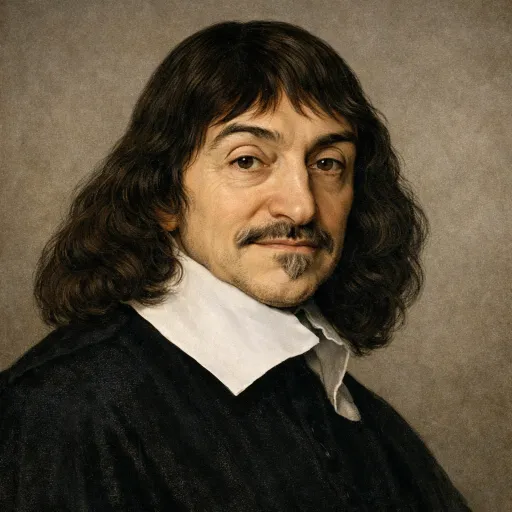
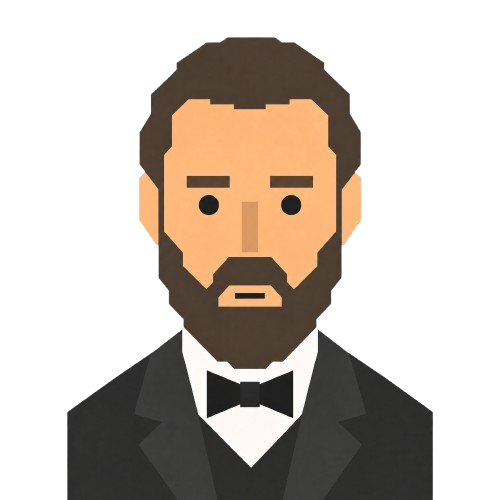
René Descartes portrait

🧐 Did you know?

René Descartes possessed delicate health from childhood, which led him to acquire the lifelong habit of remaining in bed resting and meditating in silence until ten o’clock in the morning with the permission of his Jesuit teachers. When Queen Christina of Sweden hired him as her personal philosophical tutor in 1649, she forced him to deliver his lessons in the freezing Stockholm library at five o’clock in the morning in the middle of the Scandinavian winter; this drastic shift in habits rapidly broke the French philosopher’s lungs, causing a fatal pneumonia a few months later.

🏅 Awards and Honors

He was recognized as one of the founders of modern philosophy and analytic geometry. He was invited by Queen Christina of Sweden to her court as her philosophy tutor.

📚 Their name in science

➤ Cartesian coordinates

Coordinate system used to locate points in a plane or space.

➤ Cartesian product

Fundamental set operation widely used in mathematics and computer science.

➤ Cartesian oval

Algebraic curve introduced by René Descartes.

❓ Who was René Descartes?

René Descartes was a French philosopher, mathematician, and physicist, universally considered the father of modern philosophy and the founder of analytical geometry for unifying algebra and spatial geometry. Educated by the Jesuits at the Collège de La Flèche and graduated in law from the University of Poitiers, he led an itinerant life as a soldier and thinker across Europe before settling in the Netherlands to draft his work. He possessed a mind endowed with a radical methodological skepticism and an absolute love for deductive clarity, seeking to reconstruct all human knowledge upon indubitable foundations like those of mathematics. Descartes did not view knowledge as an accumulation of scholastic dogmas, but as a logical structure governed by pure reason.


🌍 The world in their time

In the early 17th century, European mathematics operated as two separate and stagnant disciplines. Geometry depended on classical visual constructions inherited from the Greeks, while algebra was a catalog of abstract numerical rules without spatial representation, which limited the development of physical calculus and structural analysis.

Become a giant

Your path to becoming a giant of knowledge begins with these top free courses
free quantum optomechanics course
Free mode

Cavity Quantum Optomechanics

free advanced nanophotonic course
Free mode

Nanophotonic Modeling

free materials capstone course
Free mode

Capstone Exam – Materials for Electronic, Optical, and Magnetic Devices

free quantum optomechanics course
Free mode

Cavity Quantum Optomechanics

free advanced nanophotonic course
Free mode

Nanophotonic Modeling

🔬 Scientific legacy

René Descartes revolutionized science by publishing his appendix *La Géométrie* in 1637 alongside his famous *Discourse on the Method*, where he invented analytical geometry and introduced the Cartesian coordinate system. He achieved the fundamental milestone of associating algebraic equations with geometric curves in space, allowing geometric problems to be solved through purely algebraic calculation. He introduced the use of the last letters of the alphabet ($x, y, z$) for unknown variables and the first letters ($a, b, c$) for constants, as well as modern exponential notation. In physics, he pioneered the law of light refraction (Snell-Descartes Law) and conceptually formulated the principle of mechanical inertia.

👣 Footprint in today's world

The legacy of René Descartes forms the mathematical and instrumental foundation of contemporary architectural design, structural engineering, theoretical physics, and computer science. His Cartesian coordinate system is the universal spatial structure used today across the planet for computer-aided design (CAD), the technical operation of three-dimensional video game graphics engines, industrial robotics programming, and spatial analysis via geographic information systems (GIS).

🏃‍♂️ The relay race

📥 Taking the baton

The monumental algebraic breakthroughs of René Descartes built upon François Viète’s symbolic algebra, combined with the classical geometric principles of Euclid and Apollonius of Perge.

📤 Passing the baton

The mathematical unification achieved by René Descartes provided the indispensable analytical tool for Isaac Newton and Gottfried Leibniz to develop infinitesimal calculus. His rational, deductive method permanently transformed Western epistemology, opening the theoretical floodgates of the Enlightenment and laying the methodological foundations of the modern Scientific Revolution.

Other giants you will want to get to know

Gottfried Wilhelm Leibniz

Gottfried Wilhelm Leibniz

1646

 –

1716
The universal genius who co-invented infinitesimal calculus and designed the binary system that powers computers.
Augustin-Louis Cauchy

Augustin-Louis Cauchy

1789

 –

1857
The structural master who brought absolute logical rigor to mathematical analysis.
Johannes Kepler

Johannes Kepler

1571

 –

1630
The mathematical astronomer who shattered celestial geometric perfection by discovering the elliptical orbits of planets.
Christiaan Huygens

Christiaan Huygens

1629

 –

1695
The architect of the optical wavefront who invented the pendulum clock and unveiled the hidden rings of Saturn.
René Descartes

René Descartes

1596

 –

1650
The architect of analytical geometry who unified algebra with space and established the rational method.

Tools

Scientific calculator

Powered by Desmos

Scientific Dictionary

Powered by Wikipedia

2026 Best Online STEM Education Platform

Cargando clima y ubicación...

To learn and experience

Take your knowledge to the next level with science kits and hands-on tools that connect theory with experimentation

Essential for teachers and students

Learn with the best courses