

Generic selectors
Exact matches only
Search in title
Search in content
Post Type Selectors

Alkane Hydrocarbons. Nomenclature and formulation

31/03/2026

The online 3D alkane hydrocarbon molecules of this page visualize through 3D images of the molecules of some of the most important hydrocarbons of this type: methane, ethane, propane and butane. We will discover what are alkane hydrocarbons, how is their nomenclature and formulation, as well as their presence in nature and their applications

What are alkane hydrocarbons

Alkane hydrocarbons are a class of fundamental organic compounds consisting of carbon and hydrogen atoms only. They are known as saturated hydrocarbons because all the bonds between the carbon atoms are single, meaning that they are saturated with hydrogen atoms.

Nomenclature and formulation of alkane hydrocarbons

These compounds are named according to the number of carbon atoms present in their molecule. For example, methane has only one carbon atom, ethane has two carbon atoms, propane has three carbon atoms and so on.

Their chemical structure is based on a linear or branched carbon chain, where hydrogen atoms are linked to carbon atoms by single bonds. The general formula for alkanes is CnH2n+2, where “n” represents the number of carbon atoms.

Presence of alkane hydrocarbons in nature

Alkanes can be found in different states of matter, from gases such as methane to liquids such as pentane and hexane, and even solids such as heptane.  Alkane hydrocarbons are widely found in nature, forming a major part of natural gas deposits, where short-chain hydrocarbons such as methane, ethane, propane and butane predominate. Long-chain alkanes are mainly present in petroleum. They are also generated biologically in oxygen-depleted environments, such as swamps or the seabed, where methane is produced by bacteria. They can also be found in small quantities in living organisms, as part of plant waxes and certain oils. This diversity of origins underlines the relevance of alkanes both industrially and ecologically.

Applications of alkane hydrocarbons

Alkanes are widely used as fuels. Natural gas, which contains mainly methane, is an important energy source used for heating, electricity generation and as a fuel in vehicles. Gasoline, which is a mixture of hydrocarbons, also contains alkanes, such as heptane and octane, which provide energy for internal combustion engines.

In addition to their use as fuels, alkanes have applications in the petrochemical industry. They are used as feedstock for the production of plastics, such as polyethylene and polypropylene, as well as for the manufacture of chemicals, lubricants, solvents and detergents.

In summary, these online 3D alkane hydrocarbon molecules give you a visualization of the molecules that will undoubtedly help you to better understand these important chemical compounds. Don’t miss them!

Explore the exciting STEM world with our free, online, simulations and accompanying companion courses! With them you’ll be able to experience and learn hands-on. Take this opportunity to immerse yourself in virtual experiences while advancing your education – awaken your scientific curiosity and discover all that the STEM world has to offer!

3D alkane hydrocarbon molecules

Methane


Methane is the simplest alkane hydrocarbon, whose chemical formula is CH4. Each of the hydrogen atoms is bonded to carbon by a covalent bond. It is a non-polar substance that occurs as a gas at ordinary temperatures and pressures. It is colorless, odorless and insoluble in water.


Methane
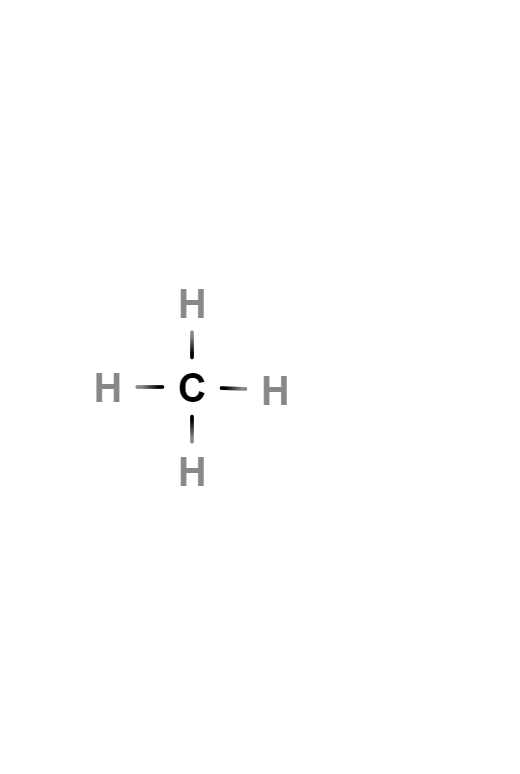

CH4
Metano
SingleBondSingle bond
DoubleBond
Double bond
TripleBondTriple bond
WedgeBond
Wedge bond
HashBond
Hash bond

Ethane


Ethane is an aliphatic alkane hydrocarbon with two carbon atoms, formula C2H6. Under normal conditions it is gaseous and an excellent fuel. Its boiling point is -88 °C. It is found in appreciable quantities in natural gas.


Ethane
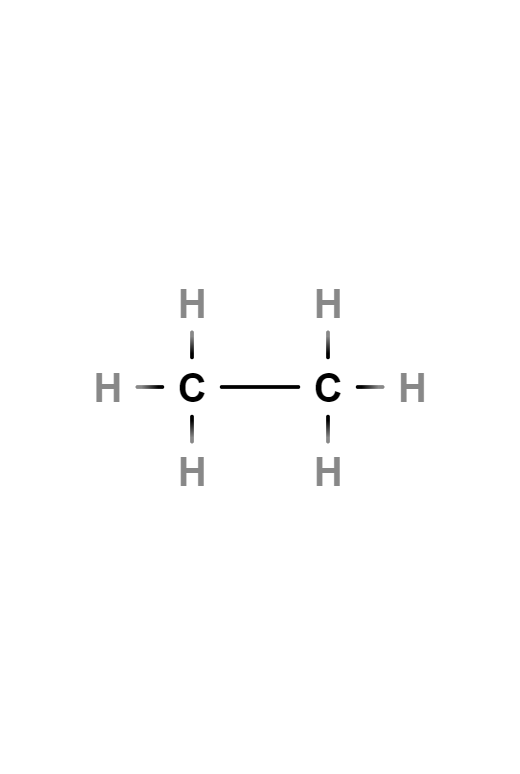

C2H6
Metano
SingleBondSingle bond
DoubleBond
Double bond
TripleBondTriple bond
WedgeBond
Wedge bond
HashBond
Hash bond

Propane


Propane is a colorless, odorless gas. It belongs to the aliphatic hydrocarbons with carbon single bonds, known as alkanes. Its chemical formula is C3H8.


Propane
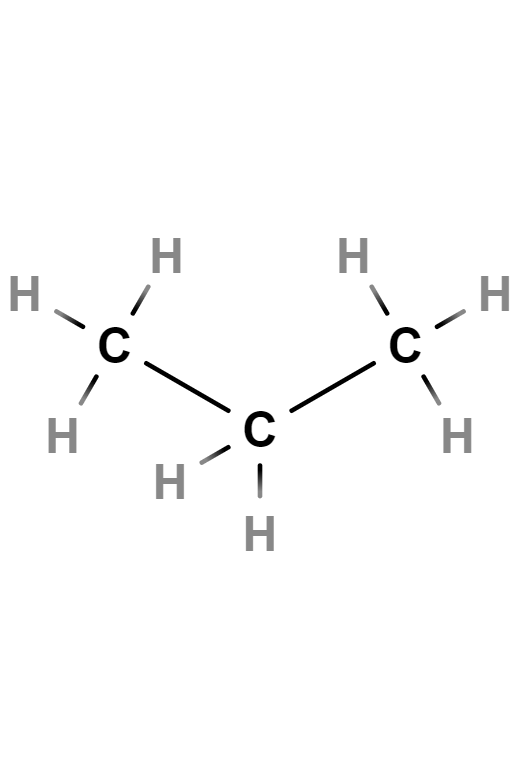

C3H8
Metano
SingleBondSingle bond
DoubleBond
Double bond
TripleBondTriple bond
WedgeBond
Wedge bond
HashBond
Hash bond

Butane


Butane, also called n-butane, is a saturated, paraffinic or aliphatic, flammable, gaseous hydrocarbon that liquefies at atmospheric pressure at -0.5 °C, consisting of four carbon atoms and ten hydrogen atoms, whose chemical formula is C4H10. An isomer of this gas can also be called by the same name: isobutane or methylpropane.


Butane
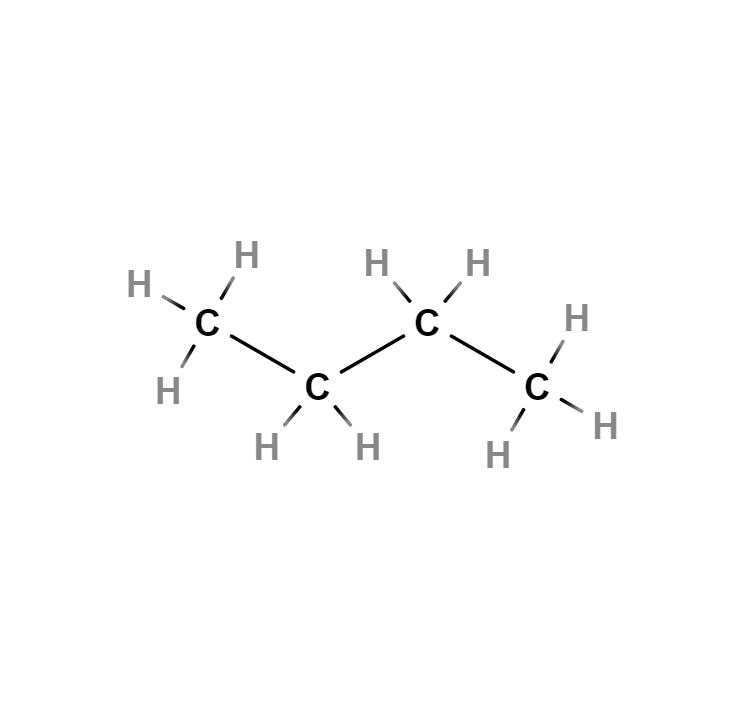

C4H10
Metano
SingleBondSingle bond
DoubleBond
Double bond
TripleBondTriple bond
WedgeBond
Wedge bond
HashBond
Hash bond

Covalent hydrocarbon bonds


This simulation allows us to build hydrocarbon molecules by combining carbon and hydrogen atoms.


“If I have seen further, it is by standing on the shoulders of giants”

Isaac Newton

Your path to becoming a giant of knowledge begins with these top free courses

Test your knowledge

Alkane hydrocarbons are organic compounds composed exclusively of carbon and hydrogen atoms. They are characterized by having only single bonds between carbon atoms, which makes them saturated hydrocarbons. Their structure is based on carbon chains that may be linear or branched, where each carbon atom bonds to others through single bonds and completes its valence with hydrogen atoms. The general formula of alkanes is CnH2n+2 , where “n” represents the number of carbon atoms. These compounds are essential in organic chemistry because they serve as the basis for understanding more complex structures and fundamental reactions. Their chemical stability and abundance in nature make them key substances in industrial, energy and environmental processes.

The nomenclature of alkanes is based on the number of carbon atoms in the molecule. Each number corresponds to a specific prefix: meth‑ (1), eth‑ (2), prop‑ (3), but‑ (4), pent‑ (5), hex‑ (6), hept‑ (7), oct‑ (8), non‑ (9) and dec‑ (10). These prefixes are combined with the suffix “‑ane,” characteristic of alkanes. For example, methane is CH4, ethane is C2H6 and propane is C3H8. The general formula of alkanes is CnH2n+2, reflecting that each carbon atom is saturated with hydrogens. This nomenclature allows quick identification of the compound’s structure and composition. Alkanes may also have linear or branched chains, giving rise to structural isomers with slightly different physical properties.
Alkanes are found in many places in nature. Short‑chain alkanes such as methane, ethane, propane and butane make up much of natural gas. Longer‑chain alkanes appear mainly in petroleum. They are also produced in oxygen‑poor environments, such as swamps or the seafloor, where certain bacteria generate methane. They even occur in small amounts in living organisms as components of waxes and oils. They are important because they are a key energy source and serve as raw materials for fuels and chemical products.
Alkanes are used mainly as fuels. Natural gas, rich in methane, is used for heating, cooking and generating electricity. Gasoline contains alkanes such as heptane and octane, which provide energy for engines. Alkanes are also essential in the petrochemical industry, where they are transformed into plastics such as polyethylene and polypropylene. They are used to manufacture lubricants, solvents and detergents. Their abundance and stability make them highly versatile compounds.
Alkanes are useful because they are stable, abundant and easy to obtain from natural gas and petroleum. Their combustion releases large amounts of energy, making them excellent fuels. Their simple structure allows them to be chemically transformed into plastics, waxes, oils and other industrial compounds. They are also good solvents and are used in processes requiring low reactivity. These properties make them essential in energy, transportation and materials manufacturing.

You may also be interested

Cargando clima y ubicación...

You may also be interested