
RLC Circuits. Operation, Analysis and Applications
The online RLC circuit simulations on this page allow you to interactively explore how circuits combining resistors, coils and inductors behave. By analysing phenomena such as resonance, filters and LC oscillation, these tools make it easier to understand fundamental concepts of electronics and their practical applications in electrical systems and modern devices.
This Thematic Unit is part of our Physics collection

STEM OnLine mini dictionary
Alternating Current
Type of electric current in which charges periodically change direction.
Impedance
Total opposition a circuit offers to the flow of alternating current; it combines resistance and reactances, measured in Ohms (Ω).
Phase Angle
Time or angular difference between the voltage and current peaks in an alternating current circuit.
Reactance
Opposition to the flow of alternating current due to inductance or capacitance, causing a phase shift between voltage and intensity.
Resonance
Phenomenon that occurs when inductive and capacitive reactances cancel each other out, allowing the current to reach its maximum value.
Resonant Frequency
Specific frequency at which the circuit enters resonance, determined by the inductance (L) and capacitance (C) values.
RLC Circuit
Electrical system consisting of a resistor (R), a coil or inductor (L), and a capacitor (C) connected to each other.
What is an RLC circuit
An RLC circuit is an electrical system made up of resistors, coils or inductors, and capacitors connected together. These circuits can operate with both direct current and alternating current, although their most interesting behaviour is observed with AC, where phenomena such as resonance and phase shift between current and voltage appear. With DC, the circuit mainly shows transient charge and discharge phenomena, which help to understand how resistance, inductance and capacitance interact. RLC circuits are fundamental for studying oscillating systems and are widely used in electronics, telecommunications and other technological fields.
Operation of RLC circuits
The operation of an RLC circuit depends on the interaction between resistance, inductance and capacitance, especially when alternating current is applied. These three elements determine how the current flows, how energy is stored and released, and how the circuit responds to different frequencies. In addition, they allow the appearance of phenomena such as resonance and damping of oscillations, concepts fundamental to understanding their behaviour in electronics and telecommunications.
Fundamental parameters
RLC circuits are made up of three essential elements: resistance (R), inductance (L) and capacitance (C). The resistance limits the current intensity, dissipating energy as heat. The inductance, associated with the coil, generates a magnetic field and causes a delay in the current’s response to voltage changes. The capacitance, provided by the capacitor, allows electrical energy to be stored and released later, also affecting the phase shift between current and voltage. The interaction of these three parameters determines the overall behaviour of the circuit when faced with alternating current signals.
Resonance in RLC circuits
Resonance occurs when the frequency of the applied signal coincides with the natural frequency of the circuit, causing the amplitude of the current to reach its maximum value. At this point, the inductive and capacitive reactance cancel each other out, leaving only resistance as opposition to the passage of current. The resonance frequency depends on the values of L and C and is a key concept for designing filters, oscillators and tuning systems in electronics.
Behaviour with alternating current
When an RLC circuit is connected to an alternating current source, the current and voltage are not always in phase due to the presence of inductance and capacitance. The phase difference depends on the signal frequency and the values of the components. The total impedance of the circuit combines the resistance with inductive and capacitive reactances, determining both the amplitude of the current and its phase shift. This behaviour is fundamental for analysing the response of electrical systems to different frequencies.
Types of RLC circuits
There are mainly three configurations: series, parallel and combined. In a series RLC circuit, the components are connected one after another, sharing the same current but with varying voltage across each element. In a parallel RLC, the components are connected between two common points, sharing the same voltage and with individual currents in each branch. Combined circuits show mixed characteristics. Each type has specific applications: series circuits are used in simple filters and oscillators, while parallel ones are employed in tuners and frequency selection systems.
Applications of RLC circuits
RLC circuits are widely used in electronics and telecommunications due to their ability to filter, tune and temporarily store energy. They are used in frequency filters, oscillators, resonant circuits for radio and television, and control systems where it is necessary to adjust the response to specific alternating signals. Understanding these applications allows you to connect theory with practical uses in real life and modern technological devices.

STEM OnLine mini dictionary
Alternating Current
Type of electric current in which charges periodically change direction.
Impedance
Total opposition a circuit offers to the flow of alternating current; it combines resistance and reactances, measured in Ohms (Ω).
Phase Angle
Time or angular difference between the voltage and current peaks in an alternating current circuit.
Reactance
Opposition to the flow of alternating current due to inductance or capacitance, causing a phase shift between voltage and intensity.
Resonance
Phenomenon that occurs when inductive and capacitive reactances cancel each other out, allowing the current to reach its maximum value.
Resonant Frequency
Specific frequency at which the circuit enters resonance, determined by the inductance (L) and capacitance (C) values.
RLC Circuit
Electrical system consisting of a resistor (R), a coil or inductor (L), and a capacitor (C) connected to each other.
Explore the exciting STEM world with our free, online, simulations and accompanying companion courses! With them you’ll be able to experience and learn hands-on. Take this opportunity to immerse yourself in virtual experiences while advancing your education – awaken your scientific curiosity and discover all that the STEM world has to offer!
RLC circuit simulations
AC circuit construction basic kit
This simulation allows you to build alternating current electrical circuits with resistors, coils and inductors, exploring how these components interact and affect the circuit’s behaviour. It allows you to experiment with different configurations and observe real-time magnitudes such as current and voltage.

Combination of inductor and capacitor in alternating current I
This simulation allows you to observe how an inductor and a capacitor interact within an alternating current circuit. The inductor behaves as a resistance that depends on the frequency of the signal, while the capacitor enables the flow of alternating current through charging and discharging processes. It is useful for studying the relationship between inductance, capacitance, and frequency in RLC circuits.

Combination of inductor and capacitor in alternating current II
In this simulation, the behaviour of inductors and capacitors in high-frequency alternating current circuits is explored in greater depth. It can be observed that alternating current has difficulty passing through the inductor at high frequencies, whereas the capacitor allows the passage of alternating current through charging and discharging processes. This simulation is useful for studying the relationship between inductance, capacitance and frequency in RLC circuits.
Series RLC circuit
This simulation allows you to explore a series circuit made up of a resistor, a coil and a capacitor. You can observe how current and voltage vary in each component, how resonance occurs and how the circuit behaves at different frequencies. It is an excellent tool for practically understanding the principles of series RLC circuits.
LC Filter
This simulation allows you to analyse how an LC filter, made up of an inductor and a capacitor, acts on signals of different frequencies. It is useful for understanding how high-pass, low-pass or band-pass filters are designed and how RLC circuits are practically applied to control electrical signals.
AC RLC Circuit
This simulation is used to explore the resonance frequency of an RLC circuit by changing the frequency until the maximum voltage is obtained across the resistor. In this simulation, you can observe the effect of frequency on the voltages in a series circuit containing a resistor, a capacitor and a coil. You can change the value of these components, as well as the frequency of the generator. Check the graph that appears below the circuit.
When you are ready to begin, press the “Begin” button.

Giants of science
“If I have seen further, it is by standing on the shoulders of giants”
Isaac Newton
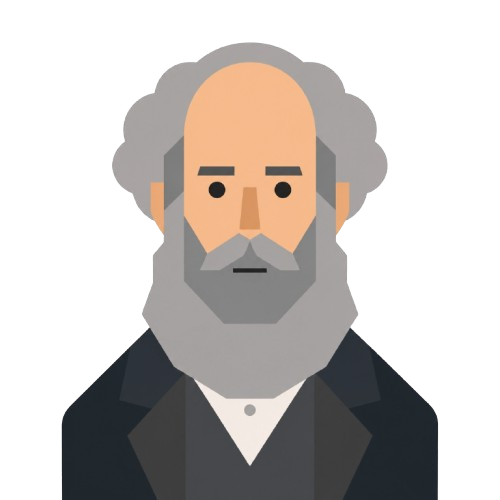
Michael Faraday
–
James Clerk Maxwell
–
Become a giant
Principles of Modeling, Simulations, and Control for Electric Energy Systems
Principles of Electric Circuits | 电路原理
Electrotechnique I
Electromagnetic Compatibility Essentials
Pre-University Physics
AP® Physics 1 – Part 4: Exam Prep
AP® Physics 2: Challenging Concepts
AP® Physics 1: Challenging Concepts
Professional development for Educators
Teach computing: Introducing physical computing
Teach kids computing: Developing your programming pedagogy
Teach teens computing: Computer networks
Teach teens computing: Databases and SQL
Giants of science
“If I have seen further, it is by standing on the shoulders of giants”
Isaac Newton
André-Marie Ampère
–
James Clerk Maxwell
–
Become a giant
Principles of Modeling, Simulations, and Control for Electric Energy Systems
Principles of Electric Circuits | 电路原理
Electrotechnique I
Electromagnetic Compatibility Essentials
AP® Physics 1: Challenging Concepts
Circuits for Beginners
The Basics of Transport Phenomena
AP® Physics 1 – Part 4: Exam Prep
Professional development for Educators
HP AI Teacher Academy
Teach teens computing: Object-oriented Programming in Python
Teach kids computing: Developing your programming pedagogy
Teach teens computing: Machine learning and AI
Test your knowledge
What is an RLC circuit, and why is it essential for studying oscillating systems?
How do resistance, inductance and capacitance interact in an RLC circuit, and what characteristic phenomena do they produce?
What happens in an RLC circuit when it is connected to alternating current?
What is resonance in an RLC circuit, and why is it important?
What are RLC circuits used for in everyday technology?
You may also be interested
Last simulations
To learn and experience
Take your knowledge to the next level with science kits and hands-on tools that connect theory with experimentation
Digital multimeter

Teachers essentials
Notion
Organize your notes, tasks, and projects in one place. Notion combines notes, lists, and calendars in one flexible space.
Canva
Design presentations, diagrams, and infographics with easy-to-use templates and professional results
Genially
Create interactive content, presentations, and educational games in a simple and visual way
Desmos
The most intuitive graphing calculator to explore mathematics and create dynamic classroom activities
Tinkercad
Design in 3D and simulate electronic circuits for free; it’s the perfect tool for simple robotics projects
Your Infinite Library
Enjoy the freedom to explore millions of titles and a curated selection of magazines on any device
Join Prime for students and young adults
The best series. Millions of songs. All included with your subscription.

Science made fun
Learn with the best courses
edX
Online courses from leading universities and companies. Learn practical skills and earn professional certifications

Coursera
Courses from leading universities and companies. Learn practical skills and earn professional certifications
Udemy
Thousands of online courses tailored to your level. Learn at your own pace with expert instructors