Generic selectors
Exact matches only
Search in title
Search in content
Post Type Selectors

René Just Haüy

René Just Haüy icon
17/07/2026

🗓️

🌱February 28, 1743 – Saint-Just-en-Chaussée, France.
🍂June 1, 1822 – Paris, France.

🌟 Main Contribution

René Just Haüy established the foundations of modern crystallography, showing that crystals have regular forms derived from an ordered internal structure. He founded crystallographic mineralogy
“Crystals reveal to us the secret geometry of nature”
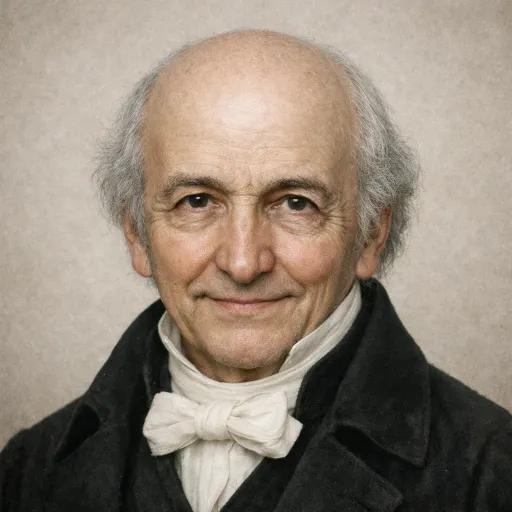
René Just Haüy portrait

🧐 Did you know?

René Just Haüy made his most revolutionary discovery accidentally while examining a valuable prismatic calcite crystal belonging to his friend de l’Croy’s collection. Due to a careless slip, the crystal fell to the floor and shattered into pieces; picking up the fragments in distress, Haüy observed with mathematical astonishment that the fractures were not irregular, but that each broken fragment showed perfectly flat faces reproducing exactly the geometry of a regular rhombohedron, leading him to exclaim “”Everything is found!”” and to begin deliberately breaking his own crystals to extract their geometric nuclei.

🏅 Awards and Honors

Haüy received the Legion of Honour and was a member of the French Academy of Sciences. He is regarded as the founder of modern crystallography.

📚 Their name in science

➤ Haüy’s law

Crystallographic law describing the regular arrangement of crystal building blocks.

Ad

❓ Who was René Just Haüy?

René Just Haüy was a French Catholic priest, physicist, and mineralogist, unanimously recognized as the father of modern crystallography for discovering that the external shape of crystals reflects an ordered, geometric internal structure. Educated at the Collège de Navarre in Paris and professor at the National Museum of Natural History, he possessed a mind endowed with extraordinary three-dimensional intuition and absolute taxonomic rigor, capable of finding precise mathematical laws within the whimsical shapes of minerals. Haüy did not view mineralogy as a chaotic catalog of curious stones described by external color or texture, but as an exact science governed by the geometric repetition of identical molecular units in three-dimensional space.

🌍 The world in their time

In the late 18th century, the study of minerals lacked a rigorous scientific and instrumental foundation. Naturalists classified crystals arbitrarily according to their irregular external appearance, completely unaware of why the same chemical substance could crystallize into multiple external geometric shapes or what internal laws regulated mineral cleavage.

Become a giant

Your path to becoming a giant of knowledge begins with these top free courses
free Antarctic geology course
Free mode

Antarctica: From Geology to Human History

free unconventional reservoir geomechanics course
Free mode

Unconventional Reservoir Geomechanics

free sustainable mining course
Free mode

Minerals and Mining in a Sustainable World

free Antarctic geology course
Free mode

Antarctica: From Geology to Human History

free unconventional reservoir geomechanics course
Free mode

Unconventional Reservoir Geomechanics

🔬 Scientific legacy

René Just Haüy revolutionized science by formulating the Law of Rational Intercepts in 1784 (known as Haüy’s Law), proving mathematically that all crystals are formed by the three-dimensional repetition of tiny identical blocks he termed “”integrant molecules”” (today called unit cells). He discovered the principle of crystalline symmetry by demonstrating that crystal faces develop by intersecting spatial axes in proportions of simple whole numbers. He pioneered the geometric concept of “”decrement”” to explain how complex shapes like dodecahedra or octahedra can originate externally from an internal cubic nucleus, and made monumental contributions to mineral classification based on mechanical properties of cleavage and pyroelectricity.

👣 Footprint in today's world

The legacy of René Just Haüy forms the scientific, instrumental, and industrial foundation of contemporary X-ray crystallography, materials science, and mineralogy. His law of molecular symmetry is the theoretical bedrock used today by chemists, geologists, and metallurgists across the planet to classify crystalline structures via computational software, design new advanced ceramic materials, understand semiconductor conductivity in microchips, and analyze the atomic purity of metallic alloys in the automotive and aerospace industries.

🏃‍♂️ The relay race

📥 Taking the baton

The monumental geometric breakthroughs of René Just Haüy built firmly upon Romé de l’Isle’s previous crystallographic observations regarding the constancy of interfacial angles and classical polyhedral geometric laws developed by Leonhard Euler.

📤 Passing the baton

The molecular ordering achieved by René Just Haüy transformed mineralogy into an exact mathematical and physical discipline, banishing merely descriptive classifications from classical natural history. His models of repeating three-dimensional cells brilliantly anticipated Bravais’s 19th-century space lattice theory and opened the direct path for later scientists to decipher the intimate atomic structure of matter through diffraction.

Other giants you will want to get to know

Alfred Lothar Wegener

Alfred Lothar Wegener

1880

 –

1930
The daring meteorologist who discovered that the continents are in constant motion.
René Just Haüy

René Just Haüy

1743

 –

1822
The father of geometric crystallography who discovered the internal symmetry laws of decapitated minerals.
Charles Lyell

Charles Lyell

1797

 –

1875
The architect of modern geology who proved that the Earth was sculpted by slow, gradual changes.
James Hutton

James Hutton

1726

 –

1797
The father of modern geology who discovered deep time and shattered the catastrophist myths of the Earth.
Alexander von Humboldt

Alexander von Humboldt

1769

 –

1859
The visionary naturalist who conceived nature as an interconnected global web.

Tools

Scientific calculator

Powered by Desmos

Scientific Dictionary

Powered by Wikipedia

2026 Best Online STEM Education Platform

Cargando clima y ubicación...

To learn and experience

Take your knowledge to the next level with science kits and hands-on tools that connect theory with experimentation

Essential for teachers and students

Learn with the best courses