Generic selectors
Exact matches only
Search in title
Search in content
Post Type Selectors

Alexander von Humboldt

Alexander von Humboldt icon
17/07/2026

🗓️

🌱September 14, 1769 – Berlin, Germany.
🍂May 6, 1859 – Berlin, Germany.

🌟 Main Contribution

Alexander von Humboldt integrated geology, climate, and biology observations to found modern geography, showing the connections between nature, climate, and life
“Nature is a living whole of interconnected forces”
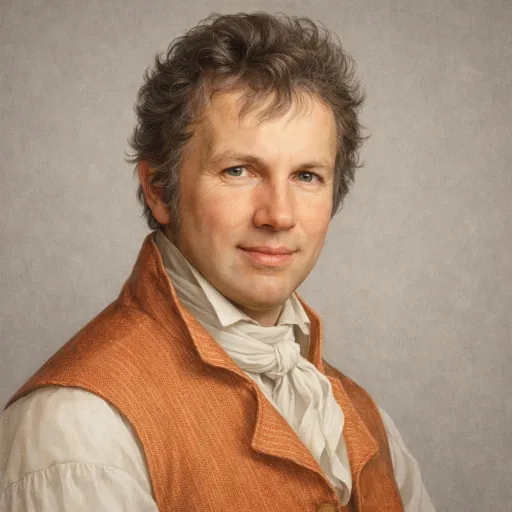
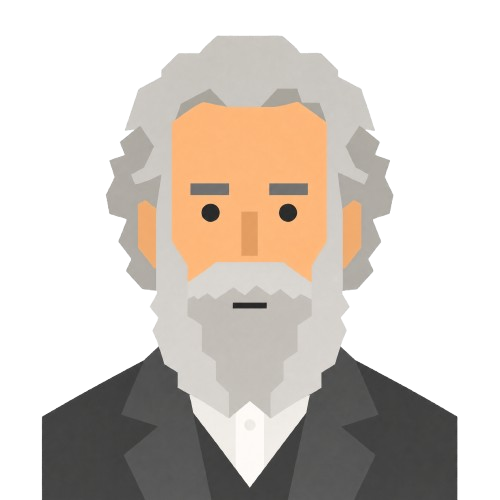
Alexander von Humboldt portrait

🧐 Did you know?

Alexander von Humboldt was incredibly daring during his field research, frequently using his own body as a laboratory instrument to study electricity. In South America, he experimented on himself with electric eels, enduring intense shocks to measure their current, and climbed to altitudes never before reached by European explorers, all while continuously recording precise barometric data.

🏅 Awards and Honors

Humboldt accumulated the highest academic honors of his era, being elected a Member of the Prussian Academy of Sciences, the French Academy of Sciences (1810), and a Fellow of the Royal Society of London (1815). His research career was capped with the prestigious Copley Medal in 1852.

Ad

❓ Who was Alexander von Humboldt?

Alexander von Humboldt was a German naturalist, explorer, and geographer whose massive scientific expeditions redefined empirical research. Born into a wealthy Prussian family, he chose to risk his life and fortune exploring the deep wilderness of the Americas and Central Asia. His meticulous measurements and holistic perspective allowed him to bridge various scientific disciplines, creating a comprehensive view of the natural world. He spent his final decades compiling his monumental work, Kosmos, which sought to unite all branches of scientific knowledge into a single cohesive narrative.

🌍 The world in their time

During the late 18th century, science was highly fragmented, with scholars focusing strictly on classifying isolated species or cataloging independent geological formations. There was a profound lack of understanding regarding how climate, geography, flora, and fauna influenced one another, leaving nature viewed as a static assortment of parts rather than a living system.

Become a giant

Your path to becoming a giant of knowledge begins with these top free courses
free advanced SAR course
Free mode

Synthetic Aperture Radar: Hazards

free sustainable energy course
Free mode

Energy Within Environmental Constraints

free climate modeling course
Free mode

Modeling Climate Change

free advanced SAR course
Free mode

Synthetic Aperture Radar: Hazards

free sustainable energy course
Free mode

Energy Within Environmental Constraints

🔬 Scientific legacy

Alexander von Humboldt pioneered the field of biogeography by demonstrating that nature is a complex, interconnected web of life where everything is linked. Through his detailed study of the Chimborazo volcano, he mapped how vegetation shifts predictably with altitude and climate, inventing isotherms (lines of equal temperature) to compare global climate zones and identifying the foundational principles of human-induced climate change.

👣 Footprint in today's world

Alexander von Humboldt laid the foundational ideas for modern ecology and environmental awareness. His holistic view directly inspired the creation of national parks and international conservation efforts. Today, his name is immortalized across the globe, gracing geographic features, cities, parks, and the famous Humboldt Current that runs along the western coast of South America.

🏃‍♂️ The relay race

📥 Taking the baton

The rigorous empirical training of Alexander von Humboldt was shaped by his studies at the Freiberg School of Mining under Abraham Gottlob Werner. He was also deeply inspired by his close friendship with Johann Wolfgang von Goethe, whose romantic yet acute observations of the natural world encouraged Humboldt to seek a deeper unity in science.

📤 Passing the baton

Alexander von Humboldt’s extensive writings ignited a passion for exploration in a young Charles Darwin, who traveled with Humboldt’s books aboard the HMS Beagle. His environmental insights also paved the way for naturalists like John Muir and George Perkins Marsh, who championed the preservation of wild ecosystems based on his systemic principles.

Other giants you will want to get to know

Luke Howard

Luke Howard

1772

 –

1864
The godfather of meteorology who named the clouds and scientifically ordered the chaos of the sky.
James Hutton

James Hutton

1726

 –

1797
The father of modern geology who discovered deep time and shattered the catastrophist myths of the Earth.
Evangelista Torricelli

Evangelista Torricelli

1608

 –

1647
The bold physicist who proved the existence of atmospheric pressure and invented the mercury barometer.
Vilhelm Friman Koren Bjerknes

Vilhelm Friman Koren Bjerknes

1862

 –

1951
The strategist of atmospheric physics who discovered meteorological fronts and founded numerical weather prediction.
Alfred Lothar Wegener

Alfred Lothar Wegener

1880

 –

1930
The daring meteorologist who discovered that the continents are in constant motion.

Tools

Scientific calculator

Powered by Desmos

Scientific Dictionary

Powered by Wikipedia

2026 Best Online STEM Education Platform

Cargando clima y ubicación...

To learn and experience

Take your knowledge to the next level with science kits and hands-on tools that connect theory with experimentation

Essential for teachers and students

Learn with the best courses