Generic selectors
Exact matches only
Search in title
Search in content
Post Type Selectors

James Hutton

James Hutton icon
17/07/2026

🗓️

🌱June 3, 1726 – Edinburgh, Scotland.
🍂March 26, 1797 – Edinburgh, Scotland.

🌟 Main Contribution

James Hutton proposed uniformitarianism, showing that present geological processes explain Earth’s history
“Earth is explained by its own processes”
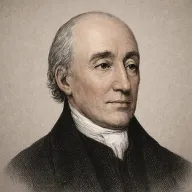
James Hutton portrait

🧐 Did you know?

James Hutton undertook strenuous field trips along the Scottish coasts searching for empirical evidence to validate his theory. In 1788, he discovered at a coastal cliff in Siccar Point a perfect geological unconformity where horizontal layers of sandstone rested upon much older vertical rocks; observing this temporal collision of strata, Hutton remarked to his companions that the human mind grew giddy looking so far into the abyss of time.

🏅 Awards and Honors

Hutton was a founding member of the Royal Society of Edinburgh and is regarded as the father of modern geology.

❓ Who was James Hutton?

James Hutton was a Scottish geologist, physician, chemist, and naturalist, unanimously considered the father of modern geology for establishing that the Earth is much older than was believed in his time. Educated at the universities of Edinburgh and Paris, he was part of the Scottish Enlightenment, an environment of intellectual effervescence where the observation of nature began to take precedence over traditional dogmas. He possessed a mind of infinite patience, capable of reading the history of the planet in rock layers and sea cliffs. Hutton did not view the Earth as a static stage created a few thousand years ago, but as a dynamic system continuously shaped by slow, imperceptible natural forces.

🌍 The world in their time

In the late 18th century, the study of the Earth was dominated by catastrophist theories and religious readings. The scientific community assumed that the planet’s relief had been formed through sudden global floods and brief biblical cataclysms, calculating the Earth’s age to be barely six thousand years, which prevented an understanding of long-term sedimentation and erosion processes.

Become a giant

Your path to becoming a giant of knowledge begins with these top free courses
free Antarctic geology course
Free mode

Antarctica: From Geology to Human History

free unconventional reservoir geomechanics course
Free mode

Unconventional Reservoir Geomechanics

free sustainable mining course
Free mode

Minerals and Mining in a Sustainable World

free Antarctic geology course
Free mode

Antarctica: From Geology to Human History

free unconventional reservoir geomechanics course
Free mode

Unconventional Reservoir Geomechanics

🔬 Scientific legacy

James Hutton revolutionized science by formulating the principle of uniformitarianism in his 1788 work *Theory of the Earth*, coining the idea that the same geological processes acting today are the same ones that shaped the planet in the past. He proved that sedimentary rocks form by the slow accumulation of debris and that igneous rocks originate from the solidification of underground magma. This discovery introduced the scientific concept of “deep time,” a scale of eons that radically expanded our understanding of planetary history.

👣 Footprint in today's world

The legacy of James Hutton forms the conceptual foundation of contemporary Earth sciences and geology. His principles regarding uniformitarianism and stratigraphy allow modern geologists to date fossils, understand the internal mechanisms of plate tectonics, locate mineral resource deposits, and reconstruct historical fluctuations of the global climate through deep rock records.

🏃‍♂️ The relay race

📥 Taking the baton

The monumental geological breakthroughs of James Hutton built firmly upon the chemical studies of his friend Joseph Black, agricultural analyses concerning soil erosion, and previous mineralogical descriptions conducted by European naturalists.

📤 Passing the baton

The introduction of deep time by James Hutton definitively broke with biblical literalism in science, serving as an indispensable pillar for Charles Lyell to develop his principles of geology. His vision of an Earth in constant change over millions of years prepared the intellectual ground for Charles Darwin to formulate the theory of the evolution of species.

Other giants you will want to get to know

René Just Haüy

René Just Haüy

1743

 –

1822
The father of geometric crystallography who discovered the internal symmetry laws of decapitated minerals.
Charles Lyell

Charles Lyell

1797

 –

1875
The architect of modern geology who proved that the Earth was sculpted by slow, gradual changes.
Alfred Lothar Wegener

Alfred Lothar Wegener

1880

 –

1930
The daring meteorologist who discovered that the continents are in constant motion.
James Hutton

James Hutton

1726

 –

1797
The father of modern geology who discovered deep time and shattered the catastrophist myths of the Earth.
Alexander von Humboldt

Alexander von Humboldt

1769

 –

1859
The visionary naturalist who conceived nature as an interconnected global web.

Tools

Scientific calculator

Powered by Desmos

Scientific Dictionary

Powered by Wikipedia

2026 Best Online STEM Education Platform

Cargando clima y ubicación...

To learn and experience

Take your knowledge to the next level with science kits and hands-on tools that connect theory with experimentation

Essential for teachers and students

Learn with the best courses