Generic selectors
Exact matches only
Search in title
Search in content
Post Type Selectors

Peter Higgs

Peter Higgs icon
17/07/2026

🗓️

🌱May 29, 1929 – Newcastle upon Tyne, England.
🍂April 7, 2024 – Edinburgh, Scotland.

🌟 Main Contribution

Peter Higgs proposed the Higgs mechanism, key to explaining how particles acquire mass, culminating in the experimental discovery of the Higgs boson in 2012
“The discovery of the Higgs boson is not mine, it belongs to the entire scientific community.”
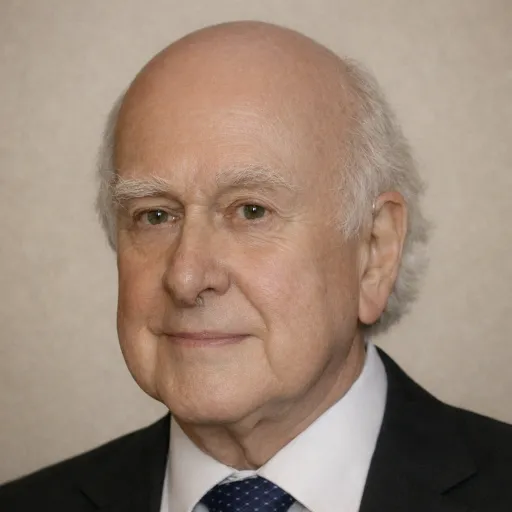
Peter Higgs portrait

🧐 Did you know?

Peter Higgs was a researcher of such absolute technological detachment that he lacked a personal computer, mobile phone, or internet connection at his Edinburgh home, preferring to draft his complex theoretical insights by hand on scrap paper. On the day CERN formally announced the discovery of his boson to the world in Switzerland, Higgs learned of the news while walking quietly down a street in his neighborhood when an old neighbor warmly congratulated him, entirely oblivious to the global digital uproar that had just erupted.

🏅 Awards and Honors

Recibió el Premio Nobel de Física (2013), el Premio Wolf de Física (2004) y la Medalla Copley (2015). Fue miembro de la Royal Society.

📚 Their name in science

➤ Bosón de Higgs

Partícula elemental asociada al mecanismo responsable del origen de la masa.

➤ Campo de Higgs

Campo cuántico responsable del mecanismo de Higgs.

➤ Mecanismo de Higgs

Proceso mediante el cual las partículas elementales adquieren masa.

❓ Who was Peter Higgs?

Peter Higgs was a British theoretical physicist, celebrated for postulating the theoretical mechanism that explains how elementary particles acquire their mass and for predicting the existence of the boson that bears his name. Educated at King’s College London and professor emeritus at the University of Edinburgh, he possessed a mind characterized by extreme academic modesty, deep intellectual shyness, and an absolute rejection of media overexposure. Higgs did not view empty space as absolute nothingness, but as an invisible dynamic medium that continuously interacts with structural matter. His bold inductive approach resolved a crucial riddle of the standard model, guiding experimental physics toward validating the structure of the universe.

🌍 The world in their time

In the early 1960s, the standard model of particle physics presented a catastrophic mathematical fissure. The fundamental equations erroneously predicted that all elementary particles, including electrons and quarks, were completely massless and had to travel through space at the speed of light, a theoretical inconsistency that prevented explaining the formation of atoms and stars.

Become a giant

Your path to becoming a giant of knowledge begins with these top free courses
free quantum computing course
Free mode

Introduction to Quantum Computing for Everyone

free quantum molecular course
Free mode

Quantum Mechanics of Molecular Structures

free quantum sci & tech course
Free mode

Introduction to Quantum Science & Technology

free quantum computing course
Free mode

Introduction to Quantum Computing for Everyone

free quantum molecular course
Free mode

Quantum Mechanics of Molecular Structures

🔬 Scientific legacy

Peter Higgs revolutionized science by publishing his theoretical paper in 1964, proposing the Higgs Mechanism, mathematically demonstrating the existence of an invisible quantum field that fills all space and slows down elementary particles through inertial drag, endowing them with mass. He predicted that this field must physically manifest through a fundamental scalar particle: the Higgs Boson. After nearly fifty years of experimental search, CERN definitively confirmed the discovery of the particle in 2012 utilizing the Large Hadron Collider (LHC), a historic scientific milestone that earned Higgs the Nobel Prize in Physics in 2013.

👣 Footprint in today's world

The legacy of Peter Higgs forms the analytical backbone of contemporary observational cosmology, quantum field theory, and the study of fundamental interactions. His Higgs field and associated boson are the theoretical key used today by nuclear physicists across the planet to understand the origin of the early universe, model Big Bang nucleosynthesis, and analyze the long-term quantum stability of the foundation of matter.

🏃‍♂️ The relay race

📥 Taking the baton

The monumental theoretical breakthroughs of Peter Higgs developed from the symmetry-breaking theories of Jeffrey Goldstone and Yoichiro Nambu, combined with standard model analytical developments formulated by Sheldon Glashow and Abdus Salam.

📤 Passing the baton

The experimental validation of Peter Higgs’s hypothesis definitively completed the final piece of the standard model of elementary particle physics, transforming our physical understanding of the quantum vacuum. His theories continue to directly inspire research concerning the nature of dark matter, gravitational unification, and the frontiers of modern theoretical physics.

Other giants you will want to get to know

Werner Karl Heisenberg

Werner Karl Heisenberg

1901

 –

1976
The philosopher of quantum uncertainty who dismantled mechanical determinism through matrix algebra.
Erwin Schrödinger

Erwin Schrödinger

1887

 –

1961
The philosopher of physics who formulated the quantum wave equation and raised the famous cat paradox.
Peter Higgs

Peter Higgs

1930

 –

2024
The theoretical physicist of the mass mechanism who conceived the fundamental particle that unifies the cosmos.
Albert Einstein

Albert Einstein

1879

 –

1955
The revolutionary physicist who transformed our understanding of space, time, and gravity.
Max Karl Ernst Ludwig Planck

Max Karl Ernst Ludwig Planck

1858

 –

1947
The father of quantum physics who discovered the microcosm constant and revolutionized the laws of energy.

Tools

Scientific calculator

Powered by Desmos

Scientific Dictionary

Powered by Wikipedia

2026 Best Online STEM Education Platform

Cargando clima y ubicación...

To learn and experience

Take your knowledge to the next level with science kits and hands-on tools that connect theory with experimentation

Essential for teachers and students

Learn with the best courses