Generic selectors
Exact matches only
Search in title
Search in content
Post Type Selectors

Luke Howard

Luke Howard icon
17/07/2026

🗓️

🌱November 28, 1772 – London, England.
🍂March 21, 1864 – London, England.

🌟 Main Contribution

Luke Howard developed the first systematic cloud classification, establishing a universal terminology still used in modern meteorology
“By naming the clouds, we speak a common language of the atmosphere”
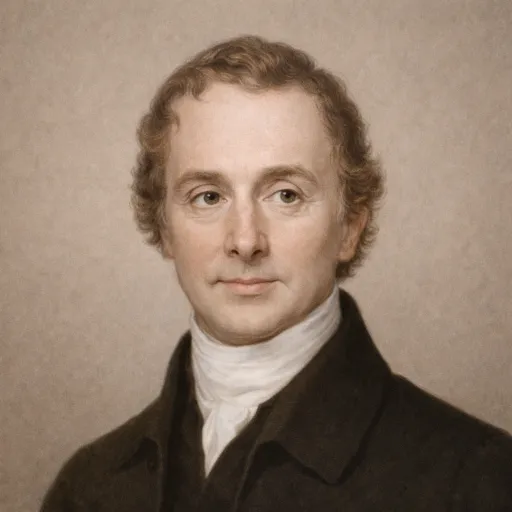
Luke Howard portrait

🧐 Did you know?

Luke Howard was an untiring observer who carried a journal and watercolors everywhere, sketching sky alterations in detail from his laboratory window or during carriage journeys. His systematic nomenclature caused such intellectual fascination in Europe that the celebrated German poet Goethe dedicated a series of poems praising his definitions and personally wrote to him requesting biographical details, astonished that someone had managed to bring order into the realm of clouds.

🏅 Awards and Honors

Howard received major recognition from meteorological societies for establishing the modern cloud classification system.

📚 Their name in science

➤ Howard classification

Cloud classification system based on the genera cirrus, cumulus, and stratus.

❓ Who was Luke Howard?

Luke Howard was a British chemist, pharmacist, and meteorologist, universally known as the father of meteorology for creating the first scientific system to classify clouds. As a member of a devout Quaker family and commercially dedicated to pharmaceutical production in London, he balanced his business duties with a passionate, systematic observation of atmospheric phenomena. He possessed a mind of exceptional descriptive sharpness, capable of finding stable morphological patterns within the ephemeral, shifting forms of the sky. Howard did not view the atmosphere as a chaotic, ungovernable space, but as a dynamic laboratory regulated by physical laws that needed to be named with scientific precision.

🌍 The world in their time

In the early 19th century, the study of the sky lacked a systematic, universal nomenclature. Clouds were considered shapeless gaseous masses impossible to classify, which prevented naturalists from recording coordinated meteorological observations, forecasting weather reliably, or studying regional climate cycles.

Become a giant

Your path to becoming a giant of knowledge begins with these top free courses
free climate modeling course
Free mode

Modeling Climate Change

free Antarctic climate course
Free mode

Antarctica in a Changing Climate

free climate change course
Free mode

Climate Change: The Science and Global Impact

free climate modeling course
Free mode

Modeling Climate Change

free Antarctic climate course
Free mode

Antarctica in a Changing Climate

🔬 Scientific legacy

Luke Howard revolutionized science by publishing his essay *On the Modifications of Clouds* in 1803, introducing the international cloud classification system using precise Latin terms. He identified three fundamental categories based on geometric appearance: “”cirrus”” (fibers or filaments), “”cumulus”” (heaps or accumulations), and “”stratus”” (extended layers), alongside their combinations such as “”nimbus”” for rain clouds. In urban climatology, he published *The Climate of London* in 1818, a pioneering study where he identified for the first time the urban heat island effect, proving mathematically that cities retain more heat than surrounding rural areas.

👣 Footprint in today's world

The legacy of Luke Howard forms the descriptive and instrumental foundation of contemporary meteorology and climate science. The taxonomic classification system he designed remains the universal international structure used today by the World Meteorological Organization, commercial aviation pilots, automated weather stations, and climatologists across the planet for cloud mass identification and weather forecasting.

🏃‍♂️ The relay race

📥 Taking the baton

The monumental descriptive breakthroughs of Luke Howard built firmly upon the botanical classifications of Carl Linnaeus, combined with chemical studies regarding atmospheric gases conducted by John Dalton and Antoine Lavoisier.

📤 Passing the baton

The ordering of the sky achieved by Luke Howard transformed meteorology into a rigorous, empirical scientific discipline, liberating it from popular folklore and astrological superstitions. His studies concerning urban microclimates laid the analytical foundations for later scientists to analyze atmospheric pollution, city thermodynamics, and global environmental change models.

Other giants you will want to get to know

Alfred Lothar Wegener

Alfred Lothar Wegener

1880

 –

1930
The daring meteorologist who discovered that the continents are in constant motion.
Evangelista Torricelli

Evangelista Torricelli

1608

 –

1647
The bold physicist who proved the existence of atmospheric pressure and invented the mercury barometer.
Luke Howard

Luke Howard

1772

 –

1864
The godfather of meteorology who named the clouds and scientifically ordered the chaos of the sky.
Alexander von Humboldt

Alexander von Humboldt

1769

 –

1859
The visionary naturalist who conceived nature as an interconnected global web.
Vilhelm Friman Koren Bjerknes

Vilhelm Friman Koren Bjerknes

1862

 –

1951
The strategist of atmospheric physics who discovered meteorological fronts and founded numerical weather prediction.

Tools

Scientific calculator

Powered by Desmos

Scientific Dictionary

Powered by Wikipedia

2026 Best Online STEM Education Platform

Cargando clima y ubicación...

To learn and experience

Take your knowledge to the next level with science kits and hands-on tools that connect theory with experimentation

Essential for teachers and students

Learn with the best courses