Generic selectors
Exact matches only
Search in title
Search in content
Post Type Selectors

Linus Carl Pauling

Linus Carl Pauling icon
17/07/2026

🗓️

🌱February 28, 1901 – Portland, Oregon, United States.
🍂August 19, 1994 – Big Sur, California, United States.

🌟 Main Contribution

Linus Pauling determinó la estructura de moléculas y cristales, elucidó enlaces químicos y contribuyó a la química de materiales y biología molecular
“La mejor manera de tener buenas ideas es tener muchas ideas”
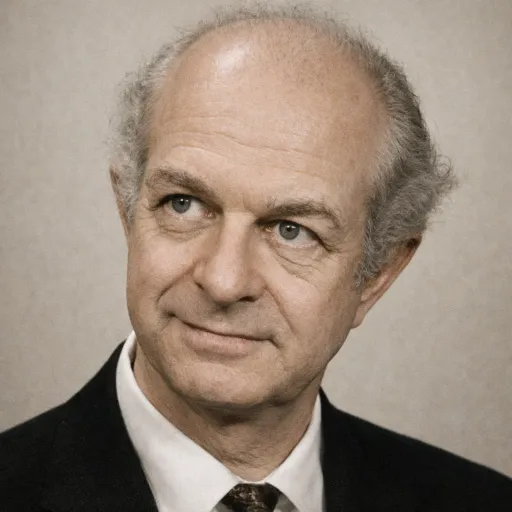
Linus Carl Pauling portrait

🧐 Did you know?

Linus Carl Pauling utilized physical three-dimensional models constructed with wooden spheres, plastic, and wires in his laboratory to solve molecular mysteries before conducting mathematical calculations. Through this visual and playful approach, he manually manipulated the bonding angles of atoms, which allowed him to outpace his worldwide competitors and decipher the helical structure of proteins while resting in bed due to a severe cold.

🏅 Awards and Honors

Pauling received the Nobel Prize in Chemistry (1954) and the Nobel Peace Prize (1962), becoming the only person awarded two unshared Nobel Prizes.

📚 Their name in science

➤ Pauling scale

Electronegativity scale widely used in chemistry.

❓ Who was Linus Carl Pauling?

Linus Carl Pauling was an American chemist, biochemist, and activist, widely ranked among the most versatile scientists of the 20th century and one of the few individuals in history to win two unshared Nobel Prizes in completely different categories. Educated at Oregon State University and the California Institute of Technology (Caltech), he possessed a mind endowed with an astonishing three-dimensional intuition, capable of visualizing how atoms organized themselves in space to form complex molecules. Pauling did not view chemistry as a catalog of isolated reactions, but as a structure governed by the mechanical laws of quantum physics. His firm humanitarian commitment led him to speak out against nuclear testing during the Cold War, facing political harassment from his own government.

🌍 The world in their time

In the early 1930s, chemistry and quantum physics operated as separate disciplines. Although subatomic particles were known, scientists lacked a complete theoretical and mathematical framework to explain precisely how electrons were shared between atoms to form stable chemical bonds and define the molecular geometry of matter.

Become a giant

Your path to becoming a giant of knowledge begins with these top free courses
free biomaterials course
Free mode

Digital Biomaterials

free materials capstone course
Free mode

Capstone Exam – Materials for Electronic, Optical, and Magnetic Devices

free advanced synchrotrons course
Free mode

Synchrotrons and X-Ray Free Electron Lasers (part 1)

free biomaterials course
Free mode

Digital Biomaterials

free materials capstone course
Free mode

Capstone Exam – Materials for Electronic, Optical, and Magnetic Devices

🔬 Scientific legacy

Linus Carl Pauling revolutionized science by publishing his masterpiece *The Nature of the Chemical Bond* in 1939, where he applied quantum mechanics to explain molecular structure, introducing the concepts of orbital hybridization, chemical resonance, and the electronegativity scale that bears his name. In biochemistry, he discovered in 1951 that proteins fold into specific spatial structures such as the alpha helix and the beta sheet, and proved that sickle-cell anemia is a molecular disease caused by an alteration in hemoglobin. For his monumental discoveries on the chemical bond, he received the Nobel Prize in Chemistry in 1954, and in 1962, he was awarded the Nobel Peace Prize for his untiring campaign against nuclear weapons.

👣 Footprint in today's world

The legacy of Linus Carl Pauling forms the cornerstone of contemporary quantum chemistry, molecular materials design, and biological medicine. His models on chemical bonding and electronegativity regulate the development of new drugs in today’s pharmaceutical industry, the synthesis of advanced polymers and plastics, and the computational modeling used by bioinformaticians to understand the three-dimensional structure of viruses and human proteins.

🏃‍♂️ The relay race

📥 Taking the baton

The monumental chemical breakthroughs of Linus Carl Pauling built directly upon the quantum mechanics theories of Erwin Schrödinger and Werner Heisenberg, combined with the valence electron models proposed by Gilbert N. Lewis.

📤 Passing the baton

The discovery of secondary protein structures achieved by Linus Carl Pauling laid the structural foundations of molecular biology, serving as a direct inspiration for Watson and Crick to decipher the double helix of DNA. His pacifist activism transformed the conscience of the international scientific community, leading to the historic Partial Nuclear Test Ban Treaty of 1963.

Other giants you will want to get to know

Dmitri Ivánovich Mendeleyev

Dmitri Ivánovich Mendeleyev

1834

 –

1907
The genius of elements who discovered the hidden order of matter and designed the periodic table.
William Henry

William Henry

1774

 –

1836
The physician of gaseous fluids who measured the dissolution of matter and industrialized elastic water chemistry.
Fritz Haber

Fritz Haber

1868

 –

1934
The tragic genius of chemistry who fed the world with synthetic nitrogen and unleashed modern chemical warfare.
Linus Carl Pauling

Linus Carl Pauling

1901

 –

1994
The architect of the chemical bond who unified quantum physics with living matter and led world peace.
Gilbert Newton Lewis

Gilbert Newton Lewis

1875

 –

1946
The master of the chemical bond who discovered how electrons bind matter together and redefined acids and bases.

Tools

Scientific calculator

Powered by Desmos

Scientific Dictionary

Powered by Wikipedia

2026 Best Online STEM Education Platform

Cargando clima y ubicación...

To learn and experience

Take your knowledge to the next level with science kits and hands-on tools that connect theory with experimentation

Essential for teachers and students

Learn with the best courses