Generic selectors
Exact matches only
Search in title
Search in content
Post Type Selectors

Euclides

Euclides icon
17/07/2026

🗓️

🌱Circa 325 BC – Place unknown.
🍂Circa 265 BC – Alexandria, Egypt.

🌟 Main Contribution

Euclid established the foundations of geometry, organizing axioms and theorems
“There is no royal road to geometry”
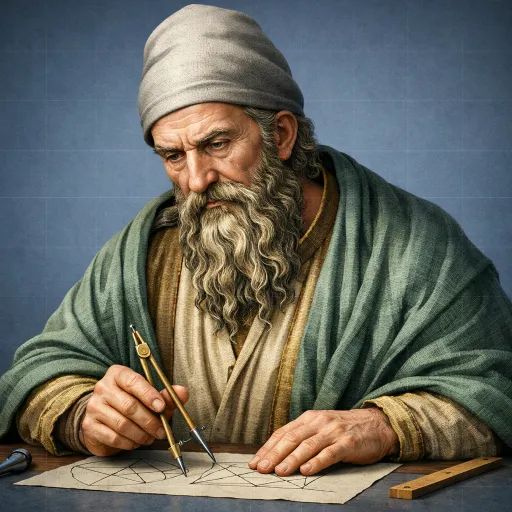
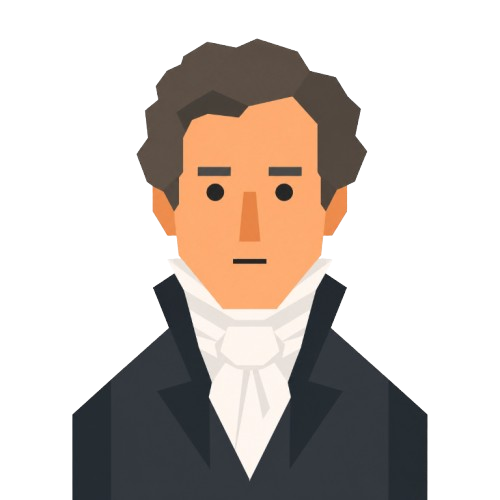
Euclides portrait

🧐 Did you know?

Euclides was a teacher deeply committed to the value of pure knowledge independent of financial gain. A famous anecdote recounts that when a young student began studying geometry and asked what he would gain by learning such things, Euclides called his servant and said, “Give him a coin, since this man must make money from what he learns,” before dismissing him from his school.

🏅 Awards and Honors

Belongs to classical antiquity, Euclid received no awards, distinctions, or memberships during his lifetime from any modern scientific or academic institution.

📚 Their name in science

➤ Euclidean Geometry

Mathematical and geometric system based on the axioms and postulates described in Euclid’s Elements, describing standard two-dimensional and three-dimensional space.

❓ Who was Euclides?

Euclides (Euclid) was a Greek mathematician who flourished in the vibrant city of Alexandria during the reign of Ptolemy I. Although his personal life details remain shrouded in the mists of antiquity, his intellectual impact is colossal. Founder of the prestigious mathematical school at the Library of Alexandria, he dedicated himself to systematically compiling, ordering, and refining all geometrical and mathematical knowledge of his era. His crowning masterpiece, *Elements*, established a method of inductive logical reasoning based on axioms so perfect that it became the world’s most widely used school textbook for over two thousand years.

🌍 The world in their time

Before the 4th century BC, mathematics and geometry consisted of a scattered collection of practical rules, isolated theorems, and empirical tricks developed by Babylonians, Egyptians, and early Greeks. There was no unified system or rigorous proof method capable of deducing all space properties from a few self-evident truths, limiting the advancement of pure logic.

Become a giant

Your path to becoming a giant of knowledge begins with these top free courses
free orthogonal algebra course
Free mode

Linear Algebra IV: Orthogonality & Symmetric Matrices and the SVD

free determinants algebra course
Free mode

Linear Algebra III: Determinants and Eigenvalues

free matrix algebra course
Free mode

Linear Algebra II: Matrix Algebra

free orthogonal algebra course
Free mode

Linear Algebra IV: Orthogonality & Symmetric Matrices and the SVD

free determinants algebra course
Free mode

Linear Algebra III: Determinants and Eigenvalues

🔬 Scientific legacy

Euclides revolutionized science by writing the *Elements*, a monumental 13-volume treatise where he organized plane geometry and number theory through a rigorous deductive system. Starting from just 5 fundamental postulates (Euclid’s axioms), he mathematically proved hundreds of essential theorems, including a definitive proof of the Pythagorean Theorem. Furthermore, he formulated Euclid’s algorithm for finding the greatest common divisor of two numbers and mathematically proved the infinitude of prime numbers.

👣 Footprint in today's world

The legacy of Euclides forms the structural baseline of modern mathematical reasoning and engineering. Euclidean geometry is the tool used daily in architecture, industrial design, surveying, and civil construction to draw blueprints and structures in our three-dimensional space. His formal axiomatic method permanently transformed philosophy and science, establishing the absolute standard of what constitutes a rigorous scientific proof.

🏃‍♂️ The relay race

📥 Taking the baton

The monumental deductive breakthroughs of Euclides built firmly upon previous geometric discoveries conducted by the Pythagorean school, the theorems of Thales of Miletus, and the polyhedron classifications formulated by Theaetetus and Eudoxus of Cnidus.

📤 Passing the baton

The scientific treatise of Euclides served as an indispensable foundation for ancient astronomers and mechanics like Archimedes and Apollonius of Perge to expand geometry. Centuries later, his logical framework directly inspired Isaac Newton’s work and paved the definitive path for 19th-century mathematicians to develop non-Euclidean geometries vital for modern physics.

Other giants you will want to get to know

John von Neumann

John von Neumann

1903

 –

1957
The brilliant polymath who designed modern computer architecture and founded game theory.
Gottfried Wilhelm Leibniz

Gottfried Wilhelm Leibniz

1646

 –

1716
The universal genius who co-invented infinitesimal calculus and designed the binary system that powers computers.
Georg Cantor

Georg Cantor

1845

 –

1918
The bold mathematician who tamed the infinite and proved that some infinities are larger than others.
René Descartes

René Descartes

1596

 –

1650
The architect of analytical geometry who unified algebra with space and established the rational method.
Archimedes

Archimedes

287 a.C.

 –

212 a.C.
The mathematical titan of antiquity who unlocked the laws of levers, buoyancy, and infinity.

Tools

Scientific calculator

Powered by Desmos

Scientific Dictionary

Powered by Wikipedia

2026 Best Online STEM Education Platform

Cargando clima y ubicación...

To learn and experience

Take your knowledge to the next level with science kits and hands-on tools that connect theory with experimentation

Essential for teachers and students

Learn with the best courses