Generic selectors
Exact matches only
Search in title
Search in content
Post Type Selectors

Dmitri Skobeltsyn

Dmitri Skobeltsyn icon
28/08/2026

🗓️

🌱November 24, 1892 – St. Petersburg, Russia.
🍂March 4, 1990 – Moscow, Russia.

🌟 Main Contribution

Dmitri Skobeltsyn pioneered the study of cosmic rays and used cloud chambers to discover high-energy charged particles, laying the foundations of particle physics
“Every particle we observe is a window to the universe”
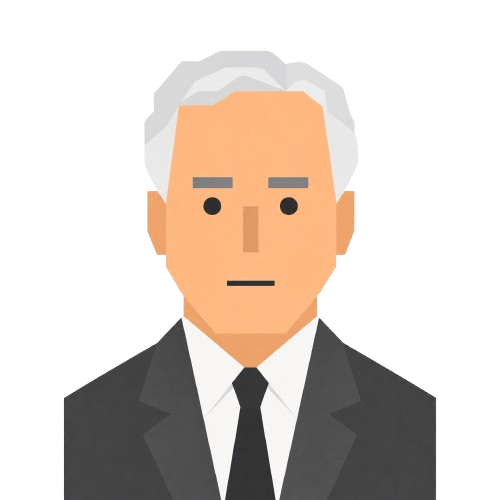
Dmitri Skobeltsyn portrait

🧐 Did you know?

Dmitri Skobeltsyn was famous for his infinite patience in the laboratory, spending thousands of hours in the dark meticulously analyzing photographic plates and tiny condensation bubbles. His experimental rigor was so strict that he rejected any rushed theoretical hypotheses, insisting that only physical trajectories clearly imprinted on his images constituted the indisputable truth of subatomic nature.

🏅 Awards and Honors

Skobeltsyn was awarded the highest civil and scientific decorations of the Soviet Union, including the Stalin Prize in 1951, the Lenin Prize in 1982, and the prestigious title of Hero of Socialist Labor in 1969. A full Member of the USSR Academy of Sciences (1946), he was also awarded the Lomonosov Gold Medal in 1977.

Ad

❓ Who was Dmitri Skobeltsyn?

Dmitri Skobeltsyn was a Soviet physicist whose acute experimental observations opened the path to high-energy quantum physics. Born into an academic family, he trained at St. Petersburg University during an era of deep political and scientific revolutions. Gifted with an exceptional ability for laboratory instrumentation design, he became a professor and researcher at the Lebedev Physical Institute. He was the first scientist to apply magnetic fields to cloud chambers, transforming a simple observation apparatus into a powerful spectrometer capable of measuring invisible particles. His dedication to nuclear research led him to head his nation’s efforts in cosmic and quantum physics for decades.

🌍 The world in their time

In the early 1920s, particle physics relied on abstract theories and lacked precise visual tools to track high-energy electrons. Cosmic rays bombarding the Earth remained an invisible mystery, and scientists possessed no empirical methods to measure the speed, trajectory, or electrical charge of subatomic particles generated in the upper atmosphere.

Become a giant

Your path to becoming a giant of knowledge begins with these top free courses
free quantum computing course
Free mode

Introduction to Quantum Computing for Everyone

free quantum molecular course
Free mode

Quantum Mechanics of Molecular Structures

free quantum sci & tech course
Free mode

Introduction to Quantum Science & Technology

free quantum computing course
Free mode

Introduction to Quantum Computing for Everyone

free quantum molecular course
Free mode

Quantum Mechanics of Molecular Structures

🔬 Scientific legacy

Dmitri Skobeltsyn revolutionized experimental physics in 1727 by placing a Wilson cloud chamber inside a powerful magnetic field. With this brilliant invention, he managed to photograph directly the tracks left by cosmic rays, proving they were streams of charged particles. In his images, he captured particles curving in the opposite direction of ordinary electrons, a pioneering experimental proof that constituted the first actual observation of antimatter (the positron), though its exact nature was formally identified shortly after.

👣 Footprint in today's world

The pioneering work of Dmitri Skobeltsyn transformed the detection techniques utilized in contemporary particle physics. His methods of magnetic trajectory analysis laid the direct foundations for designing the gigantic particle detectors used today in accelerators like CERN’s Large Hadron Collider (LHC), enabling the discovery of new fundamental particles.

🏃‍♂️ The relay race

📥 Taking the baton

The experimental breakthroughs of Dmitri Skobeltsyn were built upon the initial cloud chamber invention performed by Scottish physicist Charles Thomson Rees Wilson, combined with the quantum theories regarding electron scattering raised by Arthur Compton.

📤 Passing the baton

Dmitri Skobeltsyn’s historic magnetic photographs directly inspired the research of Carl David Anderson, who used identical techniques to formally identify the positron, confirming Paul Dirac’s theory of antimatter and winning the Nobel Prize, a scientific milestone that relied entirely on Skobeltsyn’s previous work.

Other giants you will want to get to know

Marie Curie

Marie Curie

1867

 –

1934
The indomitable scientist who unveiled the hidden energy at the heart of atoms.
Wolfgang Pauli

Wolfgang Pauli

1900

 –

1958
The relentless judge of quantum physics who formulated the exclusion principle and invented the ghost neutrino.
Werner Karl Heisenberg

Werner Karl Heisenberg

1901

 –

1976
The philosopher of quantum uncertainty who dismantled mechanical determinism through matrix algebra.
Max Karl Ernst Ludwig Planck

Max Karl Ernst Ludwig Planck

1858

 –

1947
The father of quantum physics who discovered the microcosm constant and revolutionized the laws of energy.
Erwin Schrödinger

Erwin Schrödinger

1887

 –

1961
The philosopher of physics who formulated the quantum wave equation and raised the famous cat paradox.

Tools

Scientific calculator

Powered by Desmos

Scientific Dictionary

Powered by Wikipedia

2026 Best Online STEM Education Platform

Cargando clima y ubicación...

To learn and experience

Take your knowledge to the next level with science kits and hands-on tools that connect theory with experimentation

Essential for teachers and students

Learn with the best courses