Fourier Series. Introduction and applications

The online Fourier series simulations on this page serve as an introduction and example of this important mathematical tool. We will learn what Fourier series are and discover some of their most important applications.

This Thematic Unit is part of our Mathematics collection

STEM OnLine mini dictionary
Fourier Coefficients
Numerical values that determine the amplitude or weight of each sine and cosine in the reconstruction of the original function.

Fourier Series
The representation of a periodic function as an infinite sum of sinusoidal functions (sines and cosines) with different frequencies.
Fourier Synthesis
The process of reconstructing a complex signal by superimposing its individual sinusoidal components.
Frequency Domain
Analysis of a function through its spectral components, showing how much energy exists at each frequency.
Fundamental Frequency
The lowest frequency in a Fourier series that defines the basic period of the original function.
Gibbs Phenomenon
An oscillation or overshoot” that occurs in the reconstruction of discontinuous functions (like square waves) near jump points.”
Harmonics
Sinusoidal components of the series whose frequencies are integer multiples of the fundamental frequency.
Periodic Function
A function that repeats its values at regular intervals of time or space, called periods.
Sinusoidal Waves
Smooth mathematical functions describing repetitive oscillations, fundamental for signal analysis.
Time Domain
The representation of a function or signal based on its evolution over time.
What are Fourier series
Fourier series is a mathematical technique used to represent periodic functions as an infinite sum of sine and cosine functions. They were developed by the French mathematician Joseph Fourier in the 19th century as a tool for studying heat conduction in solids.
Introduction to Fourier series
The basic idea behind Fourier series is that any periodic function can be decomposed into a series of sinusoids of different frequencies and amplitudes. This means that if we know the frequencies and amplitudes of the sinusoids that make up a periodic function, we can represent that function as a sum of those sinusoids. The representation of a function in terms of Fourier series allows us to analyze its behavior at different frequencies and is used in areas such as engineering, physics and telecommunications.
Approaches in mathematical analysis
The decomposition of a function in terms of Fourier series is performed by calculating integrals. This process allows determining the coefficients that represent the amplitudes of the individual sinusoids that compose the original periodic function. The integrals are calculated over a complete period of the function, which ensures that each frequency component is correctly matched to the waveform.
There are different techniques for performing this decomposition, including the classical Fourier series, which uses trigonometric expressions, the complex Fourier series, which uses complex numbers to simplify calculations, and the trigonometric Fourier series, which focuses on representation by specific sines and cosines. Each method has particular applications depending on the mathematical or physical context in which they are being used, from equation solving to signal synthesis in telecommunications.
Applications of Fourier series
Fourier series have a wide variety of applications in areas such as signal processing, where they are used to analyze and synthesize electrical and acoustic signals, facilitating the elimination of noise and the improvement of transmission quality. They are also fundamental in the resolution of partial differential equations, especially in problems related to heat diffusion and fluid dynamics. In mechanical vibration analysis, Fourier series are used to identify natural frequencies of structures and systems, which is essential in the design and maintenance of machinery and buildings.
In addition, these series play a crucial role in communication theory, allowing the representation of signals in terms of frequencies and assisting in the modulation and demodulation of signals in telecommunications. In electrical engineering, they are used to design and analyze electronic circuits and control systems. In physics, they are key tools for studying periodic phenomena such as electromagnetic waves and atomic vibrations. Finally, in digital image and video processing, Fourier series help to improve image quality and to perform spectral analysis for the detection of specific patterns.

STEM OnLine mini dictionary
Fourier Coefficients
Numerical values that determine the amplitude or weight of each sine and cosine in the reconstruction of the original function.
Fourier Series
The representation of a periodic function as an infinite sum of sinusoidal functions (sines and cosines) with different frequencies.
Fourier Synthesis
The process of reconstructing a complex signal by superimposing its individual sinusoidal components.
Frequency Domain
Analysis of a function through its spectral components, showing how much energy exists at each frequency.
Fundamental Frequency
The lowest frequency in a Fourier series that defines the basic period of the original function.
Gibbs Phenomenon
An oscillation or overshoot” that occurs in the reconstruction of discontinuous functions (like square waves) near jump points.”
Harmonics
Sinusoidal components of the series whose frequencies are integer multiples of the fundamental frequency.
Periodic Function
A function that repeats its values at regular intervals of time or space, called periods.
Sinusoidal Waves
Smooth mathematical functions describing repetitive oscillations, fundamental for signal analysis.
Time Domain
The representation of a function or signal based on its evolution over time.
Explore the exciting STEM world with our free, online, simulations and accompanying companion courses! With them you’ll be able to experience and learn hands-on. Take this opportunity to immerse yourself in virtual experiences while advancing your education – awaken your scientific curiosity and discover all that the STEM world has to offer!
Fourier series simulations
Giants of science
“If I have seen further, it is by standing on the shoulders of giants”
Isaac Newton
Joseph-Louis Lagrange
–
Archimedes
–
Become a giant
Mathematics 1 Part 2: Integral calculus, algebra, and applications
Mathematics 1 Part 1: Differential Calculus
Engineering Calculus and Differential Equations
Calculus Applied!
Maths Essentials
How to Learn Math: For Students
Polynomials, Functions and Graphs
Introduction to Algebra
Professional development for Educators
Teach teens computing: Data representation
Assessment Design with AI
Teaching Coding in Grades 5-8 with Scratch Encore
AI for Teacher Assistance
Giants of science
“If I have seen further, it is by standing on the shoulders of giants”
Isaac Newton
Augustin-Louis Cauchy
–
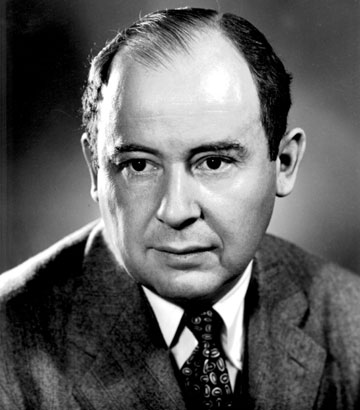
John von Neumann
–
Become a giant
Mathematics 1 Part 2: Integral calculus, algebra, and applications
Mathematics 1 Part 1: Differential Calculus
Engineering Calculus and Differential Equations
Calculus Applied!
Maths Essentials
Polynomials, Functions and Graphs
How to Learn Math: For Students
Introduction to Algebra
Professional development for Educators
Get started with teaching computing
Interdisciplinary Teaching with Museum Objects
Teach teens computing: Machine learning and AI
Teach kids computing: Computing systems and networks
Test your knowledge
What is a Fourier series, and why is it considered a fundamental tool for representing periodic functions?
How are Fourier coefficients determined, and what do they reveal about the original function?
Why can a complicated function be written as a sum of sines and cosines? Does it really make sense that something irregular can be built from smooth waves?
What happens if the function has sharp jumps or spikes? How come the Fourier series still works?
How come the first few harmonics already look so similar to the original function? Don’t we need infinitely many terms?
You may also be interested
Last simulations
To learn and experience
Take your knowledge to the next level with science kits and hands-on tools that connect theory with experimentation
Teachers essentials
Notion
Organize your notes, tasks, and projects in one place. Notion combines notes, lists, and calendars in one flexible space.
Canva
Design presentations, diagrams, and infographics with easy-to-use templates and professional results
Genially
Create interactive content, presentations, and educational games in a simple and visual way
Desmos
The most intuitive graphing calculator to explore mathematics and create dynamic classroom activities
Tinkercad
Design in 3D and simulate electronic circuits for free; it’s the perfect tool for simple robotics projects
Your Infinite Library
Enjoy the freedom to explore millions of titles and a curated selection of magazines on any device
Join Prime for students and young adults
The best series. Millions of songs. All included with your subscription.
Science made fun
Learn with the best courses
edX
Online courses from leading universities and companies. Learn practical skills and earn professional certifications
Coursera
Courses from leading universities and companies. Learn practical skills and earn professional certifications
Udemy
Thousands of online courses tailored to your level. Learn at your own pace with expert instructors