Electrostatic force is a fundamental force in nature that arises from the interaction between electric charges. It is a force of an electrical nature that acts at a distance and can be attractive or repulsive, depending on the properties of the charges involved.
Formula of Coulomb’s law
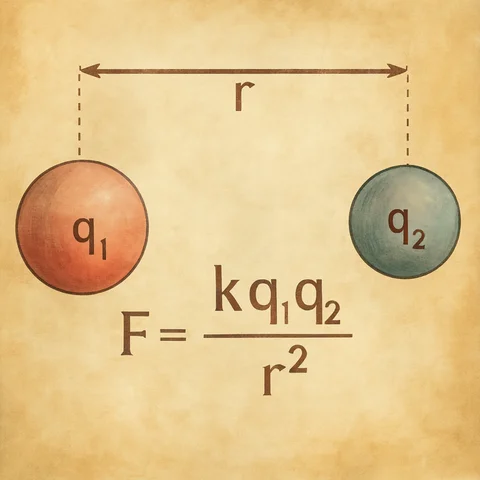
Electrostatic force is governed by Coulomb’s Law, formulated by the French physicist Charles-Augustin de Coulomb. According to this law, the magnitude of the electrostatic force between two point charges is directly proportional to the product of their charge magnitudes and inversely proportional to the square of the distance separating them. Mathematically, the formula of Coulomb’s law is expressed as:
Electrostatic force = (k x q₁ x q₂) / r².
Where:
Electrostatic force is the magnitude of the force between charges.
k is the Coulomb constant, which depends on the medium in which the charges are located and has a value of approximately 9 × 10^9 N-m²/C² in vacuum.
q₁ and q₂ are the magnitudes of the charges involved.
r is the distance between the charges.
Electrostatic force applications
The electrostatic force is fundamental to many aspects of physics and has numerous applications in everyday life and technology. For example, it is responsible for the interaction between electrons and nuclei in atoms, maintaining the stability of matter. It also determines the structure and properties of chemical compounds.
In the field of electricity and electronics, electrostatic force is essential for the operation of electrical devices, such as capacitors, which store energy in the form of charges separated by a potential difference. It is also the force behind electrostatic phenomena, such as the attraction of charged objects by rubbing or the repulsion between electrically charged balloons.
Electrostatic force is also applied in technologies such as electrodynamics, electricity generation and distribution, and touch screen technology. In addition, it has implications in fields such as astrophysics, where electrostatic interactions are studied in the behavior of stars and galaxies.
Explore the exciting STEM world with our free, online, simulations and accompanying companion courses! With them you’ll be able to experience and learn hands-on. Take this opportunity to immerse yourself in virtual experiences while advancing your education – awaken your scientific curiosity and discover all that the STEM world has to offer!
Visualize with this Coulomb’s law simulation the electrostatic force that two charges exert on each other. Notice how changing the sign and magnitude of the charges and the distance between them affects the electrostatic force.
Giants of science
“If I have seen further, it is by standing on the shoulders of giants”
Isaac Newton
André-Marie Ampère
1775
–
1836
André-Marie Ampère formulated the theory of electromagnetism, establishing the mathematical foundations linking electricity and magnetism
“Science is the explanation of the complex by the simple”
Michael Faraday
1791
–
1867
Michael Faraday discovered electromagnetic induction, conducted pioneering experiments in optics (Faraday effect), and established fundamental principles of electrochemistry.
“Nothing is too wonderful to be true”
Become a giant
Your path to becoming a giant of knowledge begins with these top free courses
Free mode
Principles of Modeling, Simulations, and Control for Electric Energy Systems
Free mode
Principles of Electric Circuits | 电路原理
Free mode
Electrotechnique I
Free mode
Electromagnetic Compatibility Essentials
Free mode
Pre-University Physics
Free mode
Circuits for Beginners
Free mode
AP® Physics 1: Challenging Concepts
Free mode
AP® Physics 1 – Part 4: Exam Prep
Professional development for Educators
Your path to becoming a giant of knowledge begins with these top free courses
Free mode
Teach teens computing: How computers work
Free mode
Get started with teaching computing
Free mode
Support kids’ projects: Web development
Free mode
Teaching with Physical Computing: Soft skills, teamwork and the wider curriculum
Giants of science
“If I have seen further, it is by standing on the shoulders of giants”
Isaac Newton
Michael Faraday
1791
–
1867
Michael Faraday discovered electromagnetic induction, conducted pioneering experiments in optics (Faraday effect), and established fundamental principles of electrochemistry.
“Nothing is too wonderful to be true”
James Clerk Maxwell
1831
–
1879
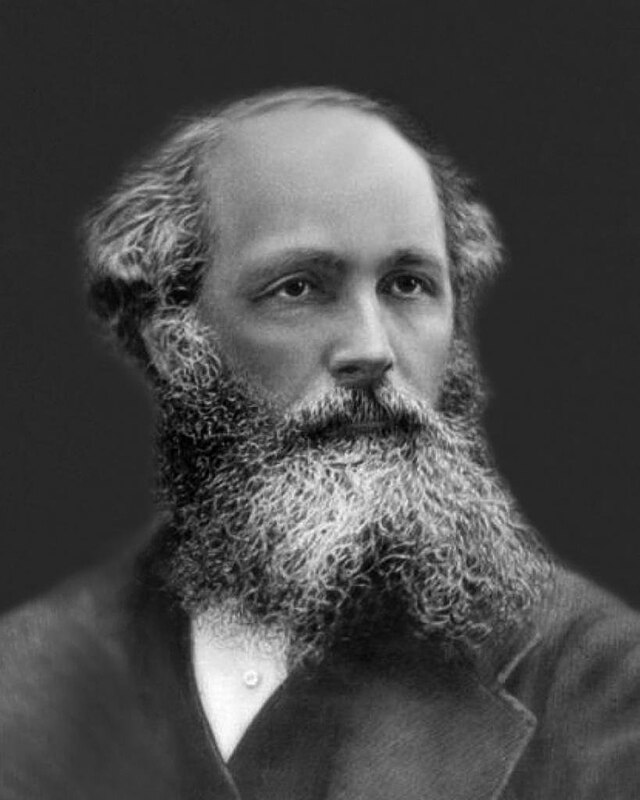
James Clerk Maxwell formulated Maxwell’s equations, unifying electricity and magnetism and predicting electromagnetic waves
“Thoroughly conscious ignorance is the prelude to every real advance in science”
Become a giant
Your path to becoming a giant of knowledge begins with these top free courses
Free mode
Principles of Modeling, Simulations, and Control for Electric Energy Systems
Free mode
Principles of Electric Circuits | 电路原理
Free mode
Electrotechnique I
Free mode
Electromagnetic Compatibility Essentials
Free mode
AP® Physics 1 – Part 2: Rotational Motion
Free mode
AP® Physics 1: Challenging Concepts
Free mode
Circuits for Beginners
Free mode
AP® Physics 1 – Part 1: Linear Motion
Professional development for Educators
Your path to becoming a giant of knowledge begins with these top free courses
Free mode
HP AI Teacher Academy
Free mode
Introduction to Online Education & Course Planning
Free mode
Teach teens computing: How computers work
Free mode
Chatbots for Instruction
Test your knowledge
What is electrostatic force, and how does it explain the interaction between electric charges?
Electrostatic force is one of the fundamental forces of nature and describes how electrically charged bodies interact. It can be attractive or repulsive depending on the signs of the charges: like charges repel, while opposite charges attract. This force acts at a distance and is governed by Coulomb’s Law, which states that the magnitude of the force depends on the product of the charges and decreases with the square of the distance between them. The Coulomb constant determines how strong the interaction is in a given medium. Electrostatic force is essential for understanding the structure of matter, since it keeps electrons bound to atomic nuclei and determines how molecules form. It also plays a key role in everyday phenomena such as static electricity and in technologies like capacitors, sensors and electronic circuits.
How is Coulomb’s Law formulated, and what does it reveal about the strength of electrostatic interactions?
Coulomb’s Law describes how the electrostatic force between two point charges behaves and identifies the factors that determine its intensity. It states that the force increases when the charges involved have larger magnitudes and decreases rapidly as the distance between them grows. This weakening is not gradual but very pronounced, because the force diminishes according to the square of the separation. The law also highlights the role of the surrounding medium: some materials allow electric fields to form easily, while others reduce or “dampen” the interaction, making the force weaker. Another key aspect is that the sign of the charges determines whether the force is attractive or repulsive, while the magnitude and distance determine how strong it is. Thanks to this formulation, scientists can analyze electric systems, understand the stability of atoms and molecules, and predict the behavior of charged particles in many technological applications.
Why does the force between two charges decrease when the distance increases?
Because Coulomb’s Law says that the force depends on the inverse of the square of the distance. When you move two charges apart, the electric field from each one spreads out more and reaches the other with less intensity. If you double the distance, the force becomes four times weaker; if you triple it, it becomes nine times weaker. That is why electrostatic effects are strong only when charges are close together and almost negligible when they are far apart. This relationship helps explain many everyday situations involving static electricity.
What determines whether the force between two charges is attractive or repulsive?
It depends on the sign of the charges. If both charges have the same sign, their electric fields push each other away, so the force is repulsive. If the charges have opposite signs, the fields point toward each other and the force becomes attractive. The strength of the force depends on the amount of charge and the distance between them, but the direction —whether they move closer or farther apart— is determined only by the sign. This rule is essential for understanding atomic structure and many electrostatic phenomena.
What role does the constant (k) play in Coulomb’s Law?
The constant (k) determines how strong the electrostatic interaction is in a particular medium. In a vacuum, its value is very high, meaning that the force between charges is especially strong. In other materials, such as water or insulating substances, the effective value is lower because the medium reduces the electric field. This means that the same two charges can interact more or less intensely depending on where they are. In practice, (k) allows Coulomb’s Law to match real physical conditions and makes it possible to calculate the force accurately in different situations.
We use first-party and third-party analytics cookies subject to your consent. You can accept or configure.
Functional
Always active
The technical storage or access is strictly necessary for the legitimate purpose of enabling the use of a specific service explicitly requested by the subscriber or user, or for the sole purpose of carrying out the transmission of a communication over an electronic communications network.
Preferences
The technical storage or access is necessary for the legitimate purpose of storing preferences that are not requested by the subscriber or user.
Statistics
The technical storage or access that is used exclusively for statistical purposes.The technical storage or access that is used exclusively for anonymous statistical purposes. Without a subpoena, voluntary compliance on the part of your Internet Service Provider, or additional records from a third party, information stored or retrieved for this purpose alone cannot usually be used to identify you.
Marketing
The technical storage or access is required to create user profiles to send advertising, or to track the user on a website or across several websites for similar marketing purposes.