Generic selectors
Exact matches only
Search in title
Search in content
Post Type Selectors

Sadi Carnot

Sadi Carnot icon
17/07/2026

🗓️

🌱June 1, 1796 – Paris, France.
🍂August 24, 1832 – Paris, France.

🌟 Main Contribution

Sadi Carnot fundó la termodinámica teórica, estableciendo los principios de eficiencia de los motores y la segunda ley de la termodinámica
“La energía no se pierde, solo se transforma”
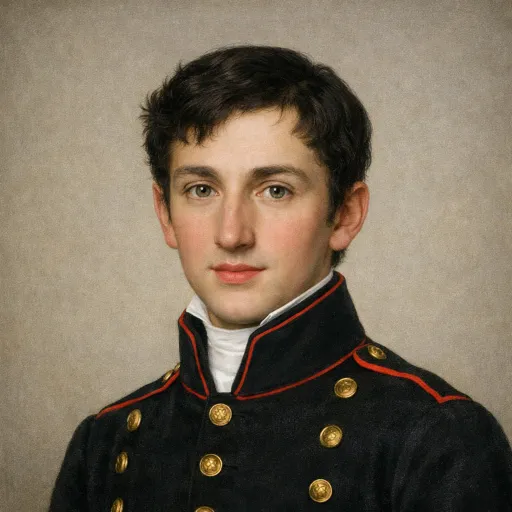
Sadi Carnot portrait

🧐 Did you know?

Sadi Carnot was a thinker of deep social detachment and shyness who funded the printing of the scarce six hundred copies of his revolutionary work out of his own pocket, which went almost unnoticed by the scientific community of his time. He passed away tragically at the early age of 36 due to a cholera epidemic in Paris; for reasons of strict public health security, the majority of his personal belongings, clothing, and unpublished notebooks were burned in a medical bonfire, miraculously saving only a small journal containing brilliant annotations where he already mathematically intuited the exact equivalence between heat and mechanical work.

🏅 Awards and Honors

He is regarded as the father of thermodynamics. He died prematurely before his work was fully recognized. Although he received no awards or distinctions during his lifetime, his scientific legacy was widely acknowledged by later generations.

📚 Their name in science

➤ Carnot cycle

Ideal thermodynamic cycle with maximum efficiency.

➤ Carnot theorem

Principle establishing the maximum efficiency of a reversible heat engine.

❓ Who was Sadi Carnot?

Sadi Carnot was a French physicist and military engineer, universally recognized as the father of thermodynamics for pioneering the theoretical principles of heat engines. Born into a family of great political relevance during the French Revolution and educated at the prestigious École Polytechnique in Paris, he balanced his duties as an army engineer officer with a rigorous mathematical analysis of the power of fire. He possessed a mind imbued with extraordinary analytical and inductive thought, capable of abstracting the operation of real engines to construct a perfect theoretical model independent of the fuel utilized. Carnot viewed heat not merely as a mechanical combustion agent, but as a universal force governed by an absolute mathematical limit of thermal efficiency.

🌍 The world in their time

In the early 1820s, the Industrial Revolution expanded thanks to steam engines, but engineering completely lacked a theoretical scientific foundation. Engines were built through rudimentary empirical trial and error, unaware of what physical laws regulated the transformation of heat into mechanical work or if an insurmountable maximum limit for efficiency existed.

Become a giant

Your path to becoming a giant of knowledge begins with these top free courses
free transport dynamics course
Free mode

Advanced Transport Phenomena

free energy & matter transfer course
Free mode

The Basics of Transport Phenomena

free advanced chemical thermodynamics course
Free mode

Chemical Thermodynamics II: Equilibrium and Kinetics

free transport dynamics course
Free mode

Advanced Transport Phenomena

free energy & matter transfer course
Free mode

The Basics of Transport Phenomena

🔬 Scientific legacy

Sadi Carnot revolutionized science by publishing his single, historic book *Réflexions sur la puissance motrice du feu* in 1824, where he invented the Carnot Cycle, an abstract mathematical model for an ideal reversible heat engine. He proved that the maximum efficiency of any heat engine depends exclusively on the temperature difference between the hot source and the cold source, pioneering what would later become the Second Law of Thermodynamics. He introduced the key concept of thermodynamic reversibility and mathematically demonstrated that it is impossible to construct a real heat engine possessing one hundred percent efficiency, establishing that a portion of the heat must inevitably dissipate irreversibly into the environment.

👣 Footprint in today's world

The legacy of Sadi Carnot forms the analytical and engineering infrastructure of contemporary power plants, propulsion systems, and climate control. His ideal thermodynamic efficiency cycle today regulates the mechanical design and optimization of current automotive combustion engines, commercial aircraft gas turbines, domestic refrigerator compressors, and electrical and industrial generation systems across the planet.

🏃‍♂️ The relay race

📥 Taking the baton

The monumental theoretical breakthroughs of Sadi Carnot built firmly upon mechanical principles of levers and pumps developed by his father Lazare Carnot, combined with empirical analyses regarding gas expansion conducted by Joseph Louis Gay-Lussac.

📤 Passing the baton

The cyclic abstraction achieved by Sadi Carnot transformed engine engineering into an exact mathematical branch of theoretical physics, serving as a direct analytical foundation for Rudolf Clausius and Lord Kelvin to definitively formulate the laws of classical thermodynamics and introduce the concept of entropy. His physical theories opened the floodgates for understanding the energy degradation of the deep universe and the development of modern statistical physics.

Other giants you will want to get to know

Sadi Carnot

Sadi Carnot

1796

 –

1832
The architect of thermodynamics who designed the ideal engine and discovered the thermal limits of the universe.
Joseph Louis Gay-Lussac

Joseph Louis Gay-Lussac

1778

 –

1850
The daring chemist who formulated the ideal gas laws and ascended in balloons to measure the atmosphere.
Amedeo Avogadro

Amedeo Avogadro

1776

 –

1856
The brilliant physicist who drew the line between atoms and molecules.

Tools

Scientific calculator

Powered by Desmos

Scientific Dictionary

Powered by Wikipedia

2026 Best Online STEM Education Platform

Cargando clima y ubicación...

To learn and experience

Take your knowledge to the next level with science kits and hands-on tools that connect theory with experimentation

Essential for teachers and students

Learn with the best courses