Water Chemistry Simulations
- Molecule
- Phase
- Distillation
- Electrolysis
Water molecule
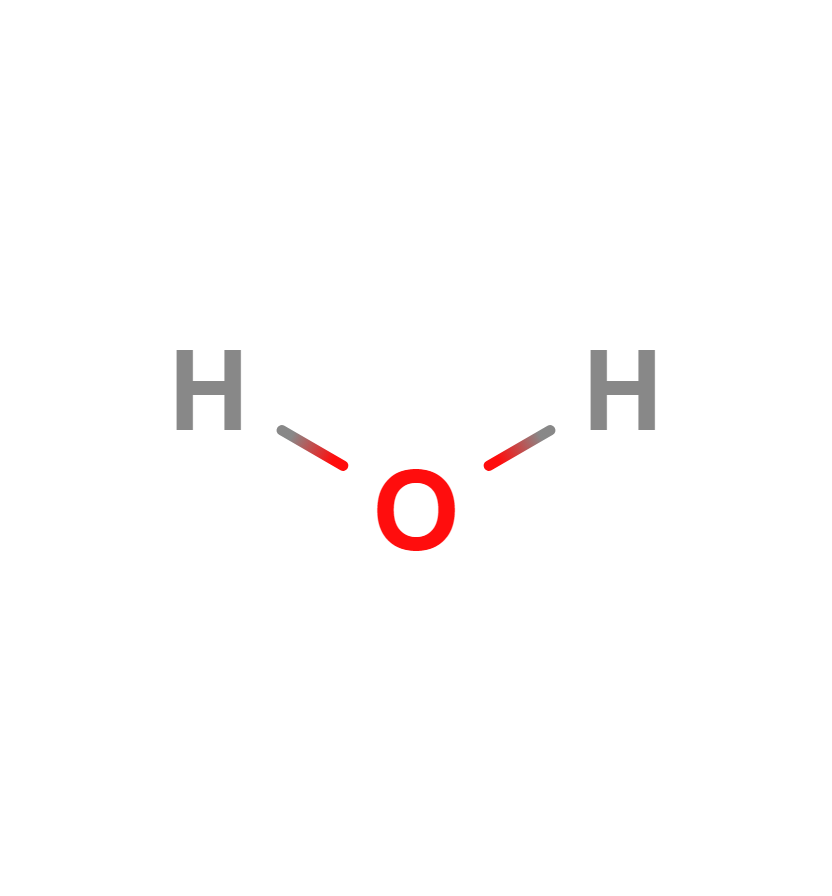
In the first of our online water chemistry simulations we can see that water molecule is composed of two hydrogen atoms and one oxygen atom joined by a covalent bond. That is, the two hydrogen atoms and the oxygen atom are bonded together by sharing electrons. Its formula is H2O.
Water
H2O

Single bond
Double bond
Triple bond
Wedge bond

Hash bond

Phase changes of water
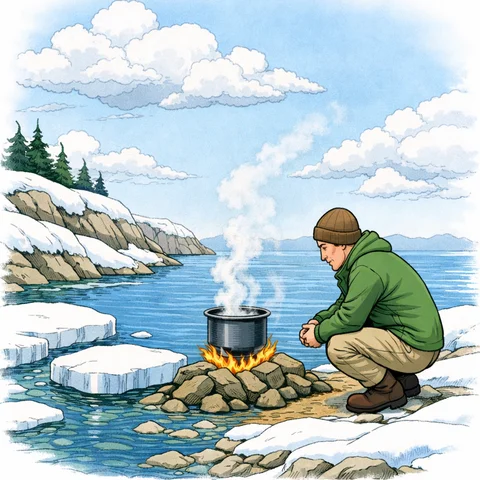
This animation shows what happens when heat is applied to a block of ice. Notice that the temperature increases until it reaches 0ºC, where it remains stable while the ice melts. The same thing happens at 100°C as the liquid water evaporates.
Electrolysis of water
The electrolysis of water is the decomposition of water (H2O) into the gases oxygen (O2) and hydrogen (H2) by means of a direct electric current. To reduce the resistance to the passage of current through water, it is usually acidified by adding a small amount of sulfuric acid or by adding a strong electrolyte such as sodium hydroxide, NaOH.

Giants of science
“If I have seen further, it is by standing on the shoulders of giants”
Isaac Newton
Dmitri Ivánovich Mendeleev
1834
–
1907
Dmitri Mendeleev formulated the periodic table of elements, organizing known ones and predicting unknown ones with remarkable accuracy.
“In science, truth is revealed sooner through errors than through confusions”
Gilbert Newton Lewis
1875
–
1946
Gilbert Lewis formulated the chemical bond theory, introduced electron pairs, and contributed to acid-base theory
“Atoms build nature as bricks build a building”
Become a giant
Your path to becoming a giant of knowledge begins with these top free courses
Free mode
Introduction to Computational Materials Design
Free mode
From Atoms to Materials: Predictive Theory and Simulations
Free mode
Digital Biomaterials
Free mode
Cement Chemistry and Sustainable Cementitious Materials
Free mode
Pre-University Chemistry
Free mode
Big Bang and the Origin of Chemical Elements
Free mode
Preparing for CLEP Chemistry: Part 1
Professional development for Educators
Your path to becoming a giant of knowledge begins with these top free courses
Free mode
Teaching with Physical Computing: Assessment of Project-Based Learning
Free mode
Teaching With Technology and Inquiry: An Open Course For Teachers
Free mode
Teach teens computing: Databases and SQL
Free mode
HP AI Teacher Academy