Generic selectors
Exact matches only
Search in title
Search in content
Post Type Selectors

Magnetism. Introduction and principles

09/03/2026

The online magnetism simulations on this page allow us to delve deeper into this important quality of some materials. We will discover magnets and the principles of magnetism, as well as the relationship between electricity and magnetism, known as electromagnetism.

What is magnetism

Magnetism is a fundamental property of certain materials that allows them to attract or repel other objects. It is a phenomenon related to the interaction of moving electric charges and is closely linked to electromagnetism, an important branch of physics.

Magnets

Magnets are objects that exhibit magnetic properties. They are the closest and most popularly known manifestation of magnetism. Magnets have two poles, the north pole and the south pole, which have different characteristics and attract each other. When a magnet is brought close to a ferromagnetic material, such as iron or nickel, these materials can become temporarily magnetic and be attracted to the magnet. Around a magnet there is an area called a magnetic field, which is the region where magnetic forces are exerted. Magnetic field lines represent the direction and shape of this field, coming out of the north pole and entering the south pole of the magnet.

Principles of magnetism

The principles of magnetism that explain how it works are found in electrons, negatively charged subatomic particles that orbit around the nucleus of an atom. Moving electrons generate a magnetic field around them. In an atom, electrons pair up and their magnetic fields cancel each other out. However, in certain materials, such as magnets, the electrons do not pair up and their magnetic fields do not cancel, resulting in a net magnetization.

Electricity and magnetism. Electromagnetism

Electricity and magnetism are closely related to the point that they have given rise to a branch of physics called electromagnetism. Electromagnetism is a branch of physics that studies the relationship between electrical and magnetic phenomena, demonstrating that both are closely connected and form part of the same fundamental interaction, the electromagnetic force.

Laws of electromagnetism

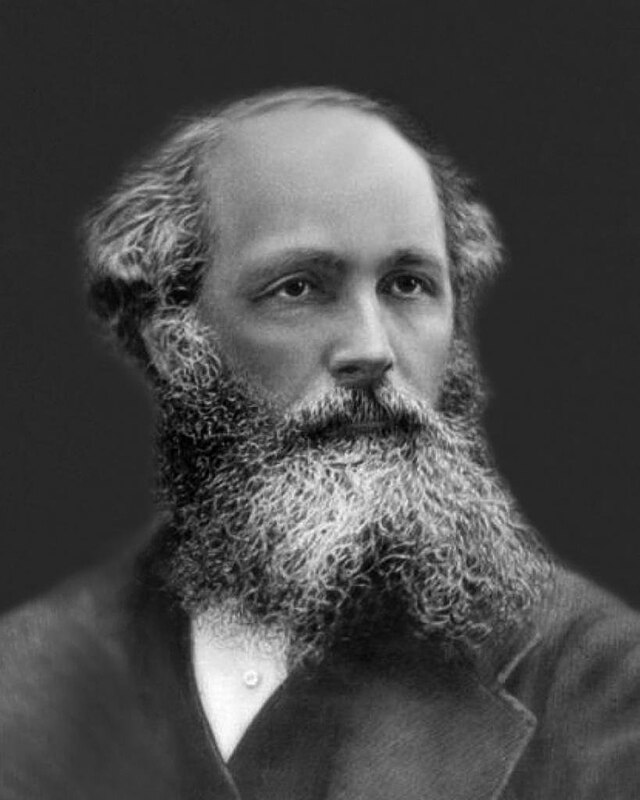
The study of magnetism is supported by the laws of electromagnetism, formulated by James Clerk Maxwell in the 19th century. These laws describe the interactions between electric and magnetic fields, and have laid the foundation for the development of modern technologies such as electricity, wireless communications and electronics.

Electromagnets

Magnetism is also related to electricity. Thanks to electricity, magnets can be built, which are called electromagnets. Electric current in a wire generates a magnetic field around the wire. This principle is used in the construction of electromagnets, where a coil of wire wound around a magnetic core becomes magnetic when current passes through it. Electromagnets are widely used in technological applications, such as electric motors, generators, transformers and data storage devices, such as hard disks.

Magnetic fields

A magnetic field is a region of space in which magnetic forces act on magnetic materials and moving charged particles. These fields can be generated by permanent magnets, electric currents, or variations in electric fields. Magnetic field lines are a graphical representation showing the direction and intensity of the field: they run from the north pole to the south pole in a magnet. The density of these lines indicates the strength of the field; the closer they are together, the greater the intensity. The study of magnetic fields is fundamental to understanding the operation of numerous electromagnetic devices such as motors, generators, and transformers, as well as natural phenomena such as the Earth’s magnetic field, which protects the Earth from solar radiation.

Applications of magnetism

Magnetism has a wide range of applications in everyday life and technology. A classic example is navigation: compasses use a magnetized needle that aligns with the Earth’s magnetic field, allowing us to orient ourselves and determine north-south direction, something that has been fundamental to exploration for centuries. Today, this phenomenon is exploited in electric motors and generators, in data storage systems such as hard drives, in medical devices such as magnetic resonance imaging, and in advanced technologies such as magnetic levitation for transportation. Even the Earth’s magnetic field plays a vital role in protecting our planet from solar wind.

In short, these online magnetism simulations are a great tool to go deeper into this important field of physics.


Explore the exciting STEM world with our free, online, simulations and accompanying companion courses! With them you’ll be able to experience and learn hands-on. Take this opportunity to immerse yourself in virtual experiences while advancing your education – awaken your scientific curiosity and discover all that the STEM world has to offer!

Magnetism simulations

Charge in a magnetic field


Magnetic field lines


This simulation shows how the magnetic field lines generated by two interacting magnets look like. See what happens when you rotate the magnets or change the position between them.


Magnetic field of an electric wire I


This simulation shows what the magnetic field generated by an electric current in a wire looks like and how the right-hand rule can be applied to find the direction of the field.


Magnetic field of an electric wire II


Metal bar


Magnets and electromagnets

Explore the interaction between bar magnets and compasses, and learn how to build an electromagnet using a battery and a wire. Experiment with variables such as magnetic field strength, polarity, and type of magnet.
Licencia de Creative Commons

Virtual Electromagnetic Laboratory


Delve into electromagnetism and discover key concepts such as electromagnetic induction, magnetic fields, and electric current. This simulation acts as a complete virtual laboratory, allowing you to experiment with a bar magnet and coils to light up a bulb, visualize magnetic field lines and measure current, as well as explore setups with electromagnets, generators, and transformers.

Licencia de Creative Commons

To learn and experience

Take your knowledge to the next level with science kits and hands-on tools that connect theory with experimentation

“If I have seen further, it is by standing on the shoulders of giants”

Isaac Newton

Your path to becoming a giant of knowledge begins with these top free courses

Test your knowledge

Magnetism originates from the motion of electric charges within atoms, particularly the spin and orbital movement of electrons around the nucleus. In most materials, these magnetic effects cancel out because the electrons are arranged in ways that oppose each other. However, in materials such as iron, nickel, and cobalt, many electrons align their magnetic moments in the same direction. This creates regions called magnetic domains, which can collectively orient themselves and produce a measurable magnetic field. The interaction between these fields is what generates attraction or repulsion. Magnetism is therefore not a surface property but a direct consequence of the microscopic electronic structure of matter.
A magnet produces a magnetic field that extends outward and has a defined direction from its north pole to its south pole. This field dictates how the magnet interacts with other materials: ferromagnetic objects align with the field lines, while other magnets experience attraction or repulsion depending on the orientation of their poles. The field is strongest near the poles and weakens with distance, which explains why magnetic forces are more noticeable when objects are close. Understanding this spatial distribution helps explain phenomena such as magnetic levitation, the operation of electric motors, and the way magnets influence their environment.
You can’t. If you cut a magnet in half, you don’t get a single north pole—you get two smaller magnets, each with its own north and south pole. That’s because the poles aren’t separate “pieces” you can isolate; they come from the alignment of magnetic domains inside the material. When you cut the magnet, those domains reorganize and form new pairs of poles. In nature, isolated magnetic monopoles have never been observed.
Usually, nothing noticeable happens. Most non‑metallic materials are either diamagnetic or paramagnetic, meaning their response to a magnetic field is extremely weak. A regular magnet won’t affect them in any meaningful way. Only ferromagnetic materials—like iron—react strongly. Very powerful magnets, such as neodymium magnets, can exert tiny forces on some non‑metals, but the effect is minimal compared to their interaction with magnetic metals.
The force comes from the magnetic field surrounding the magnet. This field is a region of space where other materials can feel a magnetic influence. When a ferromagnetic object enters that region, its internal domains begin to align with the magnet’s field, and that alignment creates the attraction. No physical contact is needed because the interaction happens through the field itself—just like gravity pulls objects without touching them.

You may also be interested

Cargando clima y ubicación...

You may also be interested