Generic selectors
Exact matches only
Search in title
Search in content
Post Type Selectors

Gaspard-Gustave de Coriolis

Gaspard-Gustave de Coriolis icon
17/07/2026

🗓️

🌱May 21, 1792 – Paris, France.
🍂September 19, 1843 – Paris, France.

🌟 Main Contribution

Gaspard-Gustave de Coriolis formulated the effect that bears his name, explaining the deflection of bodies on Earth’s rotation and providing key foundations for mechanics.
“Motion is not only trajectory, it is also invisible influence”
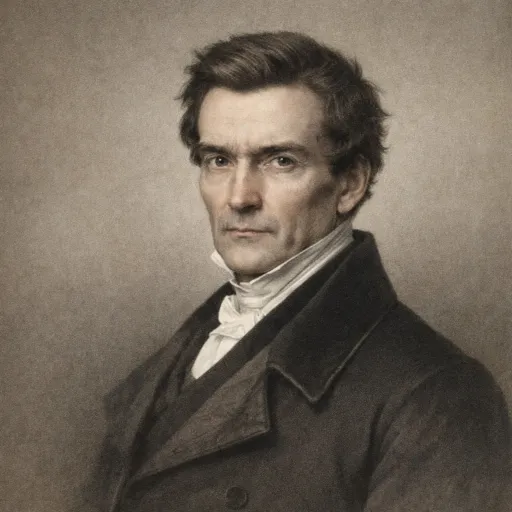
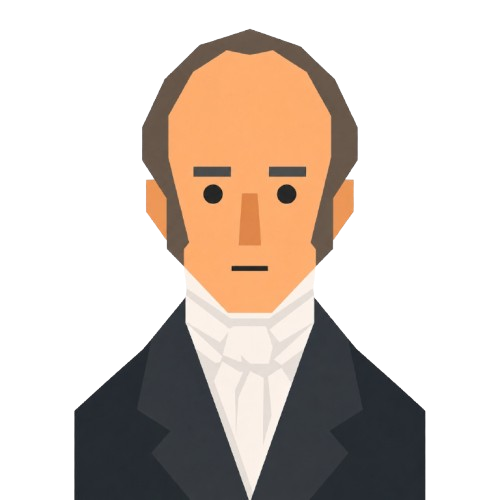
Gaspard-Gustave de Coriolis portrait

🧐 Did you know?

Gaspard-Gustave de Coriolis deduced his complex inertial force equations by practically analyzing the motion of balls on billiard tables and the efficiency of rotating components in steam engines. His purely mechanical and industrial focus prevented him from ever suspecting that his mathematical formula would become the absolute key to understanding the Earth’s atmosphere.
🏅 Awards and Honors

Coriolis received no formal medals or scientific awards during his lifetime. Nonetheless, his academic standing earned him election to the French Academy of Sciences in 1836.

📚 Their name in science

➤ Coriolis Effect

Physical effect whereby the trajectory of an object moving within a rotating reference frame undergoes an apparent deviation relative to an observer inside the frame.

➤ Coriolis Force

Inertial or fictitious force acting on objects in motion within a rotating frame of reference, directed perpendicular to both the velocity and the axis of rotation.

❓ Who was Gaspard-Gustave de Coriolis?

Gaspard-Gustave de Coriolis was a French mathematician and mechanical engineer whose mathematical acuity transformed our understanding of rotating systems. Possessing fragile health and a deeply practical mindset, he trained at the prestigious École Polytechnique in Paris, where he later served as a professor. Coriolis focused much of his career on applying abstract mathematics to real-world problems regarding industrial machines and moving mechanical gears. His analytical rigor led him to formulate dynamic equations that, although initially intended to optimize waterwheels and mills, ultimately explained the planet’s most colossal meteorological and geophysical phenomena.

🌍 The world in their time

In the early 19th century, classical mechanical physics was capable of describing precisely the motion of objects in straight lines or across stationary, motionless surfaces. However, scientists lacked the mathematical equations necessary to analyze what happens to a body’s trajectory when it moves within a system that is rotating upon itself, such as the Earth.

Become a giant

Your path to becoming a giant of knowledge begins with these top free courses
free quantum optomechanics course
Free mode

Cavity Quantum Optomechanics

free computer graphics course
Free mode

Computer Graphics

free systems engineering course
Free mode

Dynamics and Control

free quantum optomechanics course
Free mode

Cavity Quantum Optomechanics

free computer graphics course
Free mode

Computer Graphics

🔬 Scientific legacy

Gaspard-Gustave de Coriolis revolutionized science by publishing his celebrated treatise in 1835, where he described mathematically the Coriolis Effect. He proved that any object moving over a rotating reference frame experiences an apparent inertial force perpendicular to its direction of motion, known as the Coriolis force ($F_c = -2m(mathbf{omega} times mathbf{v})$). Furthermore, he formally introduced the modern concept of mechanical “Work” ($W = mathbf{F} cdot mathbf{d}$) into physics as it is used today.

👣 Footprint in today's world

The work of Gaspard-Gustave de Coriolis remains vital to contemporary meteorology, oceanography, and ballistics. The Coriolis effect is the physical law explaining why hurricanes rotate counterclockwise in the Northern Hemisphere and clockwise in the Southern Hemisphere, and stands as an indispensable parameter used to calculate flight navigation routes, satellite launches, and long-range projectile trajectories.

🏃‍♂️ The relay race

📥 Taking the baton

The monumental mathematical breakthroughs of Gaspard-Gustave de Coriolis built upon the mechanical principles of classical dynamics and analytical calculus previously developed by Joseph-Louis Lagrange and Pierre-Simon Laplace, applied to early 19th-century industrial machine design.

📤 Passing the baton

The brilliant mechanical equations of Gaspard-Gustave de Coriolis were adopted decades later by meteorologists and geophysicists like William Ferrel to formulate the first rigorous mathematical models of global atmospheric circulation and ocean currents, permanently transforming Earth sciences.

Other giants you will want to get to know

Gottfried Wilhelm Leibniz

Gottfried Wilhelm Leibniz

1646

 –

1716
The universal genius who co-invented infinitesimal calculus and designed the binary system that powers computers.
Gaspard-Gustave de Coriolis

Gaspard-Gustave de Coriolis

1792

 –

1843
The mechanical engineering genius who discovered the inertial force governing Earth’s cyclones and currents.
Galileo Galilei

Galileo Galilei

1564

 –

1642
The father of modern science who aimed his telescope at the heavens and challenged the world defending heliocentrism.
Léon Foucault

Léon Foucault

1819

 –

1868
The physicist of precision who visually demonstrated Earth’s rotation and measured the speed of light.
Henri Poincaré

Henri Poincaré

1854

 –

1912
The last universalist who discovered deterministic chaos and revolutionized topology and celestial mechanics.

Tools

Scientific calculator

Powered by Desmos

Scientific Dictionary

Powered by Wikipedia

2026 Best Online STEM Education Platform

Cargando clima y ubicación...

To learn and experience

Take your knowledge to the next level with science kits and hands-on tools that connect theory with experimentation

Essential for teachers and students

Learn with the best courses