Generic selectors
Exact matches only
Search in title
Search in content
Post Type Selectors

Friedrich Wöhler

Friedrich Wöhler icon
17/07/2026

🗓️

🌱July 31, 1800 – Eschersheim, Germany.
🍂September 23, 1882 – Göttingen, Germany.

🌟 Main Contribution

Friedrich Wöhler synthesized urea from inorganic compounds, demonstrating that organic compounds can be artificially produced
“Organic chemistry unites the living and the inanimate”
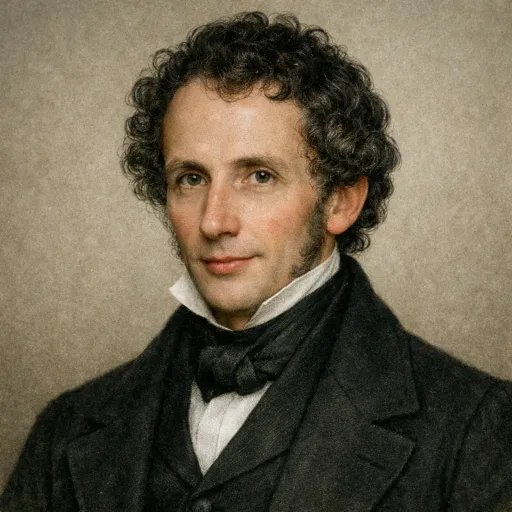
Friedrich Wöhler portrait

🧐 Did you know?

Friedrich Wöhler achieved the synthesis of urea entirely by accident while attempting to prepare pure ammonium cyanate for other experiments. Upon observing the formation of bright, white, needle-shaped crystals, he analyzed them meticulously; recognizing the properties of urea, he wrote a famous letter to his master Berzelius stating: “I must tell you that I can make urea without needing kidneys or an animal, whether man or dog.”

🏅 Awards and Honors

Wöhler was decorated with the prestigious Copley Medal of the Royal Society of London in 1872 in recognition of his monumental research in inorganic and organic chemistry. Additionally, he was elected a foreign Fellow of the Royal Society (1854).

📚 Their name in science

➤ Wöhler Synthesis

Chemical reaction consisting of the synthesis of urea from ammonium cyanate, proving that organic compounds can be artificially created from inorganic precursors.

❓ Who was Friedrich Wöhler?

Friedrich Wöhler was a German chemist whose astonishing experimental audacity permanently transformed our understanding of the molecules of life. Born near Frankfurt, he initially trained in medicine and gynecology before his fascination with minerals and chemical elements led him to dedicate himself entirely to the laboratory under the guidance of Jöns Jacob Berzelius. Possessing infinite patience and a masterly dexterity for chemical purification processes, he spent his academic career as a professor at the University of Göttingen, where he not only discovered fundamental chemical elements but shattered the philosophical dogma separating the mineral world from the living world.

🌍 The world in their time

In the early 19th century, science was dominated by the theory of vitalism, which asserted that organic compounds (produced by living organisms) possessed a mysterious, divine “vital force” and, therefore, it was entirely impossible to synthesize or obtain them in a laboratory starting from inert, inorganic matter.

Become a giant

Your path to becoming a giant of knowledge begins with these top free courses
free biorefinery course
Free mode

Biorefinery: From Biomass to Building Blocks of Biobased Products

free industrial biotech essentials course
Free mode

Industrial Biotechnology

free pharmacology course
Free mode

Introduction to Pharmacology

free biorefinery course
Free mode

Biorefinery: From Biomass to Building Blocks of Biobased Products

free industrial biotech essentials course
Free mode

Industrial Biotechnology

🔬 Scientific legacy

Friedrich Wöhler revolutionized science in 1828 by achieving the Wöhler Synthesis, managing to produce urea artificially in his laboratory from ammonium cyanate, a completely inorganic compound. This scientific milestone marked the formal birth of modern Organic Chemistry. Furthermore, he was the first scientist to isolate chemical elements of massive industrial importance such as metallic aluminum, beryllium, and yttrium.

👣 Footprint in today's world

The work of Friedrich Wöhler stands as the absolute foundation upon which contemporary chemical, pharmaceutical, and biotechnological industries are built. His proof that life’s molecules obey the same physical laws as inanimate matter enabled the development of synthetic drug manufacturing, plastics, advanced fertilizers, and pesticides sustaining today’s global society.

🏃‍♂️ The relay race

📥 Taking the baton

The monumental laboratory successes of Friedrich Wöhler developed thanks to the rigorous learning of mineralogical analysis techniques and chemical nomenclature established by his mentor Jöns Jacob Berzelius, combined with analytical methods shared with his close friend and collaborator Justus von Liebig.

📤 Passing the baton

The pioneering synthesis of Friedrich Wöhler opened the floodgates of chemistry for later scientists like Hermann Kolbe and Marcellin Berthelot to synthesize more complex organic compounds artificially, definitively burying vitalism and accelerating the birth of modern biochemistry.

Other giants you will want to get to know

Friedrich Wöhler

Friedrich Wöhler

1800

 –

1882
The father of organic chemistry who overturned vitalism by synthesizing urea in a laboratory for the first time.

Tools

Scientific calculator

Powered by Desmos

Scientific Dictionary

Powered by Wikipedia

2026 Best Online STEM Education Platform

Cargando clima y ubicación...

To learn and experience

Take your knowledge to the next level with science kits and hands-on tools that connect theory with experimentation

Essential for teachers and students

Learn with the best courses