Generic selectors
Exact matches only
Search in title
Search in content
Post Type Selectors

Giants of Science

Gigantes de la ciencia
A tribute to the minds that, with curiosity, courage, and boundless vision, transformed our understanding of the universe and paved the way for the paths we continue to explore today.

In this gallery os scientific giants, you’ll find the women and men whose ideas, insights, and discoveries pushed the boundaries of what is possible. Each figure represents a pivotal chapter in the history of human knowledge: people who viewed the world with a unique blend of curiosity, rigor, and intellectual courage. Their legacy lives on in every scientific breakthrough and in every question that continues to drive us to explore.

Who Are the Giants of Science

The Giants of Science are individuals whose ideas, discoveries, and methods marked decisive milestones in the history of knowledge. Their contributions span fields as diverse as physics, biology, astronomy, engineering, and mathematics, and each has opened up new ways of understanding the world. Through their careers, we can explore how science is built: with bold questions, constant experimentation, and a determination that transcends generations.

This selection is not intended to be exhaustive. The history of science is vast and full of extraordinary figures, many of whom we have not yet included. But we can say with certainty that all the people featured here left a profound and lasting mark, and they truly represent the spirit of those who have driven human progress.


Why Explore the Giants of Science

Learning about great scientific figures offers a powerful and accessible way to engage with STEM concepts and the history of human knowledge. Among the key benefits of exploring this selection are:

Historical perspective. It helps us understand how the ideas we now consider fundamental emerged and how each discovery built upon the work of those who came before.

Personal inspiration. These individuals’ journeys show that science advances through curiosity, perseverance, and creativity—qualities anyone can cultivate.

Diversity of approaches. Each giant offers a distinct way of looking at the world: from meticulous observation to bold experimentation or deep mathematical reasoning.

Connection to the present. Their contributions continue to influence technology, medicine, engineering, and current research, helping us understand why the world works the way it does.

Meaningful learning. Learning their stories makes complex concepts easier to grasp, as we see how they emerged, what problems they solved, and what impact they had.

Accessibility. Exploring these figures doesn’t require advanced prior knowledge: all you need is a curiosity to discover how science is built.

Together, the Giants of Science offer an inspiring, human, and profound gateway to the STEM universe, showing that knowledge is a collective adventure that continues to grow with each generation.

Gallery of Science Giants

Alan Turing

Alan Turing

1912

 –

1954
Alan Turing laid the foundations of modern computing with the “Turing machine” and broke Nazi codes, changing the course of World War II
“Machines often surprise me very much”
Albert Einstein

Albert Einstein

1879

 –

1955
Albert Einstein developed the special and general theory of relativity, explained the photoelectric effect, and laid the foundations of modern physics
“Imagination is more important than knowledge”
Alexander von Humboldt

Alexander von Humboldt

1769

 –

1859
Alexander von Humboldt integrated geology, climate, and biology observations to found modern geography, showing the connections between nature, climate, and life
“Nature is a living whole of interconnected forces”
Alfred Lothar Wegener

Alfred Lothar Wegener

1880

 –

1930
Alfred Wegener formulated the theory of continental drift, proposing that the continents were once united in a supercontinent called Pangaea, laying the foundation of modern plate tectonics
“Continental drift explains the harmony of the coasts and the similarity of fossils on both sides of the ocean”
Amedeo Avogadro

Amedeo Avogadro

1776

 –

1856
Amedeo Avogadro stated his famous hypothesis: equal volumes of gases, under the same conditions, contain the same number of molecules. He grounded modern chemistry and molecular theory
“In science, patience and method always triumph over chance”
André-Marie Ampère

André-Marie Ampère

1775

 –

1836
André-Marie Ampère formulated the theory of electromagnetism, establishing the mathematical foundations linking electricity and magnetism
“Science is the explanation of the complex by the simple”
Andrey Kolmogorov

Andrey Kolmogorov

1903

 –

1987
Andrey Kolmogorov founded modern probability theory, applying it to statistics, turbulence, and natural phenomena, establishing a solid mathematical framework for uncertainty
“Probability theory is the logic of uncertainty”
Antoine-Laurent de Lavoisier

Antoine-Laurent de Lavoisier

1743

 –

1794
Antoine Lavoisier estableció la ley de conservación de la masa y nombró el oxígeno e hidrógeno, sentando las bases de la química moderna
“La nada no produce nada”
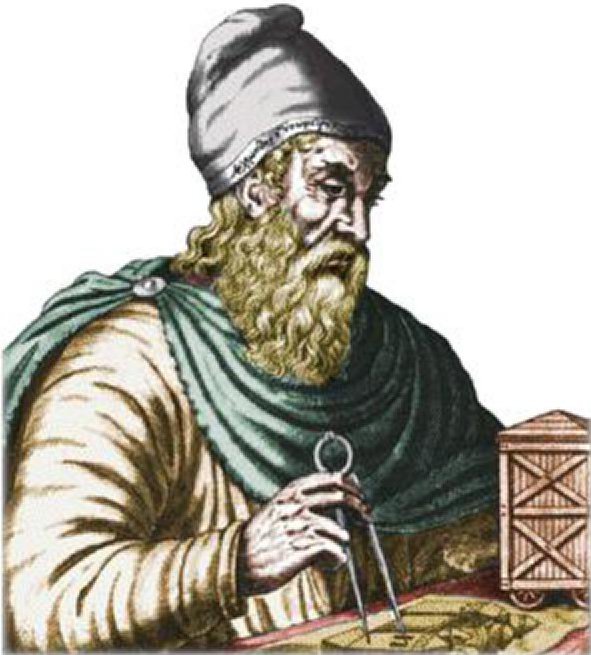
Archimedes

Archimedes

287 a.C.

 –

212 a.C.
Archimedes established fundamental principles of mechanics and hydrostatics, including the famous Archimedes’ principle of buoyancy in fluids
“Give me a place to stand, and I will move the world”
Augustin-Louis Cauchy

Augustin-Louis Cauchy

1789

 –

1857
Augustin-Louis Cauchy formalized mathematical analysis, providing rigor to calculus and function theory, influencing mathematical physics
“Rigor in mathematics is the key to understanding physical phenomena”
Blaise Pascal

Blaise Pascal

1623

 –

1662
Blaise Pascal studied fluid pressure, mathematical statistics, and laid foundations of probability theory
“The understanding of pressure and vacuum transforms our comprehension of nature”
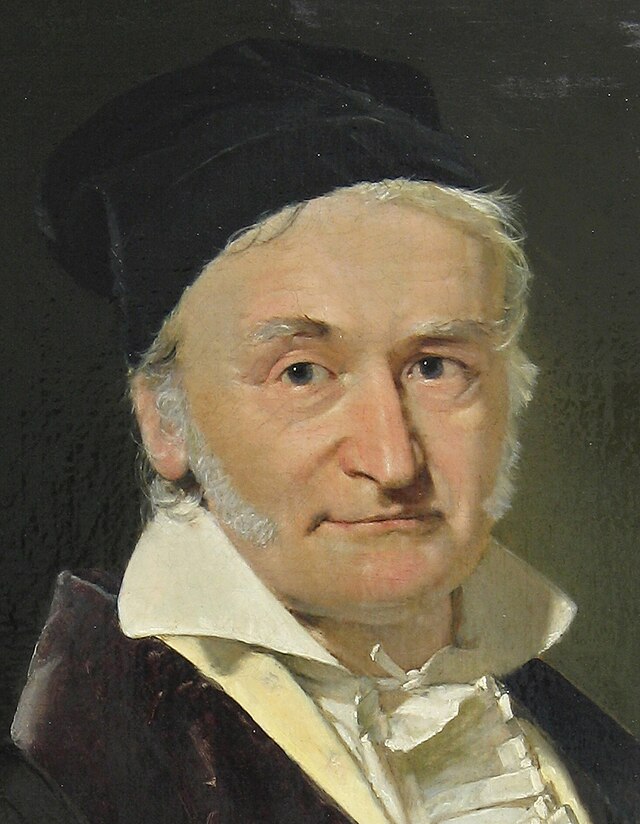
Carl Friedrich Gauss

Carl Friedrich Gauss

1777

 –

1855
Carl Friedrich Gauss developed fundamental methods in algebra, number theory, and statistics, consolidating the foundation of modern mathematics.
“Mathematics is the queen of the sciences and number theory its queen”
Charles Lyell

Charles Lyell

1797

 –

1875
Charles Lyell was a defender of uniformitarianism, he showed that present geological processes shaped Earth over millions of years. His work strongly influenced Darwin and modern geology
“The present is the key to the past”
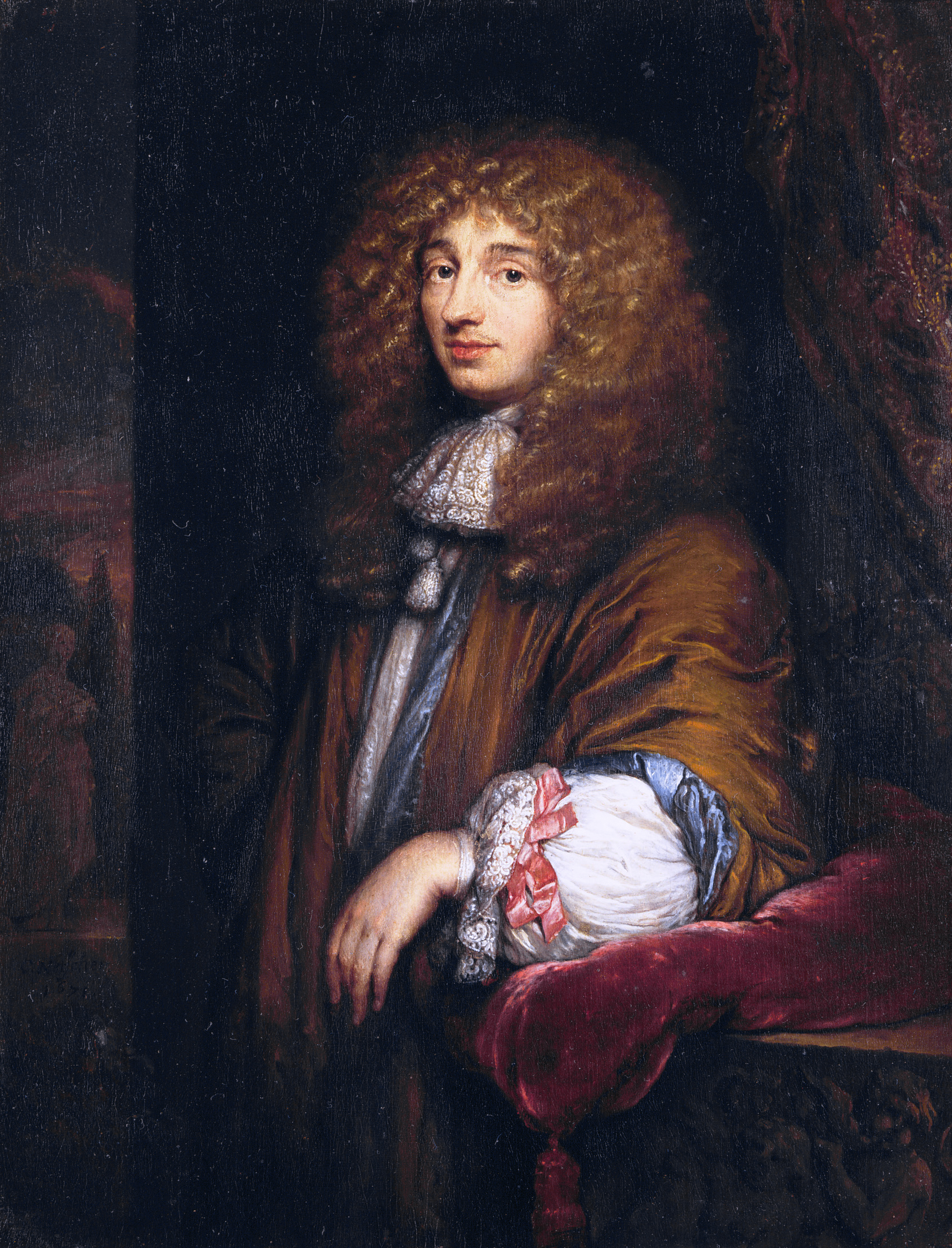
Christiaan Huygens

Christiaan Huygens

1629

 –

1695
Christiaan Huygens developed the wave theory of light, explained double refraction, and discovered Titan, contributing to the understanding of optics and astronomy
“Light propagates as a wave advancing in all directions”
Daniel Bernoulli

Daniel Bernoulli

1700

 –

1782
Daniel Bernoulli formulated Bernoulli’s principle and developed fundamental theories in fluid mechanics and gas dynamics
“Nature is always economical in its means”
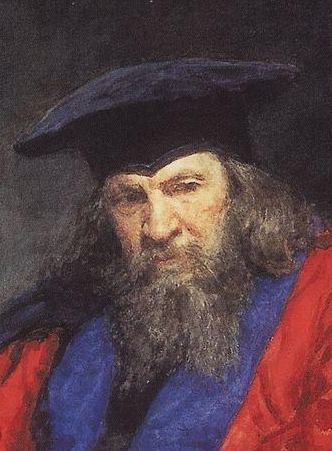
Dmitri Ivánovich Mendeléyev

Dmitri Ivánovich Mendeleev

1834

 –

1907
Dmitri Mendeleev formulated the periodic table of elements, organizing known ones and predicting unknown ones with remarkable accuracy.
“In science, truth is revealed sooner through errors than through confusions”
Dmitri Skobeltsyn

Dmitri Skobeltsyn

1892

 –

1990
Dmitri Skobeltsyn pioneered the study of cosmic rays and used cloud chambers to discover high-energy charged particles, laying the foundations of particle physics
“Every particle we observe is a window to the universe”
Edme Mariotte

Edme Mariotte

1620

 –

1684
Edme Mariotte independently described the relationship between gas pressure and volume, known as Boyle-Mariotte’s law, contributing to the quantitative study of fluids
“Nature never acts in vain”
Edwin Powell Hubble

Edwin Powell Hubble

1889

 –

1953
Edwin Hubble demonstrated the expansion of the universe and classified galaxies, establishing the foundations of modern observational cosmology
“Equipped with his five senses, man explores the universe”
Enrico Fermi

Enrico Fermi

1901

 –

1954
Enrico Fermi developed the theory of beta decay, built the first nuclear reactor, and made decisive advances in particle physics and nuclear energy
“There is no science without imagination”
Erwin Schrödinger

Erwin Schrödinger

1887

 –

1961
Erwin Schrödinger developed the wave equation of quantum mechanics, describing particle behavior, and created the famous Schrödinger’s cat thought experiment
“The chief task of physics is to discover the underlying mathematical structure in nature”
Euclides

Euclides

300 a.C.

 –

?
Euclid established the foundations of geometry, organizing axioms and theorems
“There is no royal road to geometry”
Evangelista Torricelli

Evangelista Torricelli

1608

 –

1647
Evangelista Torricelli invented the mercury barometer, demonstrating the existence of atmospheric pressure, and made advances in hydrodynamics, geometry, and applied optics
“We have only today; let us make good use of this day”
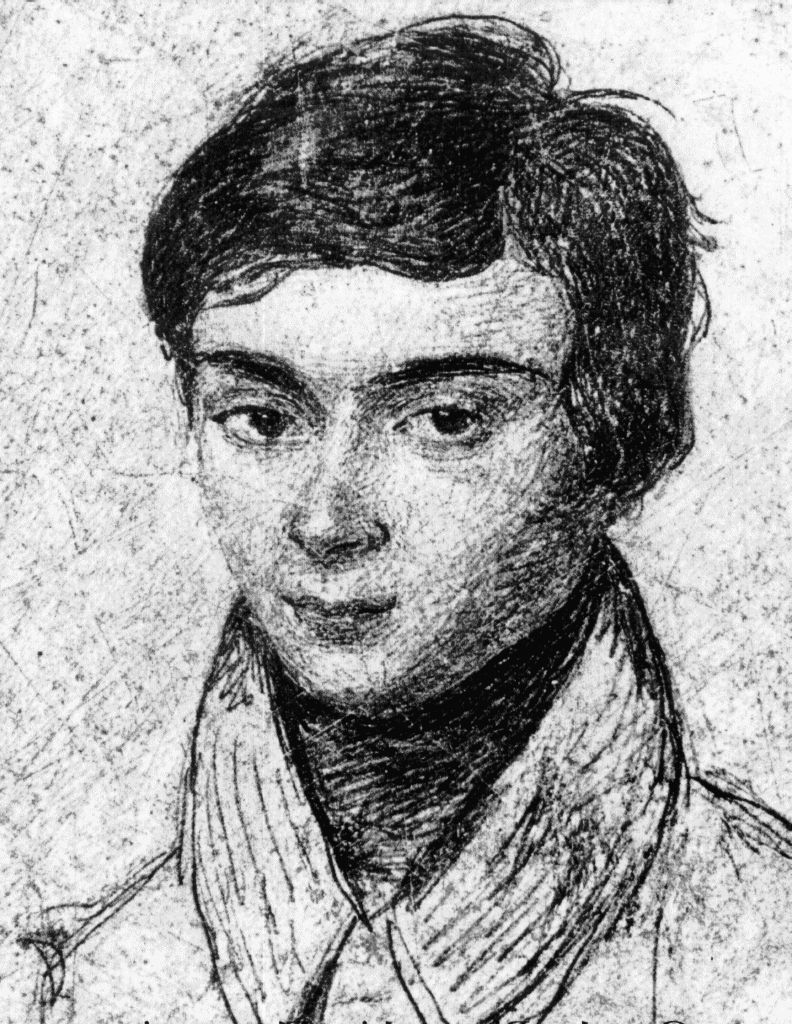
Évariste Galois

Évariste Galois

1811

 –

1832
Évariste Galois developed group theory, laying foundations of modern algebra and solving polynomial equations using symmetries
“Mathematics revealing the hidden order of equations”
Cargando clima y ubicación...