Generic selectors
Exact matches only
Search in title
Search in content
Post Type Selectors

Giants of Science

Gigantes de la ciencia
A tribute to the minds that, with curiosity, courage, and boundless vision, transformed our understanding of the universe and paved the way for the paths we continue to explore today.

In this gallery os scientific giants, you’ll find the women and men whose ideas, insights, and discoveries pushed the boundaries of what is possible. Each figure represents a pivotal chapter in the history of human knowledge: people who viewed the world with a unique blend of curiosity, rigor, and intellectual courage. Their legacy lives on in every scientific breakthrough and in every question that continues to drive us to explore.

Who Are the Giants of Science

The Giants of Science are individuals whose ideas, discoveries, and methods marked decisive milestones in the history of knowledge. Their contributions span fields as diverse as physics, biology, astronomy, engineering, and mathematics, and each has opened up new ways of understanding the world. Through their careers, we can explore how science is built: with bold questions, constant experimentation, and a determination that transcends generations.

This selection is not intended to be exhaustive. The history of science is vast and full of extraordinary figures, many of whom we have not yet included. But we can say with certainty that all the people featured here left a profound and lasting mark, and they truly represent the spirit of those who have driven human progress.


Why Explore the Giants of Science

Learning about great scientific figures offers a powerful and accessible way to engage with STEM concepts and the history of human knowledge. Among the key benefits of exploring this selection are:

Historical perspective. It helps us understand how the ideas we now consider fundamental emerged and how each discovery built upon the work of those who came before.

Personal inspiration. These individuals’ journeys show that science advances through curiosity, perseverance, and creativity—qualities anyone can cultivate.

Diversity of approaches. Each giant offers a distinct way of looking at the world: from meticulous observation to bold experimentation or deep mathematical reasoning.

Connection to the present. Their contributions continue to influence technology, medicine, engineering, and current research, helping us understand why the world works the way it does.

Meaningful learning. Learning their stories makes complex concepts easier to grasp, as we see how they emerged, what problems they solved, and what impact they had.

Accessibility. Exploring these figures doesn’t require advanced prior knowledge: all you need is a curiosity to discover how science is built.

Together, the Giants of Science offer an inspiring, human, and profound gateway to the STEM universe, showing that knowledge is a collective adventure that continues to grow with each generation.

Gallery of Science Giants

Friedrich Wöhler

Friedrich Wöhler

1800

 –

1882
Friedrich Wöhler synthesized urea from inorganic compounds, demonstrating that organic compounds can be artificially produced
“Organic chemistry unites the living and the inanimate”
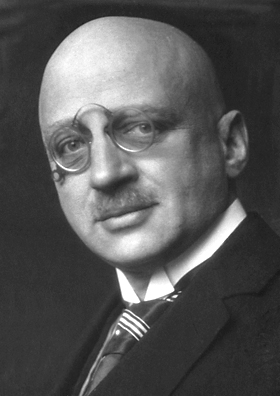
Fritz Haber

Fritz Haber

1868

 –

1934
Fritz Haber developed the Haber-Bosch process, enabling large-scale ammonia synthesis, revolutionizing fertilizer production and industrial chemistry
“Chemistry has the power to transform life on Earth”
Galileo Galilei

Galileo Galilei

1564

 –

1642
Galileo Galilei revolutionized astronomy by observing planets, Jupiter’s moons, and advocating heliocentrism.
“And yet it moves”
Gaspard-Gustave de Coriolis

Gaspard-Gustave de Coriolis

1792

 –

1843
Gaspard-Gustave de Coriolis formulated the effect that bears his name, explaining the deflection of bodies on Earth’s rotation and providing key foundations for mechanics.
“Motion is not only trajectory, it is also invisible influence”
Georg Cantor

Georg Cantor

1845

 –

1918
Georg Cantor created set theory, developed transfinite numbers, and laid the foundation of modern mathematics
“The essence of mathematics lies in the infinite diversity of its sets”
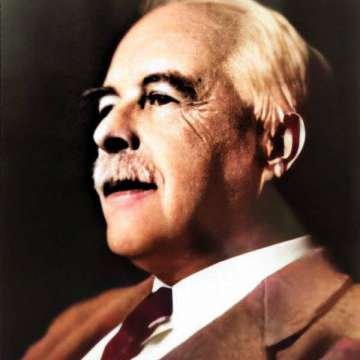
Gilbert Newton Lewis

Gilbert Newton Lewis

1875

 –

1946
Gilbert Lewis formulated the chemical bond theory, introduced electron pairs, and contributed to acid-base theory
“Atoms build nature as bricks build a building”
Gottfried Wilhelm Leibniz

Gottfried Wilhelm Leibniz

1646

 –

1716
Gottfried Wilhelm Leibniz was one of the founders of infinitesimal calculus, created modern mathematical notation, and contributed to mechanics and optics with groundbreaking theories
“Music is the hidden exercise of arithmetic of the soul, which does not know it is calculating.”
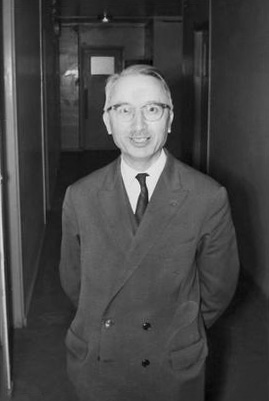
Henri Cartan

Henri Cartan

1904

 –

2008
Henri Cartan developed sheaf theory and cohomology, revolutionizing algebra and modern geometry, and was a leading figure of the Bourbaki group in mathematic
“Mathematics is not a set of formulas, but a language to understand the world”
Henri Poincaré

Henri Poincaré

1854

 –

1912
Henri Poincaré founded algebraic topology, contributed to chaos theory and the mathematical formulation of physics
“The mathematical universe reflects the harmony and complexity of nature”
Isaac Newton

Isaac Newton

1643

 –

1727
Isaac Newton formulated the law of universal gravitation and the three laws of motion, founding classical mechanics.
“If I have seen further, it is by standing on the shoulders of giants”
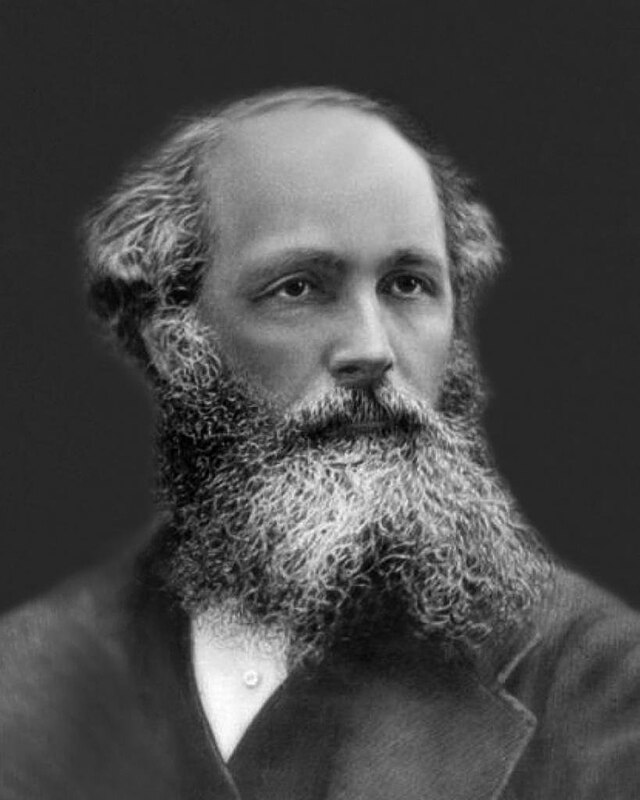
James Clerk Maxwell

James Clerk Maxwell

1831

 –

1879
James Clerk Maxwell formulated Maxwell’s equations, unifying electricity and magnetism and predicting electromagnetic waves
“Thoroughly conscious ignorance is the prelude to every real advance in science”
James Hutton

James Hutton

1726

 –

1797
James Hutton proposed uniformitarianism, showing that present geological processes explain Earth’s history
“Earth is explained by its own processes”
Johannes Kepler

Johannes Kepler

1571

 –

1630
Kepler formulated the three laws of planetary motion, establishing elliptical orbits and the relationship between planetary period and distance from the Sun
“The heavens teach the geometry that nature follows”
John Dalton

John Dalton

1766

 –

1844
John Dalton formulated the first atomic theory, explaining the composition of matter and the law of multiple proportions in chemical compounds.
“Science is the foundation of truth”
John Muir

John Muir

1838

 –

1914
John Muir was a naturalist and activist who promoted nature conservation and was key in the creation of national parks in the United States
“The clearest way into the Universe is through a forest wilderness”
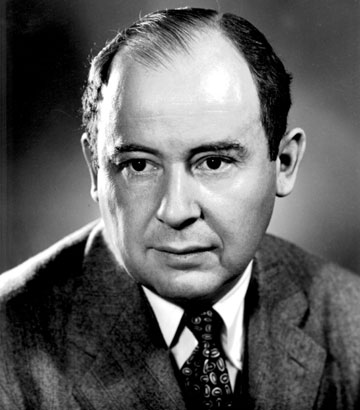
John von Neumann

John von Neumann

1903

 –

1957
John von Neumann developed the modern computer architecture, contributed to game theory, quantum mechanics, and statistics, transforming mathematics and computer science
“Truth is, at best, a hypothesis”
Joseph Fourier

Joseph Fourier

1768

 –

1830
Fourier developed the Fourier series, allowing the representation of periodic functions and modeling phenomena like heat, sound, and waves. He transformed applied calculus and mathematical statistics
“The profound analogy between heat and light guides scientific research”
Joseph Louis Gay-Lussac

Joseph Louis Gay-Lussac

1778

 –

1850
Joseph Louis Gay-Lussac formulated fundamental gas laws on the relationship between volume, temperature, and pressure, also studying gas mixtures and chemical reactions in air
“Chemistry is the key to understanding nature”
Joseph-Louis Lagrange

Joseph-Louis Lagrange

1736

 –

1813
Joseph-Louis Lagrange formulated the Lagrangian equations, key in classical mechanics to describe motion. He also founded variational calculus, applying it to algebra and mathematical physics
“As soon as a mathematical truth is established, it always serves as a starting point for new truth”
Kurt Gödel

Kurt Gödel

1906

 –

1978
Kurt Gödel revolutionized modern mathematics and logic with his incompleteness theorems, proving that any consistent system contains undecidable propositions
“Only those who understand logic can discover the limits of human reaso”
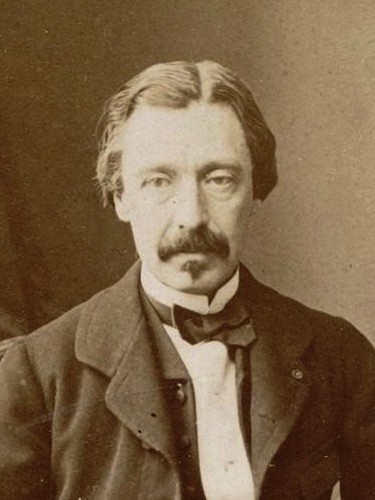
Léon Foucault

Léon Foucault

1819

 –

1868
Léon Foucault demonstrated Earth’s rotation with his famous pendulum and measured the speed of light with great precision, revolutionizing experimental optics
“The pendulum does not lie: the Earth moves beneath our feet”
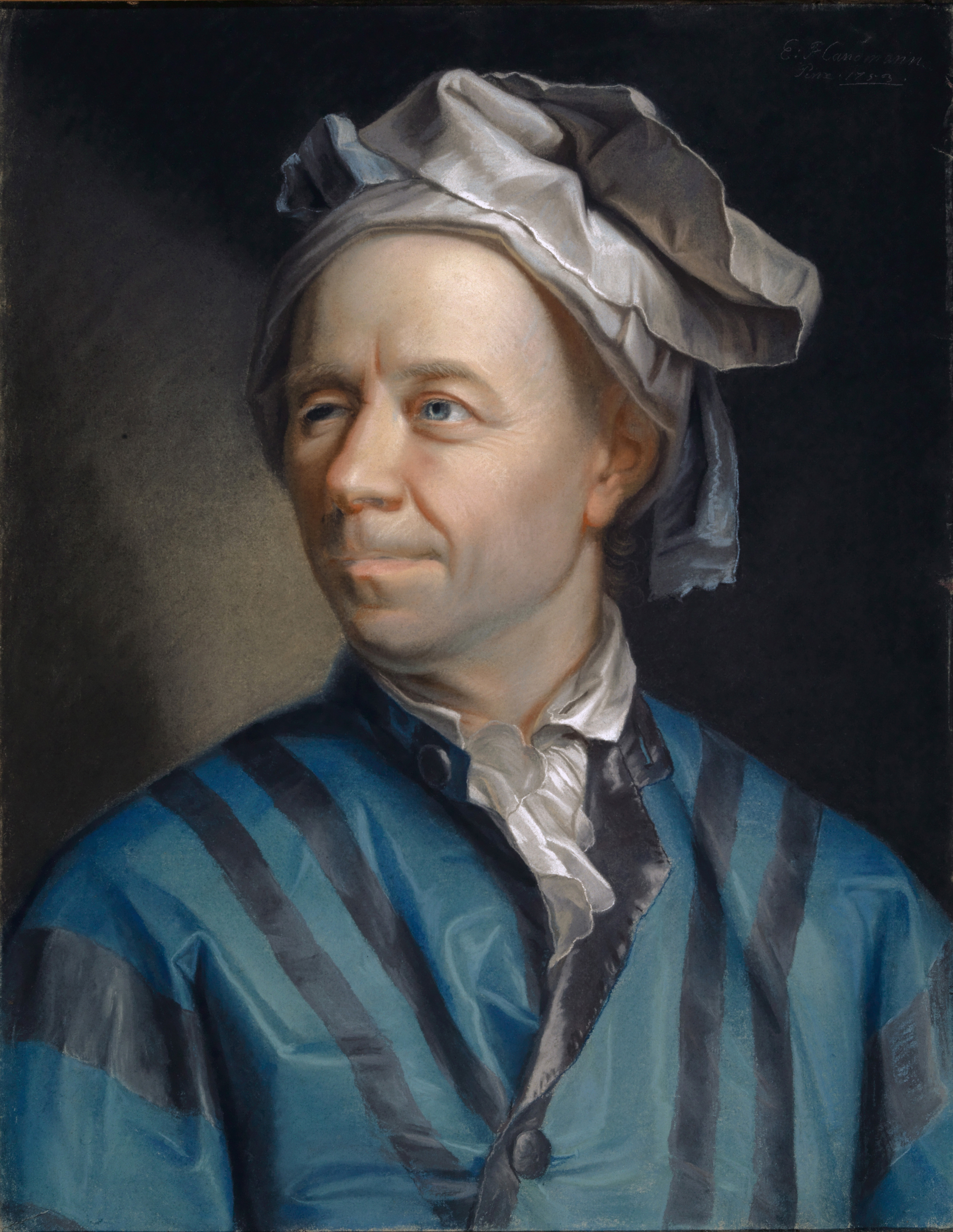
Leonhard Euler

Leonhard Euler

1707

 –

1783
Euler developed much of modern mathematical notation and made key contributions to analysis, topology, mechanics, and graph theory
“Nothing takes place in the universe without mathematics expressing it”
Linus Carl Pauling

Linus Carl Pauling

1901

 –

1994
Linus Pauling determinó la estructura de moléculas y cristales, elucidó enlaces químicos y contribuyó a la química de materiales y biología molecular
“La mejor manera de tener buenas ideas es tener muchas ideas”
Luke Howard

Luke Howard

1772

 –

1864
Luke Howard developed the first systematic cloud classification, establishing a universal terminology still used in modern meteorology
“By naming the clouds, we speak a common language of the atmosphere”
Cargando clima y ubicación...