Online STEM Simulations and other interactive resources for science and technology education
Discover a unique collection of online STEM simulations and other educational resources that make science visible. All content is free, organized into thematic units, and designed for teachers and students
.
Discover all our STEM simulations and online resources for science and technology education
Explore our thematic units of free STEM simulations and resources. You’ll find interactive experiments and educational tools of various types and levels of difficulty, ready to use, at no cost to you
Mathematics
More than 40 online simulations and interactive activities to learn and teach Mathematics in a practical and visual way
Physics
Over 140 online simulations and virtual experiments to explore the principles of Physics visually and enjoyably
Chemistry
More than 70 interactive simulations and virtual labs to understand reactions, bonds, and properties of matter step by step
Earth Science
Over 65 online simulations and other educational resources to discover astronomy, geology, and much more
Circuits
A collection of interactive online simulations to build, measure, and understand electric circuits in a visual and hands-on way
We help you learn and teach STEM
STEM education is a challenge
Our online interactive resources are designed to help you learn and teach effectively
Take advantage of them!
STEM Education
STEM education is an innovative educational approach that integrates science, technology, engineering, and mathematics. Its goal is to prepare students for careers related to these fields and to successfully face the social and economic challenges of the 21st century.

STEM Students
STEM students may face various difficulties depending on their level and experience, but some are common: limited understanding of basic concepts, difficulty applying abstract ideas to the real world, lack of critical thinking, low motivation, and little practice.
STEM Teachers
Being a STEM teacher is a significant challenge, as it requires not only highly specialized technical knowledge but also strong pedagogical and communication skills to convey these complex concepts clearly, engagingly, and effectively.
To learn and experiment
In each thematic unit, we offer science kits and educational tools that connect theory with practice in a fun and effective way
Microscopio

Relativity and Quantum Physics For Beginners

Cálculo vectorial

Equipos laboratorio químico

Perpetual motion machine

Natural gems

Geology Kit

Reflection and refraction

Astrofísica para gente con prisas

Montaña rusa

Area mazes

Balanza científica

Juego de fracciones

Submarino

Math posters

Bunsen burner

Kit sistema solar

Leyes de la mecánica

Dinámica de fluidos

Dispositivo de destilación

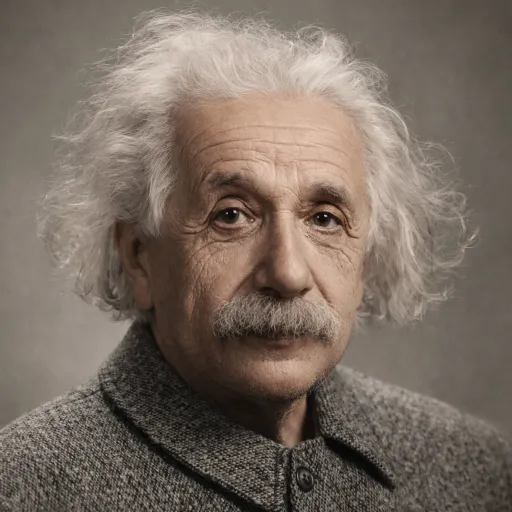
Giants of science
“If I have seen further, it is by standing on the shoulders of giants”
Isaac Newton
Discover in each thematic unit some of the scientists who have shaped history and made it possible for us to get to where we are today
Sadi Carnot
–
Pythagoras
–
Niels Henrik David Bohr
–
Blaise Pascal
–
Luke Howard
–
Évariste Galois
–
Isaac Newton
–
Dmitri Skobeltsyn
–
Henri Poincaré
–
Robert Wilhelm Bunsen
–
Alexander von Humboldt
–
William Henry
–
Amedeo Avogadro
–
Marie Curie
–
John Dalton
–
Peter Higgs
–
Linus Carl Pauling
–
Gaspard-Gustave de Coriolis
–
James Hutton
–
Carl Friedrich Gauss
–
Become a giant
In each thematic unit, we present a selection of online courses from the best academic institutions
And they are completely free!
Tropical coastal ecosystems
Introduction to Water and Climate
Data Science: Probability
Energías convencionales, limpias y su tecnología
Bases Matemáticas: Integrales
Natural Resources for Sustainable Development
e-moderación para tutores virtuales
Silicon Photonics Design, Fabrication and Data Analysis
Introducción a la Estructura de la Materia
El Enlace Químico y las Interacciones Moleculares
Quantum Mechanics for Scientists and Engineers 1
Groundwater Cycle
Aplicaciones de la Teoría de Grafos a la Vida Real (I)
Astrophysics: Cosmology
Introducción a los Sistemas de Información Geográfica
General Chemistry II: Chemical Equilibrium, Kinetics, and Transition Metals
Introduction to Pharmacology
Probability and Statistics in Data Science using Python
Classroom Strategies for Inquiry-Based Learning
Teach Teens Computing: Understanding AI for Educators