Generic selectors
Exact matches only
Search in title
Search in content
Post Type Selectors

Christiaan Huygens

Christiaan Huygens icon
17/07/2026

🗓️

🌱April 14, 1629 – The Hague, Netherlands.
🍂July 8, 1695 – The Hague, Netherlands.

🌟 Main Contribution

Christiaan Huygens developed the wave theory of light, explained double refraction, and discovered Titan, contributing to the understanding of optics and astronomy
“Light propagates as a wave advancing in all directions”
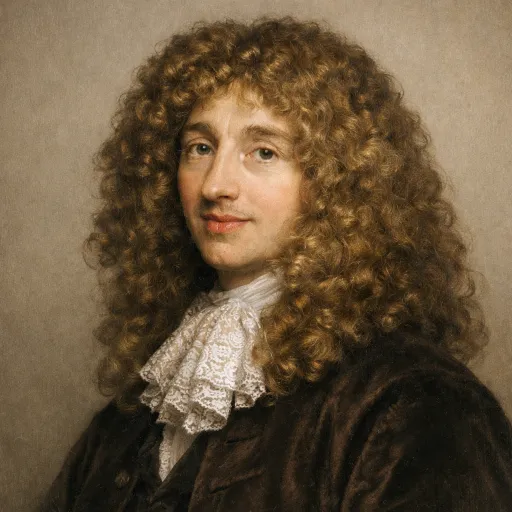
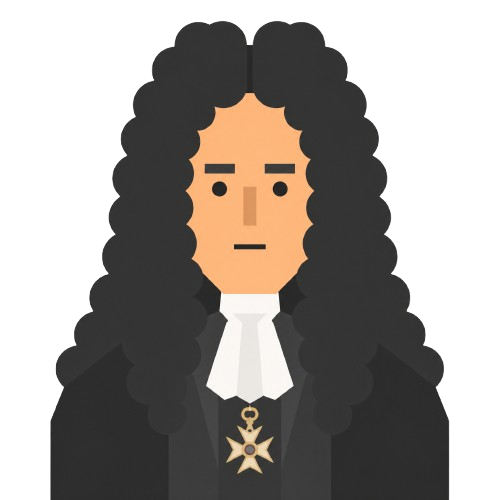
Christiaan Huygens portrait

🧐 Did you know?

Christiaan Huygens maintained a lifelong intense, bitter, and celebrated scientific and intellectual rivalry with Isaac Newton regarding the nature of light and cosmic gravity; while Newton relentlessly defended that light was composed of fast material corpuscles traveling in straight lines, Huygens maintained with superior mathematical elegance that light propagated as elastic waves through an invisible subtle medium he termed ether. He lived afflicted by recurrent episodes of severe depression and social isolation that paralyzed his laboratory activity for months, passing away unmarried at his residence in The Hague after refusing traditional painkillers of the era to maintain his mental and instrumental lucidez until his final breath.

🏅 Awards and Honors

Huygens was one of the first scientists elected as a Fellow of the Royal Society of London in 1663. His extraordinary prestige in physics and astronomy earned him an invitation from Minister Colbert to become a founding member and leader of the French Academy of Sciences upon its creation in 1666.

📚 Their name in science

➤ Huygens’ Principle

Method of analysis applied to wave propagation problems, stating that every point on a primary wavefront behaves as a source of tiny secondary spherical waves.

Ad

❓ Who was Christiaan Huygens?

Christiaan Huygens was a Dutch physicist, mathematician, astronomer, and instrument designer, universally considered one of the most versatile and brilliant scientists of the 17th century for founding the wave theory of light and mathematizing the mechanics of rotating bodies. Born into an influential Dutch diplomatic family during the Golden Age and educated at the universities of Leiden and Breda, he possessed a mind characterized by a perfect synthesis between the abstract rigor of classical geometric geometry and a prodigious manual and instrumental skill for polishing optical lenses. Huygens did not view theoretical physics as abstract hypotheses disconnected from material reality, but as exact mechanical phenomena that had to be measured with precision clocks and telescopes built by the researcher himself.

🌍 The world in their time

In the mid-17th century, European optics explained light qualitatively or through rigid corpuscles, and astronomy dragged severe visual distortions within rudimentary telescopes, preventing any understanding of the true physical nature of outer planets or the measurement of small time intervals in analytical navigation.

Become a giant

Your path to becoming a giant of knowledge begins with these top free courses
free quantum optomechanics course
Free mode

Cavity Quantum Optomechanics

free advanced nanophotonic course
Free mode

Nanophotonic Modeling

free materials capstone course
Free mode

Capstone Exam – Materials for Electronic, Optical, and Magnetic Devices

free quantum optomechanics course
Free mode

Cavity Quantum Optomechanics

free advanced nanophotonic course
Free mode

Nanophotonic Modeling

🔬 Scientific legacy

Christiaan Huygens revolutionized science by publishing his *Traité de la lumière* in 1690, establishing the Huygens Principle, which geometrically states that every point on a luminous wavefront behaves as a new source of spherical waves, mathematically explaining reflection and refraction phenomena. In mechanics and precision engineering, he invented the pendulum clock in 1656 and formulated the laws of centripetal force ($F_c = frac{m cdot v^2}{r}$) and the center of oscillation. In astronomy, he discovered the satellite Titan in 1655 and pioneered solving the true geometric nature of Saturn’s rings utilizing advanced telescopes designed by himself.

👣 Footprint in today's world

The legacy of Christiaan Huygens forms the analytical, optical, and instrumental infrastructure of contemporary fiber-optic telecommunications engineering, high-end micromechanical watchmaking, planetary astrophysics, and lens design. His physical principle of wave propagation is the geometric foundation used today by optical engineers across the planet for the technical design of current medical laser scanners, atomic-precision microscope lenses, military radar antennas, and satellite trajectories in deep-space exploration missions by the European Space Agency (ESA).

🏃‍♂️ The relay race

📥 Taking the baton

The monumental optical breakthroughs of Christiaan Huygens built firmly upon René Descartes’ laws of refraction, combined with Blaise Pascal’s cycloid curve geometries and Archimedes’ surface quadrature methods.

📤 Passing the baton

The unification of mechanics and optics achieved by Christiaan Huygens transformed wave physics into an exact mathematical branch of continuous matter motion, providing the indispensable analytical tool for Thomas Young and Augustin-Fresnel to definitively confirm the wave nature of light in the 19th century. His micromechanical inventions and innovations opened the floodgates for developing safe commercial maritime navigation and modern analytical stellar cartography during the Scientific Revolution.

Other giants you will want to get to know

René Descartes

René Descartes

1596

 –

1650
The architect of analytical geometry who unified algebra with space and established the rational method.
Albert Einstein

Albert Einstein

1879

 –

1955
The revolutionary physicist who transformed our understanding of space, time, and gravity.
Michael Faraday

Michael Faraday

1791

 –

1867
The wizard of electrical induction who visualized magnetic lines of force and transformed industry.
Léon Foucault

Léon Foucault

1819

 –

1868
The physicist of precision who visually demonstrated Earth’s rotation and measured the speed of light.
Christiaan Huygens

Christiaan Huygens

1629

 –

1695
The architect of the optical wavefront who invented the pendulum clock and unveiled the hidden rings of Saturn.

Tools

Scientific calculator

Powered by Desmos

Scientific Dictionary

Powered by Wikipedia

2026 Best Online STEM Education Platform

Cargando clima y ubicación...

To learn and experience

Take your knowledge to the next level with science kits and hands-on tools that connect theory with experimentation

Essential for teachers and students

Learn with the best courses